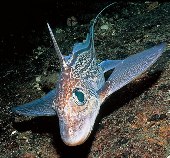
| Family: |
Chimaeridae (Shortnose chimaeras or ratfishes) |
| Max. size: |
150 cm TL (male/unsexed); max.weight: 2,500.0 g |
| Environment: |
bathydemersal; marine; depth range 40 - 1400 m, oceanodromous |
| Distribution: |
Northeast Atlantic (widespread), including the Mid-Atlantic Ridge and the Mediterranean Sea. |
| Diagnosis: |
|
| Biology: |
Bathydemersal to benthopelagic generally between 300 and 500 m depth. Found in the upper continental slope. Usually found in deeper waters in southern latitudes, while making a summer inshore migration up to 40-100 m in the northern areas. Sluggish, usually occurring in small groups. Feeds mainly on bottom-living invertebrates. The single dorsal spine is sharp and pointed, and although only mildly venomous can inflict a painful wound. Oviparous. Males have a clasper on the forehead that is probably used to hold on to the female during copulation. Egg capsules are about 17 cm long; young look alike adults and hatch when 10 cm long. Common by-catch when trawling for shrimps in the North Sea or Skaggerak. |
| IUCN Red List Status: |
Vulnerable (VU); Date assessed: 02 September 2019 (A2bd) Ref. (130435)
|
| Threat to humans: |
traumatogenic |
Source and more info: www.fishbase.org. For personal, classroom, and other internal use only. Not for publication.