| Family: |
Gobiidae (Gobies), subfamily: Gobiinae |
| Max. size: |
1.03 cm SL (male/unsexed); 0.96 cm SL (female) |
| Environment: |
reef-associated; marine; depth range 8 - 30 m |
| Distribution: |
Western Indian Ocean: Maldives. |
| Diagnosis: |
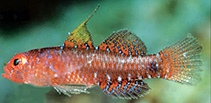
Dorsal spines (total): 7-7; Dorsal soft rays (total): 8-8; Anal spines: 1-1; Anal soft rays: 8-8. This species is distinguished from its congeners by the following set of characters: cephalic sensory-canal pore system only lacking an IT pore (Pattern 2); dorsal/anal fin-ray formula of 8/8; with one or more pectoral-fin rays branched; the fifth pelvic-fin ray present and 7-12% of fourth; deep body (23-32% SL); caudal peduncle deep (14-17% SL). Colouration: a rounded internal dark spot over the preural centrum, with 6 postanal bars, pectoral-fin base with scattered melanophores, and the distal 2/3 of first dorsal fin yellow with a black margin (Ref. 122934). |
| Biology: |
Specimens were collected or observed across a depth range of 8–30 m and were found under large pieces of coral rubble long a gentle slope on an inner patch reef. These were never observed in the open, but only found under coral rubble and living within the interstices of the reef (Ref. 122934). |
| IUCN Red List Status: |
Data deficient (DD); Date assessed: 31 May 2023 Ref. (130435)
|
| Threat to humans: |
harmless |
Source and more info: www.fishbase.org. For personal, classroom, and other internal use only. Not for publication.