|
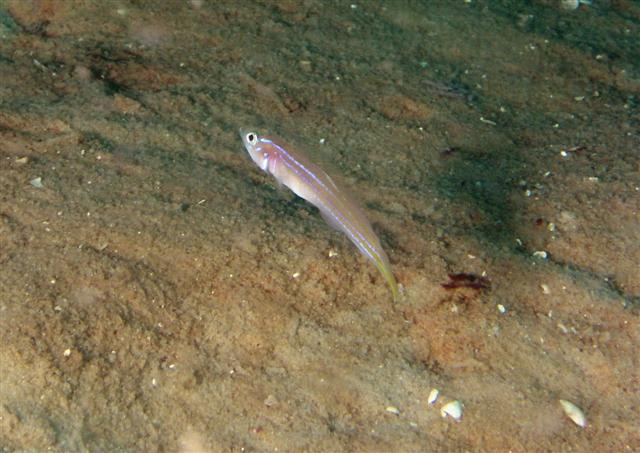
Microgobius carri Fowler, 1945 Seminole goby |
|
|
photo by
Cox, C.D. |
| Family: | Gobiidae (Gobies), subfamily: Gobiinae | |||
| Max. size: | 10 cm SL (male/unsexed) | |||
| Environment: | reef-associated; marine; depth range 0 - 36 m | |||
| Distribution: | Western Atlantic: North Carolina, USA and eastern Gulf of Mexico to the Lesser Antilles. | |||
| Diagnosis: | Distinguished by the following characteristics: general body color is light grey-brown, typically have areas of very bright iridescent blue and/or yellow; body is laterally compressed; large, nearly vertical mouth; completely scaled body; first dorsal with VII spines; ventral fins are united (Ref. 92840). | |||
| Biology: | Burrows in bottom in open stretches of coarse sand. Often hovers over burrow. Also known to inhabit mangrove streams with very fine silt-mud substrate (Ref. 92840). | |||
| IUCN Red List Status: | Least Concern (LC); Date assessed: 01 March 2010 Ref. (130435) | |||
| Threat to humans: | harmless | |||