| Family: |
Xenocyprididae (East Asian minnows) |
| Max. size: |
18 cm SL (male/unsexed); max. reported age: 8 years |
| Environment: |
benthopelagic; freshwater, potamodromous |
| Distribution: |
Asia: Malay Peninsula, Chao Phraya and Mekong basins (Ref. 26580) and Maeklong basin (Ref. 26336). |
| Diagnosis: |
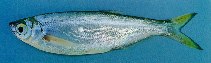
Has 33-42 gill rakers on the first gill arch (Ref. 12693); 56-64 lateral line scales; the lateral line usually discontinuous; the dorsal profile almost arched as the ventral profile (Ref. 27732). |
| Biology: |
Adults occur in shallow depths of large rivers (Ref. 12693). Found in slow flowing large rivers (Ref. 43281). They form schools; often harvested in large numbers throughout its range. Food consists of zooplankton and occasionally on insects. They migrate into flooded forests when water level is high and returns to the mainstream after the water level declines considerably (Ref. 12693). Spawning occurs at the onset of the flood season (May to July) and the eggs and larvae are swept downstream and out onto the flooded areas (Ref. 37770). Sometimes marketed fresh, but often used to make prahoc (Ref. 12693). |
| IUCN Red List Status: |
Least Concern (LC); Date assessed: 20 February 2011 Ref. (130435)
|
| Threat to humans: |
harmless |
Source and more info: www.fishbase.org. For personal, classroom, and other internal use only. Not for publication.