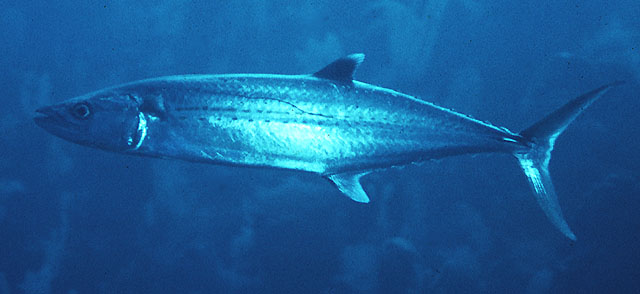
| Scombridae (Mackerels, tunas, bonitos), subfamily: Scombrinae |
| 183 cm TL (male/unsexed); max.weight: 7,760.0 g |
|
reef-associated; marine; depth range 1 - 20 m, oceanodromous |
| Western Atlantic: Massachusetts, USA to Brazil, including the Bahamas and West Indies. |
|
Dorsal spines (total): 16-18; Dorsal soft rays (total): 15-19; Anal spines: 0-0; Anal soft rays: 15-20; Vertebrae: 47-48. Interpelvic process small and bifid. Lateral line gently curving down toward caudal peduncle. Intestine with 2 folds and 3 limbs. Swim bladder absent. Body covered with small scales. Anterior third of first dorsal fin black. Pelvic fins relatively long. Sides silvery with one long mid-lateral stripe and with several rows of yellow-orange streaks of variable length and small yellow spots above and below the stripe. |
| Most abundant in clear waters around coral reefs, occasionally forming schools. Feeds on clupeoids (Harengula, Jenkinsia and Opisthonema) and atherinids (Allanetta [= Craterocephalus), squids and shrimps. Good food and game fish (Ref. 5521). Utilized fresh, smoked and frozen; consumed pan-fried, broiled and baked (Ref. 9987). Sometimes called the "Painted Mackerel" (Ref. 13442). |
|
Least Concern (LC); Date assessed: 10 November 2022 Ref. (130435)
|
| reports of ciguatera poisoning |
Source and more info: www.fishbase.org. For personal, classroom, and other internal use only. Not for publication.