Common names from other countries
分类 / 名称
俗名 | 同种异名 | Catalog of Fishes(属, 种) | ITIS | CoL | WoRMS | Cloffa
Teleostei >
Gadiformes (Cods) >
Merlucciidae (Merluccid hakes)
Etymology: Merluccius: Latin, mar, maris = the sea + Latin, lucius = pike (Ref. 45335).
Taxonomic Remarks
Reported as M. polylepis in Patagonian waters.
环境:氛围 / 气候带 / 深度上下限 / 分布范围
生态学
海洋 底中水层性; 海洋洄游的 (Ref. 51243); 深度上下限 28 - 1000 m (Ref. 58489). 亞熱帶的; 33°S - 59°S, 165°E - 66°W (Ref. 58452)
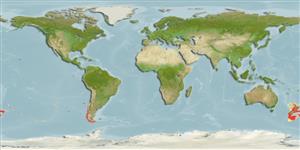
Circumglobal in the southern hemisphere (Ref. 7300). Two distinct groups. New Zealand population: Chatham Rise, Campbell Plateau and South Island northward to the East Cape. Patagonian population: Chiloé Island in the Pacific, southward around the southern tip of South America to the continental shelf to 59°S, and the slope north to 38°S in the Atlantic.
環球分佈於南半球.(參考文獻 7300) 二個明顯的群。 紐西蘭族群: Chatham 上升,坎貝爾高地與島南方部向北至東岬。 巴塔哥尼亞族群: 在太平洋的 Chiloe 島,往南南美洲到大陸棚的最南端的周圍對 59個 °S, 與斜坡在大西洋北至 38個 °S 。
首次成熟时的长度 / 大小 / 重量 / 年龄
成熟度: Lm 74.7, range 75 - 85 cm
Max length : 155 cm SL 雄鱼/尚未辨别雌雄; (Ref. 58452); common length : 80.0 cm TL 雄鱼/尚未辨别雌雄; (Ref. 1371); 最大年龄: 30 年 (Ref. 9072)
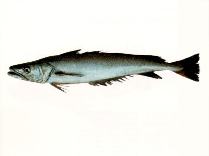
背棘 (总数) : 1; 背的软条 (总数) : 48 - 57; 臀棘: 0; 臀鳍软条: 40 - 46; 脊椎骨: 53 - 58. Body more slender than other hakes. Pectoral fins long and slender, stripe reaching anal fin in young individuals but not in fish over 50 cm in SL. Gill rakers short and thick with blunt tips. Color is steel gray on back grading to silvery white ventrally.
Body shape (shape guide): elongated; Cross section: oval.
身体更细长的超过其他的鳕鱼。 胸鳍长且细的, 斑纹在幼鱼中达到臀鳍但是不在超过 50 的鱼公分标准体长中。 鳃耙短与厚的与钝的顶端。 色彩是铁灰色的背面渐层色到腹面银白色的。
Found at depths between 415 and 1000 m in New Zealand waters, and 62 to 800 m in South American waters. The Patagonian population feeds on southern blue whiting, whiptail, nototheniids and squids. The New Zealand population feeds mainly on fishes (especially gadoids), squids, euphausiids and benthic organisms. Adults probably migrate southward during the southern summer for feeding and return to the north in winter for spawning (Ref. 1371). Spawning takes place from August to September on the western coast of South Island, from September to November in the northern part of the Campbell Plateau, and between November and January on Chatham Rise (Ref. 58452). Utilized as food fish and fishmeal.
在南美洲水域的新西兰水域 , 与 62 到 800 公尺中发现在深度介于 415 与 1000 公尺之间了。 南美南端地方的族群吃南方的蓝色牙鳕,鞭尾蜥蜴, nototheniids 与乌贼。 新西兰族群主要捕食鱼 (尤其雪科) ,乌贼,磷虾与底栖的生物。 成鱼在南方的夏天期间对于进食可能移动南方而且回到向北冬天时进行产卵。 作为食用鱼了与鱼粉。
生命周期和交配行为
成熟度 | 繁殖 | 产卵场 | 卵 | 孕卵数 | 仔鱼
環球分佈於南半球.(參考文獻 7300) 二個明顯的群。 紐西蘭族群: Chatham 上升,坎貝爾高地與島南方部向北至東岬。 巴塔哥尼亞族群: 在太平洋的 Chiloe 島,往南南美洲到大陸棚的最南端的周圍對 59個 °S, 與斜坡在大西洋北至 38個 °S 。
Cohen, D.M., T. Inada, T. Iwamoto and N. Scialabba, 1990. FAO species catalogue. Vol. 10. Gadiform fishes of the world (Order Gadiformes). An annotated and illustrated catalogue of cods, hakes, grenadiers and other gadiform fishes known to date. FAO Fish. Synop. 125(10). Rome: FAO. 442 p. (Ref. 1371)
世界自然保护联盟红皮书 (Ref. 130435: Version 2025-2 (Global))
人类利用
渔业: 高经济性
工具
特别资料
下载 XML
网络资源
基于模型的估算
首选温度 (参考文献
123201): 6.2 - 13.3, mean 8.6 °C (based on 112 cells).
系统发育多样性指数 (参考文献
82804): PD
50 = 0.5000 [Uniqueness, from 0.5 = low to 2.0 = high].
Bayesian length-weight: a=0.00398 (0.00331 - 0.00479), b=3.10 (3.05 - 3.15), in cm total length, based on LWR estimates for this species (Ref.
93245).
营养阶层 (参考文献
69278): 4.3 ±0.74 se; based on food items.
Generation time: 5.7 (4.2 - 10.7) years. Estimated as median ln(3)/K based on 15
growth studies.
回复力 (参考文献
120179): 低的, 最小族群倍增时间4.5 - 14 年 (K=0.07-0.19; tm=6-10; tmax=30).
Prior r = 0.24, 95% CL = 0.16 - 0.35, Based on 4 full stock assessments.
渔业脆弱性 (Ref.
59153): High vulnerability (56 of 100).
🛈
气候脆弱性 (Ref.
125649): High vulnerability (61 of 100).
🛈
营养素 (Ref.
124155): Calcium = 14.6 [5.9, 47.3] mg/100g; Iron = 0.536 [0.198, 1.332] mg/100g; Protein = 17.9 [16.7, 19.0] %; Omega3 = 0.148 [0.083, 0.263] g/100g; Selenium = 84.2 [34.5, 207.6] μg/100g; VitaminA = 11.5 [3.1, 40.8] μg/100g; Zinc = 0.314 [0.198, 0.493] mg/100g (wet weight); based on
nutrient studies.