This website uses cookies to enhance your browsing experience and ensure the functionality of our site. For more detailed information about the types of cookies we use and how we protect your privacy, please visit our Privacy Information page.
×
Cookie Settings
This website uses different types of cookies to enhance your experience. Please select your preferences below:
Teleostei (teleosts) > Carangiformes (Jacks) > Carangidae (Jacks and pompanos) > Caranginae
Etymology: Selaroides:A Malay vernacular name, ikan selar + Greek, suffix, oides = similar to. More on author: Cuvier.
Environment: milieu / climate zone / depth range / distribution range Ecology
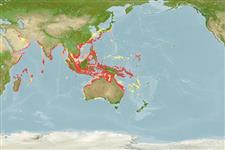
Indo-West Pacific: Persian Gulf to the Philippines, north to Japan, south to the Arafura Sea (Ref. 9819) and Australia (Ref. 3287).
Length at first maturity / Size / Weight / Age
Maturity: Lm11.9, range 10 - ? cm Max length : 22.0 cm TL male/unsexed; (Ref. 28620); common length : 15.0 cm TL male/unsexed; (Ref. 9137); max. published weight: 625.00 g (Ref. 4883)
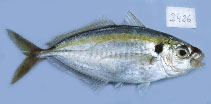
Adults occur in inshore waters of the continental shelf (Ref. 7300). They form large demersal schools over soft bottom habitats at depths shallower than 50 m. Sometimes they ascend into freshwater reaches like the freshwater tidal zone in the Mekong delta (Ref. 12693). Ostracods, gastropods and euphausiids are common prey but small fish are also taken.
Paxton, J.R., D.F. Hoese, G.R. Allen and J.E. Hanley, 1989. Pisces. Petromyzontidae to Carangidae. Zoological Catalogue of Australia, Vol. 7. Australian Government Publishing Service, Canberra, 665 p. (Ref. 7300)
IUCN Red List Status (Ref. 130435: Version 2025-2)