Galeocerdo cuvier, Tiger shark : fisheries, gamefish

You can sponsor this page

Galeocerdo cuvier (Péron & Lesueur, 1822)

Tiger shark
Add your observation in Fish Watcher
Native range | All suitable habitat | Point map | Year 2050
This map was computer-generated and has not yet been reviewed.
Galeocerdo cuvier   AquaMaps   Data sources: GBIF OBIS
Upload your photos and videos
ຮູບ | Videos | Stamps, coins, misc. | Google image


Spain country information

Common names: Alecrín, Amarillo, Tiburón tigre
Occurrence: introduced
Salinity: marine
Abundance: | Ref:
Importance: | Ref:
Aquaculture: | Ref:
Regulations: | Ref:
Uses: no uses
Comments: Recorded 1st in the Mediterranean in Malaga in 1994. Entered the Mediterranean via Gibraltar. One of the two substantiated records in the Mediterranean (Ref. 43448).
National Checklist:
Country Information: https://www.cia.gov/library/publications/resources/the-world-factbook/geos/sp.html
National Fisheries Authority:
Occurrences: Occurrences Point map
Main Ref: Golani, D., L. Orsi Relini, E. Massutí and J.-P. Quignard, 2002
National Database: ICTIMED

Common names from other countries

Classification / Names ຊື່ສາມັນ | ຄຳສັບຄ້າຍຄືກັນ | Catalog of Fishes(ຕະກຸນ, ຊະນິດ) | ITIS | CoL | WoRMS | Cloffa

ກຸ່ມປາກະດູກອ່ອນ (ເຊັ່ນ: ປາສະຫລາມ, ປາຜາໄລ) (sharks and rays) > Carcharhiniformes (Ground sharks) > Galeocerdonidae (Tiger sharks)
Etymology: Galeocerdo: galeos, a small shark or dogfish according to Aristotle and others (but perhaps used here as a generic term for shark); kerdo, Greek for fox, allusion not explained, perhaps referring to a cunning ability to steal bait from the line (see Alopias, Alopiidae) (See ETYFish)cuvier: Patronym not identified but almost certainly in honor of French naturalist Georges Cuvier (1769-1832), then most famous for his Le Règne Animal (1816), a survey of the animal kingdom based on comparative anatomy [presumably a noun in apposition, without the patronymic “i”] (See ETYFish).
Eponymy: Georges Léopold Chrétien Frédéric Dagobert Baron Cuvier (1769–1832), better known by his pen name Georges Cuvier, was a French naturalist and one of the scientific giants of his age. [...] (Ref. 128868), visit book page.
More on authors: Péron & Lesueur.

Issue
Same spelling in Ref. 3814.

Environment: milieu / climate zone / ລະດັບຄວາມເລິກ / distribution range ນິເວດວິທະຍາ

ສັດທະເລ; ນ້ຳກ່ອຍ ກ່ຽວກັບ (ຢູ່)ເທິງຊັ້ນພື້ນດິນໃນທະເລເປີດ; ປາທີ່ມີການເຄື່ອນຍ້າຍໃນສະເພາະມາະຫາສະມຸດ (Ref. 51243); ລະດັບຄວາມເລິກ 0 - 800 m (Ref. 96339), usually 0 - 140 m (Ref. 26938). Subtropical; 62°N - 44°S, 180°W - 180°E

ການແຜ່ກະຈາຍ ປະເທດ | ເຂດ FAO | ລະບົບນິເວດ | ການປະກົດຕົວ | ຈຸດໃດໜຶ່ງທີ່ສະແດງອອກໃນແຜນທີ່ (ພ້ອມທັງສະແດງຂໍ້ມູນເພີ້ນເຕີມ) | ການແນະນຳ | Faunafri

Circumglobal in tropical and temperate seas. Western Atlantic: Massachusetts, USA to Uruguay, including Gulf of Mexico and the Caribbean. Eastern Atlantic: Iceland to Angola. Indo-Pacific: Persian Gulf (Ref. 68964), Red Sea and East Africa to Hawaii and Tahiti, north to southern Japan, south to New Zealand. Eastern Pacific: southern California, USA to Peru, including the Revillagigedo, Cocos, and Galapagos islands. Highly migratory species.

Length at first maturity / ຂະໜາດ / ນ້ຳໜັກ / Age

ການຈະເລີນເຕັມໄວ: Lm 300.0, range 210 - 350 cm
Max length : 750 cm TL ຕົວຜູ້/ບໍ່ມີເພດ; (Ref. 58784); common length : 500 cm TL ຕົວຜູ້/ບໍ່ມີເພດ; (Ref. 2683); ນ້ຳໜັກສູງສຸດທີ່ເຄຍຈັດພີມມາ: 807.4 kg (Ref. 4699); ອາຍຸສູງສຸດທີ່ເຄຍລາຍງານມາ: 50 ປີ (Ref. 4827)

Short description ຕົວທີ່ໃຊ້ໃນການຈຳແນກຊະນິດ | ສະລີລະວິທະຍາ | ການວັດແທກຮູບຮ່າງລັກສະນະພາຍນອກຂອງດິນ,ສັດ,ປາ…

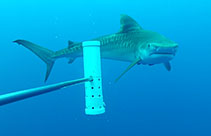
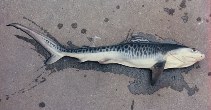
ຄີ (ໜາມ)ແຂງຢູ່ຫຼັງປາ (ທັງໝົດ) : 0; ຄີ(ໜາມ) ແຂງຢູ່ຄີກົ້ນປາ ກຸ່ມປາກະດູກແຂງ ຄວາມຖີ່ຂອງກຸ່ມຖ່າຍທອດພັນ ປາທີ່ມີການເຄື່ອນຍ້າຍຈາກທະເລໄປຫານ້ຳຈືດ ແລະນ້ຳຈືດຫາທະເລ ປາທີ່ມີການເຄື່ອນຍ້າຍຈາກທະເລແລະໄປໄຂ່ຢູ່ນ້ຳຈືດ ຄີກົ້ນຂອງປາ ສັດທີ່ມີກະດູກສັນຫັຼງ ການຖ່າຍທອດທາງກຳມະພັນຈາກພໍ່ແມ່ຫາລູກ: 0. This species is a huge, vertical tiger-striped shark with a very short or broad, bluntly rounded snout (its length much less than width of mouth), long upper labial furrows (about as long as snout, reaching front of eyes), a big mouth with large, saw-edged, cockscomb-shaped teeth (coarsely serrated with outer edges deeply notched and tips directed obliquely outward); spiracles small, slit-like, but easily visible, caudal keels low. Colour of back dark grey or greyish brown with vertical dark grey to black bars and rectangular spots often forming bars on sides and fins, but fading with growth (Ref. 5578, 9997).
Body shape (shape guide): fusiform / normal; Cross section: angular.

ຊີວະສາດ     ຄຳແປສັບ (ຕ.ຢ. epibenthic)

Usually found near surface to depths of 140 m (Ref. 26938); in Tahiti from 0-350 m (Ref. 89972). Occurs on or adjacent to continental and insular shelves, frequenting river estuaries, off wharves and jetties in harbors, and in coral atolls and lagoons (Ref. 244). Bottom-associated, sometimes pelagic (Ref. 58302). Also off oceanic islands far from other islands and continental land masses (Ref. 244). Makes excursions in the open ocean, but is not a truly oceanic species (Ref. 244). Nocturnal feeder on other sharks, rays, bony fishes, marine mammals, tortoises, seabirds, sea snakes, squids, gastropods, crustaceans, detritus (Ref. 9997), also including toxic or armored fish species such as Lactoria cornuta or Diodon hystrix, porpoises, whales, sea turtles, cephalopods, domestic animals and humans (Ref. 37816). It also feeds on carrion and garbage, including cans, pieces of metal and burlap bags (Ref. 26938). Second only to Carcharodon carcharias in recorded attacks on humans with at least 27 documented attacks sourced to it . One specimen, reportedly taken off Indo-China, weighed 3,110 kg and measured 740 cm (Ref. 9987). May be kept in an aquaria, but does not last for more than a few months (Ref. 244). Ovoviviparous (Ref. 50449). Up to 80 young of 51 to 104 cm are born per litter (Ref. 1602). Valued for its meat, fins, hide and liver oil (Ref. 9997) and also for its jaws and cartilage (Ref. 58048). Often used for fishmeal (Ref. 9997). Utilized fresh, dried-salted, smoked and frozen (Ref. 9987). Species from the Persian Gulf and Oman Sea has a max size of 750 cm TL (Ref. 47613).

Life cycle and mating behavior ການຈະເລີນເຕັມໄວ | ການສືບພັນ | ການວາງໄຂ່ | ໄຂ່ | ຄວາມດົກຂອງໄຂ່ປາ | ຕົວອ່ອນ

Ovoviviparous (Ref. 4805, 6871) with 10-82 in a litter (Ref. 26346). Mating takes place even before gravid females have given birth (Ref. 244). Distinct pairing with embrace (Ref. 205). Gestation period: 13-16 months. Size at birth between 51 (Ref. 244) and 104 (Ref. 9997) cm TL; born at about 51-76 cm TL (Ref. 58048).

Main reference Upload your references | ເອກະສານອ້າງອີງ | ຜູ້ປະສານງານ | ຜູ້ຮ່ວມມື

Compagno, L.J.V., 1984. FAO Species Catalogue. Vol. 4. Sharks of the world. An annotated and illustrated catalogue of shark species known to date. Part 2 - Carcharhiniformes. FAO Fish. Synop. 125(4/2):251-655. Rome: FAO. (Ref. 244)

IUCN Red List Status (Ref. 130435: Version 2025-1)

  Near Threatened (NT) (A2bd+3d); Date assessed: 10 August 2018

CITES

Not Evaluated

CMS (Ref. 116361)

Not Evaluated

Threat to humans

  Traumatogenic (Ref. 244)


Human uses

ການປະມົງ: ເປັນສີນຄ້າ; ຊະນິດປາທີ່ຖືກນຳໃຊ້ເຂົ້າໃນການຫາເພື່ອເປັນເກມກິລາ: ແມ່ນ
FAO - ການປະມົງ: landings; Publication: search | FishSource | ທະເລອ້ອມຂ້າງພວກເຮົາ

ຂໍ້ມູນຕື່ມອີກ

ນິເວດວິທະຍາເຂດຮ້ອນ
Food items (preys)
ອົງປະກອບຂອງອາຫານ
ການບໍລິໂພກອາຫານ
Food rations
ຜູ້ລ້າ
ນິເວດວິທະຍາ
ນິເວດວິທະຍາ
Home ranges
Population dynamics
ຕົວວັດແທກການເຕີບໃຫຍ່
Max. ages / sizes
Length-weight rel.
Length-length rel.
Length-frequencies
Mass conversion
ການທົດແທນທີ່
ຄວາມອຸດົມສົມບູນ
Life cycle
ການສືບພັນ
ການຈະເລີນເຕັມໄວ
Maturity/Gills rel.
ຄວາມດົກຂອງໄຂ່ປາ
ການວາງໄຂ່
Spawning aggregations
ໄຂ່
Egg development
ຕົວອ່ອນ
ການປ່ຽນແປງຂອງຕົວອ່ອນ
Anatomy
ເນື້ອທີ່ເຫືອກ
Brain
Otolith
Physiology
Body composition
Nutrients
ການບໍລິໂພກອົກຊີເຈນ
ປະເພດການລອຍ
ຄວາມໄວໃນການລອຍ
Visual pigments
Fish sound
Diseases & Parasites
Toxicity (LC50s)
ກຳມະພັນ
Genome
ກຳມະພັນ
Heterozygosity
ການຖ່າຍທອດທາງກຳມະພັນຈາກພໍ່ແມ່ຫາລູກ

ເຄື່ອງມື

Special reports

Download XML

ແຫຼ່ງອີນເຕີເນັດ

Estimates based on models

Preferred temperature (ເອກະສານອ້າງອີງ 123201): 15.8 - 28.9, mean 26.4 °C (based on 6872 cells).
Phylogenetic diversity index (ເອກະສານອ້າງອີງ 82804):  PD50 = 1.5000   [Uniqueness, from 0.5 = low to 2.0 = high].
Bayesian length-weight: a=0.00724 (0.00281 - 0.01869), b=3.09 (2.88 - 3.30), in cm total length, based on LWR estimates for this (Sub)family-body shape (Ref. 93245).
ຊັ້ນເຂດຮ້ອນ (ເອກະສານອ້າງອີງ 69278):  4.5   ±0.0 se; based on diet studies.
Generation time: 10.3 ( na - na) years. Estimated as median ln(3)/K based on 2 growth studies.
ຄວາມຢືດຢຸ່ນ (ເອກະສານອ້າງອີງ 120179):  ຕຳ່, ປະຊາກອນຕຳ່ສຸດທີ່ໃຊ້ເວລາສອງເທົ່າ 4.5 - 14 ປີ (tm=4-11; tmax=50; K=0.18-0.6; Fec=10).
Prior r = 0.27, 95% CL = 0.18 - 0.41, Based on 1 data-limited stock assessment.
Fishing Vulnerability (Ref. 59153):  High vulnerability (64 of 100). 🛈
Climate Vulnerability (Ref. 125649):  High vulnerability (57 of 100). 🛈
Price category (Ref. 80766):   Medium.
Nutrients (Ref. 124155):  Calcium = 4.57 [0.66, 26.59] mg/100g; Iron = 0.455 [0.113, 1.474] mg/100g; Protein = 21.6 [19.3, 23.7] %; Omega3 = 0.287 [0.118, 0.709] g/100g; Selenium = 52.8 [14.6, 163.1] μg/100g; VitaminA = 4.47 [1.34, 14.90] μg/100g; Zinc = 0.278 [0.132, 0.539] mg/100g (wet weight);