Common names from other countries
البيئة: الوسط / المنطقة المناخية / نطاق العمق / نطاق التوزيع
البيئة
; المياه العذبة قاعية التغذية و المعيشة; pH range: 6.0 - 8.3; dH range: 2 - 3; سمكة نهرية (Ref. 51243); نطاق العمق 4 - ? m (Ref. 9987). Tropical; 23°C - 28°C (Ref. 1672); 20°N - 22°S
Asia: Mekong basin in Laos, Thailand, Cambodia and Vietnam; also Chao Phraya basin (Ref. 43281). Introduced elsewhere and at least one country reports adverse ecological impact after introduction (Ref. 1739).
الحجم / وزن / العمر
النضج: Lm ? range ? - ? cm
Max length : 25.0 cm TL ذكر/ مختلط الجنس; (Ref. 6028); common length : 15.0 cm TL ذكر/ مختلط الجنس; (Ref. 2686); أعلا وزن تم نشرة: 500.00 g (Ref. 6028)
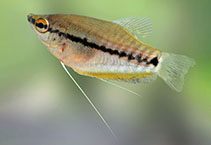
الأشواك الظهرية (المجموع) : 7 - 8; الأشعة الظهرية الناعمة (المجموع) : 10 - 11; شوكة شرجية: 9 - 12; أشعه شرجية لينه: 33 - 38. Dorsal fin with short spines and long soft rays. Caudal fin slightly emarginate. First soft ray of pelvic fins prolonged into a tentacle extending posteriorly to hind margin of caudal fin. Body with numerous dark oblique cross bands which are not always distinct; presence of irregular black stripe from eye to middle of caudal fin base (Ref. 43281).
Body shape (shape guide): short and / or deep; Cross section: compressed.
Obligate air-breathing (Ref. 126274); Found in shallow sluggish or standing-water habitats with a lot of aquatic vegetation. Occurs in flooded forests of the lower Mekong and gradually moves back to rivers and Great Lake as floodwaters recede (Ref. 12693, 57235). Generally feeds on aquatic plants. Can breathe air directly, as well as absorb oxygen from water through its gills (Ref. 9987). The flesh is of good quality; may be grilled or used for fish soup. In Thailand there is a trade of dried pla salid for the benefit of people in areas where it is not caught (Ref 2686). Cultured both for food and for export as aquarium fish (Ref. 9987). Marketed fresh (Ref. 12693). Highly economic species; both by capture and culture includes in the peat areas (Ref. 57235).
دورة الحياة وسلوك التزاوج
النضج | التكاثر | وضع البيض | بيض | الخصوبة | اليرقات
Male creates a bubble-nest at the surface. After fertilization, male, with the use of its mouth, collects the eggs and pushes them up into the bubble-nest (Ref. 6459). Male guards the eggs until hatching (Ref. 9987); both parents care for the young (Ref. 6028).
Rainboth, W.J., 1996. Fishes of the Cambodian Mekong. FAO species identification field guide for fishery purposes. FAO, Rome, 265 p. (Ref. 12693)
حالة القائمة الحمراء للاتحاد الدولي لحفظ الطبيعة والموارد الطبيعية (Ref. 130435: Version 2025-2 (Global))
خطر للأنسان
Potential pest (Ref. 6095)
استخدامات بشرية
مصائد: تجاري; الأستزراع المائي: تجاري
أدوات
تقارير خاصة
تنزيل XML
مصادر علي الأنترنت
تقديرات تستند إلى النماذج
مؤشر التنوع الشُعبي الوراثي (مرجع
82804): PD
50 = 0.5156 [Uniqueness, from 0.5 = low to 2.0 = high].
Bayesian length-weight: a=0.01318 (0.00795 - 0.02185), b=3.06 (2.92 - 3.20), in cm total length, based on LWR estimates for this species & (Sub)family-body (Ref.
93245).
مستوى غذائي (مرجع
69278): 2.8 ±0.1 se; based on diet studies.
المرونه (مرجع
120179): وسيط, الحد الزمني الأدني لتضاعف عدد أفراد المجتمع 1.4-4.4 سنة (Fec=1,000-10,000 eggs (Ref.
6459)).
ضعف الصيد (Ref.
59153): Low vulnerability (15 of 100).
🛈
المغذيات (Ref.
124155): Calcium = 54.3 [23.6, 246.2] mg/100g; Iron = 1.14 [0.50, 2.51] mg/100g; Protein = 18.4 [16.7, 19.8] %; Omega3 = 0.233 [0.083, 0.638] g/100g; Selenium = 38.7 [14.9, 93.9] μg/100g; VitaminA = 27.7 [7.1, 118.2] μg/100g; Zinc = 2.55 [1.22, 5.01] mg/100g (wet weight); based on
nutrient studies.