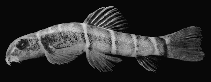
Barbucca diabolica, Fire-eyed loach

You can sponsor this page

Barbucca diabolica Roberts, 1989

Fire-eyed loach
ارفع صور و مقاطع فيديو
صور | صور قوقل
Image of Barbucca diabolica (Fire-eyed loach)
Barbucca diabolica
Female صورة بواسطة Roberts, T.R.

التصنيف / Names الأسماء الشائعة | مرادفات | Catalog of Fishes(جنس, الانواع) | ITIS | CoL | WoRMS | Cloffa

> Cypriniformes (Carps) > Barbuccidae (Fire-eyed loaches)
Etymology: Barbucca: Latin barba,-ae = beard + Latin, bucca = mouth (Ref. 45335)diabolica: The name diabolica refers to the glowing red eyes and spiked tail characteristics of the species.
More on author: Roberts.

Environment: milieu / climate zone / نطاق العمق / distribution range البيئة

; المياه العذبة القاع. Tropical

التوزيع دول | مناطق الفاو | النظام البيئي | الظهور | نقطة علي الخريطة | مقدمة | Faunafri

Asia: Malay peninsula (Johore) and western Borneo (Kapuas).

الحجم / وزن / العمر

النضج: Lm ?  range ? - ? cm
Max length : 2.3 cm SL ذكر/ مختلط الجنس; (Ref. 7050)

أحياء     المصطلحات (على سبيل المثال epibenthic)

Inhabits small, forested streams and backwaters. Feed on small invertebrates, algae and detritus from the bottom.

Life cycle and mating behavior النضج | التكاثر | وضع البيض | بيض | الخصوبة | Larvae

المرجع الرئيسي Upload your references | مراجع | المنظم | المتعاونين

Roberts, T.R., 1989. The freshwater fishes of Western Borneo (Kalimantan Barat, Indonesia). Mem. Calif. Acad. Sci. 14:210 p. (Ref. 2091)

IUCN Red List Status (Ref. 130435: Version 2025-1)

  Least Concern (LC) ; Date assessed: 01 January 2019

CITES

Not Evaluated

CMS (Ref. 116361)

Not Evaluated

خطر للأنسان

  Harmless


استخدامات بشرية

FAO - Publication: search | FishSource |

مزيد من المعلومات

علم البيئة الغذائية
Food items (preys)
التركيبة الغذائية
استهلاك الأغذية
Food rations
مفتريسات
البيئة
البيئة
Home ranges
Population dynamics
معاملات النمو
Max. ages / sizes
Length-weight rel.
Length-length rel.
الطول- الترددات
Mass conversion
توظيف
الوفرة
Life cycle
التكاثر
النضج
Maturity/Gills rel.
الخصوبة
وضع البيض
Spawning aggregations
بيض
تطور البيضة
Larvae
حركة انتقال اليرقات
التوزيع
دول
مناطق الفاو
النظام البيئي
الظهور
مقدمة
BRUVS - Videos
Anatomy
منطقة الخياشيم
Brain
Otolith
Physiology
Body composition
Nutrients
استهلاك الأوكسجين
نوع السباحة
سرعة السباحة
Visual pigments
Fish sound
Diseases & Parasites
Toxicity (LC50s)
جيني
الوراثة
جيني
Heterozygosity
التوريث
Human related
Aquaculture systems
ملامح تربية الأحياء المائية
سلالات
Ciguatera cases
Stamps, coins, misc.
مراجع
مراجع

أدوات

تقارير خاصة

Download XML

مصادر علي الأنترنت

AFORO (otoliths) | Aquatic Commons | BHL | Cloffa | Websites from users | البحث في مراقبي الأسماك | CISTI | Catalog of Fishes: جنس, الانواع | DiscoverLife | ECOTOX | FAO - Publication: search | Faunafri | Fishipedia | Fishtrace | GloBI | Google Books | Google Scholar | Google | IGFA World Record | OneZoom | Open Tree of Life | Otolith Atlas of Taiwan Fishes | PubMed | Reef Life Survey | Socotra Atlas | TreeBase | شجرة الحياة | Wikipedia: ذهب, بحث | World Records Freshwater Fishing | Zoobank | سجلات علم الحيوانات

Estimates based on models

Phylogenetic diversity index (مرجع 82804):  PD50 = 1.0000   [Uniqueness, from 0.5 = low to 2.0 = high].
Bayesian length-weight: a=0.00389 (0.00180 - 0.00842), b=3.12 (2.94 - 3.30), in cm total length, based on all LWR estimates for this body shape (Ref. 93245).
مستوى غذائي (مرجع 69278):  2.5   ±0.19 se; based on food items.
Fishing Vulnerability (Ref. 59153):  Low vulnerability (10 of 100). 🛈