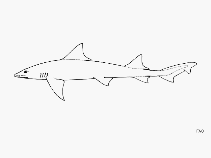
Elasmobranchi (squali e razze) (sharks and rays) >
Carcharhiniformes (Ground sharks) >
Triakidae (Houndsharks) > Triakinae
Etymology: Triakis: tri-, from tres (L.), three; akis (Gr.), point, referring to each tooth consisting of one large central cusp flanked on by both sides by a small cusplet (See ETYFish); acutipinna: acutus (L.), sharp or pointed; pinna (L.), fin, referring to its sharp-tipped fins (See ETYFish).
Environment: milieu / climate zone / distribuzione batimetrica / distribution range
Ecologia
marino demersale. Tropical; 0°S - 4°S
Eastern Pacific: known only from Ecuador.
Size / Peso / Age
Maturità: Lm ? range ? - ? cm
Max length : 90.0 cm TL maschio/sesso non determinato; (Ref. 244); 102.0 cm TL (female)
Known only from two specimens. Ovoviviparous (Ref. 50449).
Life cycle and mating behavior
Maturità | Riproduzione | Deposizione | Uova | Fecundity | Larve
Ovoviviparous, embryos feed solely on yolk (Ref. 50449).
Compagno, L.J.V., 1984. FAO Species Catalogue. Vol. 4. Sharks of the world. An annotated and illustrated catalogue of shark species known to date. Part 2 - Carcharhiniformes. FAO Fish. Synop. 125(4/2):251-655. Rome: FAO. (Ref. 244)
IUCN Red List Status (Ref. 130435: Version 2025-1)
Threat to humans
Harmless
Human uses
Pesca: di nessun interesse
Strumenti
Special reports
Download XML
Fonti Internet
Estimates based on models
Phylogenetic diversity index (Fonte Biblio.
82804): PD
50 = 0.5312 [Uniqueness, from 0.5 = low to 2.0 = high].
Bayesian length-weight: a=0.00245 (0.00114 - 0.00526), b=3.13 (2.95 - 3.31), in cm total length, based on LWR estimates for this (Sub)family-body shape (Ref.
93245).
Trophic level (Fonte Biblio.
69278): 3.7 ±0.2 se; based on size and trophs of closest relatives
Resilienza (Fonte Biblio.
120179): Basso, tempo minimo di raddoppiamento della popolazione 4.5 - 14 anni (Fec assumed to be <100).
Fishing Vulnerability (Ref.
59153): High vulnerability (61 of 100).
🛈