>
Kurtiformes (Nurseryfishes, cardinalfishes.) >
Apogonidae (Cardinalfishes) > Apogoninae
Etymology: Taeniamia: Name from feminine Latin noun 'taenia' meaning ribbon or band; and feminine Greek noun 'Amia' meaning a fish, often used with cardinalfishes genera. Here as Taeniamia referring to the vertical wide bars and near vertical to curved narrow bars as lines on most of the species in this genus.
Eponymy: Arthur Mills Lea (1868–1932) was an Australian entomologist with an enduring passion for beetles. [...] (Ref. 128868), visit book page.
More on author: Waite.
Environment: milieu / climate zone / ລະດັບຄວາມເລິກ / distribution range
ນິເວດວິທະຍາ
ສັດທະເລ ກ່ຽວກັນຫີນ; ລະດັບຄວາມເລິກ 1 - 15 m (Ref. 54391). Tropical
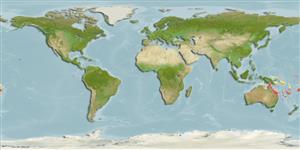
Western Pacific: New Caledonia, Norfolk Island and Australia.
ຂະໜາດ / ນ້ຳໜັກ / Age
ການຈະເລີນເຕັມໄວ: Lm ? range ? - ? cm
Max length : 9.0 cm TL ຕົວຜູ້/ບໍ່ມີເພດ; (Ref. 2334)
ຄີ (ໜາມ)ແຂງຢູ່ຫຼັງປາ (ທັງໝົດ) : 8; ຄີຫຼັງຂອງປາ (ຄີອ່ອນ) (ທັງໝົດ) : 9; ຄີ(ໜາມ) ແຂງຢູ່ຄີກົ້ນປາ
ກຸ່ມປາກະດູກແຂງ
ຄວາມຖີ່ຂອງກຸ່ມຖ່າຍທອດພັນ
ປາທີ່ມີການເຄື່ອນຍ້າຍຈາກທະເລໄປຫານ້ຳຈືດ ແລະນ້ຳຈືດຫາທະເລ
ປາທີ່ມີການເຄື່ອນຍ້າຍຈາກທະເລແລະໄປໄຂ່ຢູ່ນ້ຳຈືດ
ຄີກົ້ນຂອງປາ
ສັດທີ່ມີກະດູກສັນຫັຼງ
ການຖ່າຍທອດທາງກຳມະພັນຈາກພໍ່ແມ່ຫາລູກ: 2; ຄີກົ້ນຂອງປາ: 12 - 14. Diagnosis: Rays: dorsal VII + I,9; anal II,12-14; pectoral rays 14-15 (rarely 16). Gill rakers 5-7 + 16-19 (total 22-26). Lateral-line scales 25+2-3. Median predorsal scales 4 (rarely 3). Body depth 2.5-2.8 in SL; body width 2.05-2.8 in body depth; eye diameter 2.3-2.8 in head length; first dorsal spine 3.6 or more in length of second spine; second dorsal spine 2.9-4.4, and third dorsal spine 2.1-2.5 in head length; spine of second dorsal fin 2.25-2.8, and second anal spine 2.4-3.2 in head length; pelvic-fin length 4.4-5.0 in SL; caudal-peduncle depth 1.6-2.0in its length, and caudal-peduncle length 4.2-4.6 in SL; distance from insertion of pelvic spine to anal-fin origin 4.1-5.3 in SL. Posterior preopercular edge completely serrate or nearly so; ventral preopercular edge completely serrate; exposed posttemporal edge smooth. Scaly sheath along anal-fin base poorly developed or absent (Ref. 54391).
Body shape (shape guide): fusiform / normal.
Nocturnal species; occurs inshore (Ref. 7300); in shallow coastal and lagoon reefs, in groups among corals (Ref. 9710).
Life cycle and mating behavior
ການຈະເລີນເຕັມໄວ | ການສືບພັນ | ການວາງໄຂ່ | ໄຂ່ | ຄວາມດົກຂອງໄຂ່ປາ | ຕົວອ່ອນ
Are mouthbrooders (Ref. 240). Distinct pairing during courtship and spawning (Ref. 205).
Gon, O. and J.E. Randall, 2003. Revision of the Indo-Pacific cardinalfish genus Archamia (Perciformes: Apogonidae), with description of a new species. Indo-Pac. Fish. (35):49 p. (Ref. 54391)
IUCN Red List Status (Ref. 130435: Version 2025-1)
Threat to humans
Harmless
Human uses
ເຄື່ອງມື
Special reports
Download XML
ແຫຼ່ງອີນເຕີເນັດ
Estimates based on models
Preferred temperature (ເອກະສານອ້າງອີງ
123201): 23.5 - 28, mean 26.3 °C (based on 359 cells).
Phylogenetic diversity index (ເອກະສານອ້າງອີງ
82804): PD
50 = 0.5001 [Uniqueness, from 0.5 = low to 2.0 = high].
Bayesian length-weight: a=0.01318 (0.00717 - 0.02424), b=3.17 (3.01 - 3.33), in cm total length, based on LWR estimates for this species & (Sub)family-body (Ref.
93245).
ຊັ້ນເຂດຮ້ອນ (ເອກະສານອ້າງອີງ
69278): 3.5 ±0.53 se; based on food items.
ຄວາມຢືດຢຸ່ນ (ເອກະສານອ້າງອີງ
120179): ສູງ, ປະຊາກອນຕຳ່ສຸດທີ່ໃຊ້ເວລາສອງໜ້ອຍກວ່າ 15 ເດືອນ (Preliminary K or Fecundity.).
Fishing Vulnerability (Ref.
59153): Low vulnerability (10 of 100).
🛈
Nutrients (Ref.
124155): Calcium = 162 [97, 314] mg/100g; Iron = 1.12 [0.64, 1.83] mg/100g; Protein = 19 [18, 20] %; Omega3 = 0.157 [0.090, 0.278] g/100g; Selenium = 27.1 [13.4, 52.8] μg/100g; VitaminA = 88.5 [29.9, 262.2] μg/100g; Zinc = 2.25 [1.48, 3.24] mg/100g (wet weight);