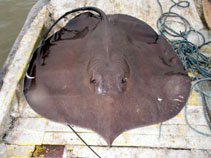
Classification / Names
ຊື່ສາມັນ | ຄຳສັບຄ້າຍຄືກັນ | Catalog of Fishes(ຕະກຸນ, ຊະນິດ) | ITIS | CoL | WoRMS | Cloffa
ກຸ່ມປາກະດູກອ່ອນ (ເຊັ່ນ: ປາສະຫລາມ, ປາຜາໄລ) (sharks and rays) >
Myliobatiformes (Stingrays) >
Dasyatidae (Stingrays) > Urogymninae
Etymology: Urogymnus: Greek, oura = tail + Greek, gymnos = naked (Ref. 45335).
More on author: Bleeker.
Environment: milieu / climate zone / ລະດັບຄວາມເລິກ / distribution range
ນິເວດວິທະຍາ
; ນ້ຳຈືດ; ນ້ຳກ່ອຍ ອາໄສຢູ່ໃກ້ໜ້າດິນໃຕ້ພື້ນທ້ອງນ້ຳ; ກຸ່ມຫຼືຊະນິດປາທີ່ມີການເຄື່ອນຍ້າຍພາຍໃນນ້ຳຈືດ (Ref. 51243). Tropical; 25°N - 20°S
Asia and Oceania: Mekong and Chao Phraya basins; also from eastern Borneo, New Guinea and northern Australia.
Length at first maturity / ຂະໜາດ / ນ້ຳໜັກ / Age
ການຈະເລີນເຕັມໄວ: Lm ?, range 110 - ? cm
Max length : 240 cm WD ຕົວຜູ້/ບໍ່ມີເພດ; (Ref. 27732); ນ້ຳໜັກສູງສຸດທີ່ເຄຍຈັດພີມມາ: 600.0 kg (Ref. 6871)
ຄີ (ໜາມ)ແຂງຢູ່ຫຼັງປາ (ທັງໝົດ) : 0. Absence of ventral and dorsal skin folds on the tail, and the broad greyish to blackish marginal band on the ventral surface of the disc. The dorsal surface of the disc is brown (Ref. 27732). Spiral valve with 21 turns; dorsal surface with uniform brown or grey coloration (Ref. 12693). Lacking caudal fin; with long whip-like tail (Ref. 43281).
Body shape (shape guide): other.
Inhabits sandy bottoms in estuaries and large rivers (Ref. 12693). Feeds on benthic invertebrates (Ref. 12693) and fishes (Ref. 32457). Ovoviviparous (Ref. 50449). Caught occasionally by demersal gillnet and longline fisheries operating in riverine and estuarine areas. Utilized for its meat and possibly its cartilage (Ref.58048). Marketed fresh, with large individuals being sold in cut pieces by the kilogram (Ref. 12693). Size reaches to about 500 cm TL. Threatened due to over harvesting and pollution (Ref. 58490).
Life cycle and mating behavior
ການຈະເລີນເຕັມໄວ | ການສືບພັນ | ການວາງໄຂ່ | ໄຂ່ | ຄວາມດົກຂອງໄຂ່ປາ | ຕົວອ່ອນ
Exhibit ovoviparity (aplacental viviparity), with embryos feeding initially on yolk, then receiving additional nourishment from the mother by indirect absorption of uterine fluid enriched with mucus, fat or protein through specialised structures (Ref. 50449). Distinct pairing with embrace (Ref. 205). Young are born at about 30 cm disc width (Ref. 6871).
Rainboth, W.J., 1996. Fishes of the Cambodian Mekong. FAO species identification field guide for fishery purposes. FAO, Rome, 265 p. (Ref. 12693)
IUCN Red List Status (Ref. 130435: Version 2025-1)
Threat to humans
Venomous
Human uses
ການປະມົງ: ທີ່ເປັນການຄ້າໜ້ອຍ; ການລ້ຽງສັດນ້ຳ: ການທົດລອງ; ຕູ້ປາ: ສາມາດເປັນໄປໄດ້
ເຄື່ອງມື
Special reports
Download XML
ແຫຼ່ງອີນເຕີເນັດ
Estimates based on models
Phylogenetic diversity index (ເອກະສານອ້າງອີງ
82804): PD
50 = 0.5156 [Uniqueness, from 0.5 = low to 2.0 = high].
Bayesian length-weight: a=0.01023 (0.00486 - 0.02155), b=3.06 (2.87 - 3.25), in cm total length, based on LWR estimates for this (Sub)family-body shape (Ref.
93245).
ຊັ້ນເຂດຮ້ອນ (ເອກະສານອ້າງອີງ
69278): 3.5 ±0.37 se; based on food items.
ຄວາມຢືດຢຸ່ນ (ເອກະສານອ້າງອີງ
120179): ຕຳ່ຫຼາຍ, ປະຊາກອນຕຳ່ສຸດທີ່ໃຊ້ເວລາສອງເທົ່າຫຼາຍກວ່າ 14 ປີ (Assuming Fec<10).
Fishing Vulnerability (Ref.
59153): Very high vulnerability (90 of 100).
🛈