This website uses cookies to enhance your browsing experience and ensure the functionality of our site. For more detailed information about the types of cookies we use and how we protect your privacy, please visit our Privacy Information page.
×
Cookie Settings
This website uses different types of cookies to enhance your experience. Please select your preferences below:
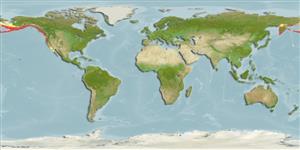
North Pacific: from Kuril Island to Bering Sea coasts of Russia and Alaska (Ref. 27436) to Cedros Island, northern Baja California, Mexico.
Length at first maturity / Size / Weight / Age
Maturity: Lm? range ? - ? cm Max length : 60.0 cm TL male/unsexed; (Ref. 56527); common length : 36.0 cm TL male/unsexed; (Ref. 56527); max. published weight: 2.0 kg (Ref. 56527); max. reported age: 27 years (Ref. 55701)
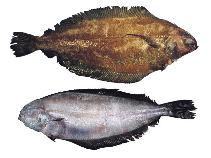
Dorsalspines (total): 0; Dorsalsoft rays (total): 87 - 110; Analspines: 0; Analsoft rays: 78 - 93; Vertebrae: 62 - 65. Dorsal origin above middle of upper eye. Posterior margin of caudal like a 'V'. Pectoral on eyed side greatly elongated. Body shape (shape guide): short and / or deep.
A slow-growing species found on sand or mud bottoms (Ref. 2850). Usually discarded by trawlers but sometimes processed into fertilizer (Ref. 27436). Flesh considered tasty (Ref. 27436). Utilized fresh and frozen; eaten steamed, fried, microwaved and baked (Ref. 9988).
Vinnikov, K.A., R.C. Thomson and T.A. Munroe, 2018. Revised classification of the righteye flounders (Teleostei: Pleuronectidae) based on multilocus phylogeny with complete taxon sampling. Molecular phylogenetics and evolution, 125:147-162. (Ref. 122998)
IUCN Red List Status (Ref. 130435: Version 2025-2)