


Mobula tarapacana (Philippi, 1892)
Sicklefin devil ray
مشاهدات خود را اضافه کنيد در Fish Watcher
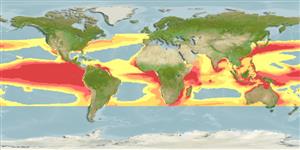
| Native range | All suitable habitat | Point map | Year 2050 |
|
| This map was computer-generated and has not yet been reviewed. |
| Mobula tarapacana AquaMaps Data sources: GBIF OBIS |
رده بندی / نامها اسامي عام | مترادف | Catalog of Fishes(جنس, گونه ها) | ITIS | CoL | WoRMS | Cloffa
(كوسه ها و سپرماهيان) (sharks and rays) > Myliobatiformes (Stingrays) > Mobulidae (Devilrays)
Etymology: tarapacana: Named for the Chilean province Tarapacà, where the type specimen was landed.
More on author: Philippi.
Etymology: tarapacana: Named for the Chilean province Tarapacà, where the type specimen was landed.
More on author: Philippi.
محیط زیست: محیط زیست / منطقه آب و هوایی / تغييرات عمق / محدوده توزیع بوم شناسي
دريايي وابسته به آب سنگ; اقیانوس رو (Ref. 51243); تغييرات عمق 0 - 1896 m (Ref. 117177), usually 0 - 20 m (Ref. 89972). Tropical; 50°N - 37°S, 180°W - 180°E (Ref. 114953)
پراكنش سرزمینها | مناطق سازمان خوار و بار جهاني (FAO) | اکوسیستمها | ظهور | نقشه نقطه ای | معرفي | Faunafri
Circumtropical, recorded from scattered localities. Western Atlantic: off Venezuela. Eastern Atlantic: Côte d'Ivoire and South Africa. Reported from Cape Verde (Ref. 34514). Indian Ocean: northwestern Red Sea and India. Western Pacific: Japan, Taiwan, and probably tropical Australia (Ref. 9911). Eastern Pacific: From Gulf of California to Chile (Ref. 130539).
طول در اولین بلوغ / اندازه / وزن / سن
بلوغ: Lm 264.8 range ? - ? cm
Max length : 328 cm WD جنس نر / بدون خواص جنسي; (Ref. 58048); 305.2 cm WD (female); common length : 250 cm WD جنس نر / بدون خواص جنسي; (Ref. 9256); بيشينه وزن گزارش شده: 350.0 kg (Ref. 50641)
Max length : 328 cm WD جنس نر / بدون خواص جنسي; (Ref. 58048); 305.2 cm WD (female); common length : 250 cm WD جنس نر / بدون خواص جنسي; (Ref. 9256); بيشينه وزن گزارش شده: 350.0 kg (Ref. 50641)
توصيف مختصر كليدهاي شناسايي | ريخت شناسي | ريخت ستجي بوسيله انداره گيري
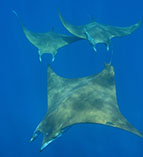
A large devil ray with a long head bearing short head fins; dorsal fin plain, and pectoral fins with strongly curved, swept-back tips; upper disc densely covered with small, pointed denticles and tail shorter than disc with no spine (Ref. 5578). Dark blue (Ref. 5578), olive-green to brownish above; ventral side white anteriorly, grey posteriorly, with an irregular but distinct line of demarcation (Ref. 11228). No caudal fin (Ref. 5578).
Body shape (shape guide): other.
Body shape (shape guide): other.
Mostly oceanic, but also in coastal waters. Solitary, sometimes forms groups (Ref. 12951). Feeds on small fishes (Ref. 5578) and planktonic crustaceans (Ref. 9911). Ovoviviparous (Ref. 50449). Litter number 1 (Ref. 12951). Sometimes found stranded in beaches in temperate areas (Ref. 9911). Data on female max. length from Ref. 9256. Commonly caught in tuna gillnet and in harpoon fisheries. Utilized for its gill filter plates (very high value), meat, cartilage and skin (Ref. 58048).
چرخه زندگی و رفتار جفتگیری بلوغ | تولید مثل | تخم ریزی | تخم ها | باروری | توزاد ( لارو)
Exhibit ovoviparity (aplacental viviparity), with embryos feeding initially on yolk, then receiving additional nourishment from the mother by indirect absorption of uterine fluid enriched with mucus, fat or protein through specialised structures (Ref. 50449).
مآخذ اصلی
مراجع خود را بارگذاری کنید | مراجع | هماهنگ كننده | همكاران
McEachran, J.D. and G. Notarbartolo di Sciara, 1995. Mobulidae. Mantas, diablos. p. 759-764. In W. Fischer, F. Krupp, W. Schneider, C. Sommer, K.E. Carpenter and V. Niem (eds.) Guia FAO para Identification de Especies para los Fines de la Pesca. Pacifico Centro-Oriental. 3 Vols. FAO, Rome. (Ref. 9256)
وضعيت در فهرست قرمز IUCN (Ref. 130435: Version 2025-2 (Global))
درمعرض خطر بحرانی (CR) (A2bd+3d); Date assessed: 18 June 2025
خطر برای انسان ها
Harmless
استفاده انسانی
ماهي گيري – شيلات: معاش ماهیگیری
FAO - Publication: search | FishSource |
اطلاعات بيشتر
پویایی جمعیت
پارامترهای رشد
حداکثر سن/اندازه
نسبت طول-وزن.
طول-طول نسبی.
نوسانات طولی
تبدیل انبوه
بازسازی
فراواني
پارامترهای رشد
حداکثر سن/اندازه
نسبت طول-وزن.
طول-طول نسبی.
نوسانات طولی
تبدیل انبوه
بازسازی
فراواني
فیزیولوژی
ترکیب بدن
مواد مغذی
مصرف اکسیژن
نوع شنا
سرعت شنا
رنگدانههای بصری
صدای ماهی
بیماریها و انگلها
سمیت (LC50s)
ترکیب بدن
مواد مغذی
مصرف اکسیژن
نوع شنا
سرعت شنا
رنگدانههای بصری
صدای ماهی
بیماریها و انگلها
سمیت (LC50s)
مرتبط با انسان
سیستمهای آبزیپروری
نمايه هاي آبزي پروري
نژادها
موارد سیگواترا
تمبر، سکه، متفرقه.
سیستمهای آبزیپروری
نمايه هاي آبزي پروري
نژادها
موارد سیگواترا
تمبر، سکه، متفرقه.
ابزارها
آزمون زیستشناسی | کتاب الکترونیکی | راهنماي صحرايي | كليدهاي شناسايي | امكان نرم افزاري بسامد طولي | ابزار تاريخ زيستي | نقشه نقطه ای |
گرفتن-MSY |
گزارش های ويژه
راجع به نگهداری آکواريم ملاحظه کنيد | برگه اطلاعات و مشخصات گونه ها را ملاحظه کنيد | برگه اطلاعات و مشخصات آبزی پروری را ببينيد
بارگيری XML
منابع اينترنتي
AFORO (otoliths) | Aquatic Commons | BHL | Cloffa | Websites from users | فيش واچر را ببينيد | CISTI | Catalog of Fishes: جنس, گونه ها | DiscoverLife | ECOTOX | FAO - Publication: search | Faunafri | Fishipedia | Fishtrace | GloBI | Google Books | Google Scholar | Google | IGFA World Record | پايگاه هاي داده ها | OneZoom | Open Tree of Life | Otolith Atlas of Taiwan Fishes | PubMed | Reef Life Survey | Socotra Atlas | TreeBase | Tree of Life | Wikipedia: برو, جستجو | World Records Freshwater Fishing | سوابق جانورشناسی
تخمینها بر اساس مدلها
دمای ترجیحی (مرجع 123201): 19.4 - 28.9, mean 27.1 °C (based on 1824 cells).
شاخص تنوع فیلوژنتیکی (مرجع 82804): PD50 = 0.5020 [Uniqueness, from 0.5 = low to 2.0 = high].
Bayesian length-weight: a=0.01000 (0.00244 - 0.04107), b=3.04 (2.81 - 3.27), in cm total length, based on all LWR estimates for this body shape (Ref. 93245).
سطح تروفیک (مرجع 69278): 3.8 ±0.59 se; based on food items.
جهندگی (مرجع 120179): خیلی آهسته, كمينه زمان لازم براي دو برابر شدن جمعيت بيش از 14 سال (Fec=1).