


Oreochromis andersonii (Castelnau, 1861)
Three spotted tilapia
อัพโหลดของคุณ ภาพถ่าย และ วิดีโอ
รูปภาพหลายรูป | Google image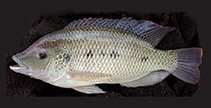 Oreochromis andersonii
ภาพโดย Panduleni Ndinelago Elago & IFC
รูปภาพหลายรูป | Google image
ภาพโดย Panduleni Ndinelago Elago & IFC
การจำแนกประเภท / ชื่อ ชื่อสามัญ | ชื่อพ้อง | Catalog of Fishes(สกุล, ชนิด) | ITIS | CoL | WoRMS | Cloffa
> Cichliformes (Cichlids, convict blennies) > Cichlidae (Cichlids) > Pseudocrenilabrinae
Etymology: Oreochromis: Latin, aurum = gold + Greek, chromis = a fish, perhaps a perch (Ref. 45335); andersonii: Named for the Swede Charles John Anderson, who explored Namibia during the middle of the 19th century (Ref. 13337).
Eponymy: Charles John Andersson (1827–1867) aka Karl Johan Andersson explored Southwest Africa (Namibia) in the 19th century. [...] (Ref. 128868), visit book page.
More on author: Castelnau.
Etymology: Oreochromis: Latin, aurum = gold + Greek, chromis = a fish, perhaps a perch (Ref. 45335); andersonii: Named for the Swede Charles John Anderson, who explored Namibia during the middle of the 19th century (Ref. 13337).
Eponymy: Charles John Andersson (1827–1867) aka Karl Johan Andersson explored Southwest Africa (Namibia) in the 19th century. [...] (Ref. 128868), visit book page.
More on author: Castelnau.
สิ่งแวดล้อม : สิ่งแวดล้อม / เขตภูมิอากาศ / ระดับความลึก / ระยะการกระจายสินค้า นิเวศวิทยา
; น้ำจืด; กร่อย กลุ่มสัตว์หน้าดิน,กลุ่มสัตว์พื้นท้องน้ำ; ระดับความลึก 0 - 10 m (Ref. 54002), usually 3 - 6 m (Ref. 54002). Tropical; 18°C - 33°C (Ref. 3); 12°S - 21°S
การแพร่กระจาย อาณาเขต | พื้นที่จำแนกตาม FAO | ระบบนิเวศหลายระบบ | การปรากฏขึ้น,การเกิดขึ้น,พบ | ตำแหน่งบนแผนที่ | การแนะนำ | Faunafri
Africa: Ngami basin, Okavango River; Cunene River and Mossamedes, Angola; upper Zambezi, Kafue River; middle Zambezi, Lake Kariba and Cabora Bassa since construction of dams. Several countries report adverse ecological impact after introduction (2265). Also reported from the Kasai system in Angola (Ref. 120641). Reported as introduced in Kasanka National Park (upper Congo River basin) in Zambia (Ref. 95585).
ความยาวเมื่อครบกำหนดครั้งแรก / ขนาด / น้ำหนัก / อายุ
วัยเจริญพันธุ์: Lm 20.7, range 12 - 15 cm
Max length : 61.0 cm TL เพศผู้/กระเทย; (Ref. 40637); น้ำหนักสูงสุดที่มีการรายงาน: 4.7 kg (Ref. 40637); อายุสูงสุดที่ได้รายงาน: 13 ปี (Ref. 13400)
Max length : 61.0 cm TL เพศผู้/กระเทย; (Ref. 40637); น้ำหนักสูงสุดที่มีการรายงาน: 4.7 kg (Ref. 40637); อายุสูงสุดที่ได้รายงาน: 13 ปี (Ref. 13400)
คำอธิบายสั้นๆ เครื่องมือที่ใช้ในการแยกชนิดสัตว์,สิ่งมีชีวิตออกจากกัน | สัณฐานวิทยา | ความยาวต่างๆ
เงี่ยงครีบหลัง (รวม) : 15 - 18; ก้านครีบอ่อนที่หาง (รวม) : 11 - 15; เงี่ยงครีบก้น: 3; ก้านครีบอ่อนที่ก้น: 9 - 13; สัตว์มีกระดูกสันหลัง: 30 - 32. Diagnosis: male genital papilla bluntly conical with a narrow flange slightly notched in the middle; jaws enlarged in breeding males, which in this species are normally not less than 30cm TL; scales in lateral line series 31-35, usually 32-33; scales of cheek in 3 full rows; vertebrae 30-32; total number of dorsal rays 28-31. Pectoral fin in adults 34-43% SL (Ref. 2), very long (Ref. 1904). Depth of body 40.5-50.5% SL; color-pattern of non-breeding fish and female always including 3 or 4 conspicuous mid-lateral blotches and a red margin on dorsal and caudal fins; breeding male with red margins broader and brighter and general dark, iridescent purplish-brown color of head, back and flanks, masking the blotches; no series of vertical spots or vertical stripes on caudal fin; nest a simple circular depression (Ref. 2).
Body shape (shape guide): fusiform / normal; Cross section: compressed.
Body shape (shape guide): fusiform / normal; Cross section: compressed.
Occurs in both river and swamp habitats and is adapted to fairly fast-flowing rivers (Ref. 6465). Hardy, tolerating fresh and brackish water (up to 20ppt, Ref. 3), preferring slow-flowing or standing water; adults occupy deep open waters, juveniles remain inshore among vegetation (Ref. 7248, 52193). Prefers fairly deep, quiet water with some weed cover; hippo pools are a favoured retreat (Ref. 12524, 13337). Forms schools (Ref. 2, 12524, 13337). Mainly diurnal; a detritivore which feeds on fine particulate matter (Ref. 2), including algae (Ref. 246, 12524, 13337, 53992), diatoms, detritus (Ref. 7248, 52193, 53992) and zooplankton (Ref. 7248, 52193). Larger individuals also take insects and other invertebrates (Ref. 53992). Feeding regime is variable, the diet changes according to food availability (Ref. 6465). Female mouthbrooder (Ref. 87, 246, 6465, 12524, 13337). Fine angling and table species (Ref. 6465, 12524, 13337).
วงจรชีวิตและพฤติกรรมการผสมพันธุ์ วัยเจริญพันธุ์ | การสืบพันธุ์ | การวางไข่ | เซลสืบพันธ์ของเพศเมีย(ไข่) | ความดกของไข่ | ตัวอ่อน
Spawning did not occur in ponds at a temperature below 21°C (Ref. 2). Rarely more than one brood in a season (Ref. 87, 246), but known to breed at least twice a year under pond conditions (Ref. 12524, 13337). Males excavate saucer-shaped nests (Ref. 246, 314, 6465, 12524, 13337, 54048) that can be up to 75cm in diameter and 30cm deep, using mouth and fins (Ref. 2, 314, 52307), in the center of their territory (Ref. 52307), on a sandy substrate (any vegetation is uprooted with its mouth) and in water from 1-3m deep, where they display to attract females (Ref. 12524, 13337, 54048). Up to 40 nests can be found together (Ref. 6465). Females are the primary care-givers (Ref. 52307), moutbrooding eggs, larvae and fry; multiple broods are raised during the warmer months (Ref. 7248, 52193). She lays her eggs in the concavity on top of the nest, the male fertilizes the eggs whereupon the female takes the eggs into her mouth where they are incubated; males guard the nest and females against all intruders; parental care is exercised for the first few weeks after the eggs hatch (Ref. 12524, 13337).
อ้างอิงหลัก
อัพโหลดข้อมูลอ้างอิงของคุณ | อ้างอิง | ผู้ประสานงาน : Kullander, Sven O. | ผู้ร่วมมือ
Trewavas, E., 1983. Tilapiine fishes of the genera Sarotherodon, Oreochromis and Danakilia. British Mus. Nat. Hist., London, UK. 583 p. (Ref. 2)
สถานะบัญชีแดงของ IUCN (Ref. 130435: Version 2025-2 (Global))
เปราะบาง (VU) (A3e); Date assessed: 01 March 2007
CITES
Not Evaluated
ภัยคุกคามต่อมนุษย์
Potential pest (Ref. 6465)
การใช้ของมนุษย์
การประมง: การค้า; การเพาะเลี้ยงสัตว์น้ำ: การค้า; การตกปลาเป็นกีฬา: ใช่
FAO - ระบบการเพาะเลี้ยงสัตว์น้ำ: การผลิต; ; Publication: search | FishSource |
ข้อมูลเพิ่มเติม
พลวัตของประชากร
พารามิเตอร์การเจริญเติบโต
อายุสูงสุด / ขนาด
ความยาว-น้ำหนักสัมพันธ์
ความยาว-ความยาวสัมพันธ์
ความยาว-ความถี่
การแปลงมวล
การทดแทนที่
อุดมสมบรูณ์
พารามิเตอร์การเจริญเติบโต
อายุสูงสุด / ขนาด
ความยาว-น้ำหนักสัมพันธ์
ความยาว-ความยาวสัมพันธ์
ความยาว-ความถี่
การแปลงมวล
การทดแทนที่
อุดมสมบรูณ์
วงจรชีวิต
การสืบพันธุ์
วัยเจริญพันธุ์
ความสมบูรณ์พันธุ์/เหงือกที่เกี่ยวข้อง
ความดกของไข่
การวางไข่
การรวมตัวของสปอน
เซลสืบพันธ์ของเพศเมีย(ไข่)
การพัฒนาไข่
ตัวอ่อน
พลวัตของสัตว์น้ำวัยอ่อน
การสืบพันธุ์
วัยเจริญพันธุ์
ความสมบูรณ์พันธุ์/เหงือกที่เกี่ยวข้อง
ความดกของไข่
การวางไข่
การรวมตัวของสปอน
เซลสืบพันธ์ของเพศเมีย(ไข่)
การพัฒนาไข่
ตัวอ่อน
พลวัตของสัตว์น้ำวัยอ่อน
การแพร่กระจาย
อาณาเขต
พื้นที่จำแนกตาม FAO
ระบบนิเวศหลายระบบ
การปรากฏขึ้น,การเกิดขึ้น,พบ
การแนะนำ
BRUVS - วิดีโอ
อาณาเขต
พื้นที่จำแนกตาม FAO
ระบบนิเวศหลายระบบ
การปรากฏขึ้น,การเกิดขึ้น,พบ
การแนะนำ
BRUVS - วิดีโอ
กายวิภาคศาสตร์
พื้นที่เหงือก
สมอง
หินโสต
พื้นที่เหงือก
สมอง
หินโสต
สรีรวิทยา
องค์ประกอบของร่างกาย
สารอาหาร
การใช้ออกซิเจน
ประเภทการว่ายน้ำ
ระดับความเร็วในการว่ายน้ำ
เม็ดสีที่มองเห็นได้
เสียงปลา
โรคและปรสิต
ความเป็นพิษ (LC50s)
องค์ประกอบของร่างกาย
สารอาหาร
การใช้ออกซิเจน
ประเภทการว่ายน้ำ
ระดับความเร็วในการว่ายน้ำ
เม็ดสีที่มองเห็นได้
เสียงปลา
โรคและปรสิต
ความเป็นพิษ (LC50s)
เกี่ยวข้องกับมนุษย์
ระบบการเพาะเลี้ยงสัตว์น้ำ
ประวัติการเพาะเลี้ยงสัตว์น้ำ
สายพันธุ์
กรณีซิเกวเทอรา
แสตมป์ เหรียญ อื่นๆ
ระบบการเพาะเลี้ยงสัตว์น้ำ
ประวัติการเพาะเลี้ยงสัตว์น้ำ
สายพันธุ์
กรณีซิเกวเทอรา
แสตมป์ เหรียญ อื่นๆ
เครื่องมือ
หนังสืออิเล็กทรอนิกส์ | คู่มือภาคสนาม | เครื่องมือที่ใช้ในการแยกชนิดสัตว์,สิ่งมีชีวิตออกจากกัน | ผู้มีความชำนาญในเรื่องความถี่ของความยาว | เครื่องมือในการศึกษาชีวประวัติ | ตำแหน่งบนแผนที่ |
จับ-MSY |
รายงานพิเศษ
ตรวจสอบการบำรุงรักษาตู้ปลา | ตรวจสอบเอกสารข้อเท็จจริงเกี่ยวกับสายพันธุ์ | ตรวจสอบเอกสารข้อเท็จจริงเกี่ยวกับการเพาะเลี้ยงสัตว์น้ำ
ดาวน์โหลด XML
หน้าสรุป | ข้อมูลสำคัญ | ชื่อสามัญ | ภาพถ่าย
แหล่งที่มาจากอินเตอร์เน็ต
AFORO (otoliths) | Alien/Invasive Species database | Aquatic Commons | BHL | Cloffa | Websites from users | Check FishWatcher | CISTI | Catalog of Fishes: สกุล, ชนิด | DiscoverLife | ECOTOX | FAO - ระบบการเพาะเลี้ยงสัตว์น้ำ: การผลิต; ; Publication: search | Faunafri | Fishipedia | Fishtrace | GloBI | Google Books | Google Scholar | Google | IGFA World Record | OneZoom | Open Tree of Life | Otolith Atlas of Taiwan Fishes | PubMed | Reef Life Survey | Socotra Atlas | TreeBase | แผนภูมิชีวิตแบบต้นไม้ | Wikipedia: Go, ค้นหา | World Records Freshwater Fishing | บันทึกทางด้านสัตววิทยา
การประมาณค่าตามแบบจำลอง
ดัชนีความหลากหลายทางวิวัฒนาการ (อ้างอิง 82804): PD50 = 0.5000 [Uniqueness, from 0.5 = low to 2.0 = high].
Bayesian length-weight: a=0.01549 (0.01202 - 0.01996), b=3.00 (2.96 - 3.04), in cm total length, based on LWR estimates for this species (Ref. 93245).
ระดับชั้นอาหาร (อ้างอิง 69278): 2.1 ±0.0 se; based on diet studies.
ความสามารถในการกลับคืนสู่ปกติ (อ้างอิง 120179): ขนาดกลาง, เวลาต่ำสุดที่จะทำให้ประชากรเพิ่มขึ้นเป็น 2 เท่าใช้เวลา 1.4 - 4.4 ปี (K=0.17-0.22; tm=4; tmax=13).