


Norfolkia brachylepis (Schultz, 1960)
Tropical scaly-headed triplefin
เพิ่มการสังเกตของคุณใน Fish Watcher
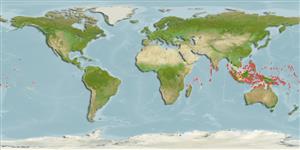
| Native range | All suitable habitat | Point map | Year 2050 |
|
| This map was computer-generated and has not yet been reviewed. |
| Norfolkia brachylepis AquaMaps Data sources: GBIF OBIS |
อัพโหลดของคุณ ภาพถ่าย และ วิดีโอ
รูปภาพหลายรูป | Google image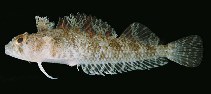 Norfolkia brachylepis
ภาพโดย Randall, J.E.
รูปภาพหลายรูป | Google image
ภาพโดย Randall, J.E.
การจำแนกประเภท / ชื่อ ชื่อสามัญ | ชื่อพ้อง | Catalog of Fishes(สกุล, ชนิด) | ITIS | CoL | WoRMS | Cloffa
> Blenniiformes (Blennies) > Tripterygiidae (Triplefin blennies) > Tripterygiinae
Etymology: Norfolkia: Named for the Norfolk Island ( In 1953 Henry W. Fowler named this new genus on a Collection of Fishes Made by Dr. Marshall Laird at Norfolk Island) (R.Bajol, pers.comm. 04/2016); brachylepis: Named for the scales on the pectoral fin base (Latin 'brachium' for upper arm and 'lepis' for a scale of a fish) (R. Bajol, pers.comm. 04/16).
More on author: Schultz.
Etymology: Norfolkia: Named for the Norfolk Island ( In 1953 Henry W. Fowler named this new genus on a Collection of Fishes Made by Dr. Marshall Laird at Norfolk Island) (R.Bajol, pers.comm. 04/2016); brachylepis: Named for the scales on the pectoral fin base (Latin 'brachium' for upper arm and 'lepis' for a scale of a fish) (R. Bajol, pers.comm. 04/16).
More on author: Schultz.
สิ่งแวดล้อม : สิ่งแวดล้อม / เขตภูมิอากาศ / ระดับความลึก / ระยะการกระจายสินค้า นิเวศวิทยา
เกี่ยวกับทะเล,น้ำเค็ม เกี่ยวกับหินโสโครก; ระดับความลึก 1 - 25 m (Ref. 90102), usually 2 - 7 m (Ref. 13227). Tropical; 16°N - 15°S
การแพร่กระจาย อาณาเขต | พื้นที่จำแนกตาม FAO | ระบบนิเวศหลายระบบ | การปรากฏขึ้น,การเกิดขึ้น,พบ | ตำแหน่งบนแผนที่ | การแนะนำ | Faunafri
Indo-West Pacific: widespread; from the Red Sea to South Africa; from Sri Lanka, the east and west coast of Australia, Indonesia, southern Japan and east to the Marshall Islands, New Caledonia and Fiji.
ขนาด / น้ำหนัก / อายุ
คำอธิบายสั้นๆ เครื่องมือที่ใช้ในการแยกชนิดสัตว์,สิ่งมีชีวิตออกจากกัน | สัณฐานวิทยา | ความยาวต่างๆ
เงี่ยงครีบหลัง (รวม) : 18 - 19; ก้านครีบอ่อนที่หาง (รวม) : 10 - 11; เงี่ยงครีบก้น: 2; ก้านครีบอ่อนที่ก้น: 20 - 21. This species is distinguished by the following characters: D IV + XIV-XV + 10-11 (IV+XV+11); A II, 20-21 (21), spine length half of the rays; pectoral rays 16, dorsalmost 2-3 and ventral most 7 simple, remainder branched once; pelvic rays bound together by membrane for less than one-fourth of length of shorter ray; lateral line pored scales 21-24 (22), terminates between 2nd and 3rd dorsal fins; notched scales and 14-19 (16); total lateral scales 32-35 (34); dentary pores 5-6 + 1 + 5-6; orbital and nasal cirri palmate and about as large as pupil diameter; dorsal fin also with cirri at tips of spines; head 2.9-3.6 (3.3) in SL, eye 3.0-3.9 (3.3), maxilla 2.3-3.0 (2.6) and snout 3.3-4.9 (3.8) in head length (Ref. 88983).
Body shape (shape guide): elongated; Cross section: oval.
Body shape (shape guide): elongated; Cross section: oval.
Adults inhabit coral or rock, often under ledges, on clear lagoon and seaward reefs (Ref. 13227). Eggs are hemispherical and covered with numerous sticky threads that anchor them in the algae on the nesting sites (Ref. 240). Larvae are planktonic which occur primarily in shallow, nearshore waters (Ref. 94114).
วงจรชีวิตและพฤติกรรมการผสมพันธุ์ วัยเจริญพันธุ์ | การสืบพันธุ์ | การวางไข่ | เซลสืบพันธ์ของเพศเมีย(ไข่) | ความดกของไข่ | ตัวอ่อน
อ้างอิงหลัก
อัพโหลดข้อมูลอ้างอิงของคุณ | อ้างอิง | ผู้ประสานงาน : Fricke, Ronald | ผู้ร่วมมือ
Holleman, W. and S.V. Bogorodsky, 2012. A review of the blennioid fish family Tripterygiidae (Perciformes) in the Red Sea, with description of Enneapterygius qirmiz, and reinstatement of Enneapterygius altipinnis Clark, 1980. Zootaxa 3152:36-60. (Ref. 88983)
สถานะบัญชีแดงของ IUCN (Ref. 130435: Version 2025-2 (Global))
Least Concern (LC) ; Date assessed: 07 May 2010
CITES
Not Evaluated
ภัยคุกคามต่อมนุษย์
Harmless
การใช้ของมนุษย์
การประมง: ไม่มีผลประโยชน์
FAO - Publication: search | FishSource |
ข้อมูลเพิ่มเติม
นิเวศวิทยาเขตร้อน
รายการอาหาร (เหยื่อ)
องค์ประอบของอาหาร
การบริโภคอาหาร
การจัดสรรอาหาร
ผู้ล่า
รายการอาหาร (เหยื่อ)
องค์ประอบของอาหาร
การบริโภคอาหาร
การจัดสรรอาหาร
ผู้ล่า
พลวัตของประชากร
พารามิเตอร์การเจริญเติบโต
อายุสูงสุด / ขนาด
ความยาว-น้ำหนักสัมพันธ์
ความยาว-ความยาวสัมพันธ์
ความยาว-ความถี่
การแปลงมวล
การทดแทนที่
อุดมสมบรูณ์
พารามิเตอร์การเจริญเติบโต
อายุสูงสุด / ขนาด
ความยาว-น้ำหนักสัมพันธ์
ความยาว-ความยาวสัมพันธ์
ความยาว-ความถี่
การแปลงมวล
การทดแทนที่
อุดมสมบรูณ์
วงจรชีวิต
การสืบพันธุ์
วัยเจริญพันธุ์
ความสมบูรณ์พันธุ์/เหงือกที่เกี่ยวข้อง
ความดกของไข่
การวางไข่
การรวมตัวของสปอน
เซลสืบพันธ์ของเพศเมีย(ไข่)
การพัฒนาไข่
ตัวอ่อน
พลวัตของสัตว์น้ำวัยอ่อน
การสืบพันธุ์
วัยเจริญพันธุ์
ความสมบูรณ์พันธุ์/เหงือกที่เกี่ยวข้อง
ความดกของไข่
การวางไข่
การรวมตัวของสปอน
เซลสืบพันธ์ของเพศเมีย(ไข่)
การพัฒนาไข่
ตัวอ่อน
พลวัตของสัตว์น้ำวัยอ่อน
การแพร่กระจาย
อาณาเขต
พื้นที่จำแนกตาม FAO
ระบบนิเวศหลายระบบ
การปรากฏขึ้น,การเกิดขึ้น,พบ
การแนะนำ
BRUVS - วิดีโอ
อาณาเขต
พื้นที่จำแนกตาม FAO
ระบบนิเวศหลายระบบ
การปรากฏขึ้น,การเกิดขึ้น,พบ
การแนะนำ
BRUVS - วิดีโอ
กายวิภาคศาสตร์
พื้นที่เหงือก
สมอง
หินโสต
พื้นที่เหงือก
สมอง
หินโสต
สรีรวิทยา
องค์ประกอบของร่างกาย
สารอาหาร
การใช้ออกซิเจน
ประเภทการว่ายน้ำ
ระดับความเร็วในการว่ายน้ำ
เม็ดสีที่มองเห็นได้
เสียงปลา
โรคและปรสิต
ความเป็นพิษ (LC50s)
องค์ประกอบของร่างกาย
สารอาหาร
การใช้ออกซิเจน
ประเภทการว่ายน้ำ
ระดับความเร็วในการว่ายน้ำ
เม็ดสีที่มองเห็นได้
เสียงปลา
โรคและปรสิต
ความเป็นพิษ (LC50s)
พันธุศาสตร์
จีโนม
พันธุศาสตร์
ความไม่สมดุลทางเชื้อชาติ
อัตราพันธุกรรม
ความหลากหลายทางพันธุกรรม
จีโนม
พันธุศาสตร์
ความไม่สมดุลทางเชื้อชาติ
อัตราพันธุกรรม
ความหลากหลายทางพันธุกรรม
เกี่ยวข้องกับมนุษย์
ระบบการเพาะเลี้ยงสัตว์น้ำ
ประวัติการเพาะเลี้ยงสัตว์น้ำ
สายพันธุ์
กรณีซิเกวเทอรา
แสตมป์ เหรียญ อื่นๆ
ระบบการเพาะเลี้ยงสัตว์น้ำ
ประวัติการเพาะเลี้ยงสัตว์น้ำ
สายพันธุ์
กรณีซิเกวเทอรา
แสตมป์ เหรียญ อื่นๆ
เครื่องมือ
หนังสืออิเล็กทรอนิกส์ | คู่มือภาคสนาม | ผู้มีความชำนาญในเรื่องความถี่ของความยาว | เครื่องมือในการศึกษาชีวประวัติ | ตำแหน่งบนแผนที่ |
จับ-MSY |
รายงานพิเศษ
ตรวจสอบการบำรุงรักษาตู้ปลา | ตรวจสอบเอกสารข้อเท็จจริงเกี่ยวกับสายพันธุ์ | ตรวจสอบเอกสารข้อเท็จจริงเกี่ยวกับการเพาะเลี้ยงสัตว์น้ำ
ดาวน์โหลด XML
หน้าสรุป | ข้อมูลสำคัญ | ชื่อสามัญ | ภาพถ่าย
แหล่งที่มาจากอินเตอร์เน็ต
AFORO (otoliths) | Aquatic Commons | BHL | Cloffa | Websites from users | Check FishWatcher | CISTI | Catalog of Fishes: สกุล, ชนิด | DiscoverLife | ECOTOX | FAO - Publication: search | Faunafri | Fishipedia | Fishtrace | GloBI | Google Books | Google Scholar | Google | IGFA World Record | ฐานข้อมูลแห่งชาติ | OneZoom | Open Tree of Life | Otolith Atlas of Taiwan Fishes | PubMed | Reef Life Survey | Socotra Atlas | TreeBase | แผนภูมิชีวิตแบบต้นไม้ | Wikipedia: Go, ค้นหา | World Records Freshwater Fishing | บันทึกทางด้านสัตววิทยา
การประมาณค่าตามแบบจำลอง
อุณหภูมิที่ต้องการ (อ้างอิง 123201): 27.6 - 29.3, mean 28.7 °C (based on 1848 cells).
ดัชนีความหลากหลายทางวิวัฒนาการ (อ้างอิง 82804): PD50 = 0.5625 [Uniqueness, from 0.5 = low to 2.0 = high].
Bayesian length-weight: a=0.00617 (0.00290 - 0.01310), b=3.04 (2.86 - 3.22), in cm total length, based on LWR estimates for this (Sub)family-body shape (Ref. 93245).
ระดับชั้นอาหาร (อ้างอิง 69278): 3.2 ±0.4 se; based on size and trophs of closest relatives
ความสามารถในการกลับคืนสู่ปกติ (อ้างอิง 120179): ความสูง, เวลาต่ำสุดที่จะทำให้ประชากรเพิ่มขึ้นเป็น 2 เท่าใช้เวลาน้อยกว่า 15 เดือน (Preliminary K or Fecundity.).
สารอาหาร (Ref. 124155): Calcium = 246 [122, 544] mg/100g; Iron = 1.36 [0.67, 2.48] mg/100g; Protein = 18.4 [17.2, 19.7] %; Omega3 = 0.103 [0.046, 0.236] g/100g; Selenium = 43.2 [15.9, 109.2] μg/100g; VitaminA = 61.1 [15.9, 225.8] μg/100g; Zinc = 2.89 [1.69, 4.58] mg/100g (wet weight);