


Xenopoclinus kochi Smith, 1948
Platanna klipfish
把你的觀察加入 Fish Watcher
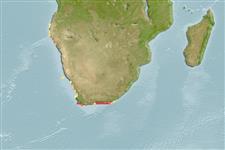
| Native range | All suitable habitat | Point map | Year 2050 |
|
| This map was computer-generated and has not yet been reviewed. |
| Xenopoclinus kochi AquaMaps Data sources: GBIF OBIS |
上傳你的 相片 和 影像
照片 | Google 影像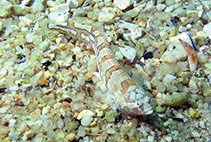 Xenopoclinus kochi
拍攝者 Zsilavecz, G.
照片 | Google 影像
拍攝者 Zsilavecz, G.
分類 / 名稱 俗名 | 同種異名 | Catalog of Fishes(屬, 種) | ITIS | CoL | WoRMS | Cloffa
Teleostei > Blenniiformes (Blennies) 鱸形目 (Blennies) > Clinidae (Clinids) 磯鳚科 (Clinids)
Etymology: Xenopoclinus: Greek, xenos = strange + Greek, pous = feet + Greek, klinein, kline = sloping and bed, due to the four apophyses of sphenoid bone (Ref. 45335).
Eponymy: H J Koch from Somerset West, South Africa, was a malacologist who collected the holotype with his wife Anne during their field work in conchology. (Ref. 128868), visit book page.
More on author: Smith.
Etymology: Xenopoclinus: Greek, xenos = strange + Greek, pous = feet + Greek, klinein, kline = sloping and bed, due to the four apophyses of sphenoid bone (Ref. 45335).
Eponymy: H J Koch from Somerset West, South Africa, was a malacologist who collected the holotype with his wife Anne during their field work in conchology. (Ref. 128868), visit book page.
More on author: Smith.
環境: 環境 / 氣候帶 / 深度上下限 / 配送範圍 生態學
海洋 居於水底的; 深度上下限 0 - 20 m (Ref. 28111). 亞熱帶的
分布 領土 | FAO區域 | 生態系 | 發現紀錄 | 分布圖 | 簡介 | Faunafri
Southeast Atlantic: South Africa.
東南大西洋: 南非。
東南大西洋: 南非。
大小 / 重量 / 年齡
簡短描述 檢索表 | 型態特徵 | 形態測量圖
背棘 (總數) : 33 - 37; 背的軟條 (總數) : 7 - 11; 臀棘: 2; 臀鰭軟條: 29 - 31.
Body shape (shape guide): elongated.
Body shape (shape guide): elongated.
Inhabits intertidal sandy areas near kelp beds. Buries itself in the substrate by diving head first into the sediment and emerging slightly so that the top of the head and the dorsally-situated eyes protrude from the sediment surface. Alternatively, it may lie on the surface of the sediment and use the pectoral, pelvic and anal fins, together with undulatory movements of the body, to insinuate itself into the sediment in a fashion to that of Trachinus vipera. Again, only the top of the head and the eyes are left exposed. Once buried in the sediment, the fish remains there and is able to 'swim' through the sediment for short distances without re-emerging, although it occasionally emerges to undertake short forays (Ref. 28111)
棲息於在海藻床附近的潮間帶的沙地。 掩藏於底部以頭部先行的方式潛入沉澱物中中而且些微地露出所以頭部的頂端與位於背部的眼伸出從沉澱物表面。 或者,它可能躺在沉澱物的表面上而且使用胸鰭, 腹鰭與臀鰭,伴隨著身體的波動運動, 蛇龍鰧〔Trachinus vipera〕 對那迂迴地進入在一種方式的沉澱物. 再一次,不過頭部與眼的頂端被露出在外。 一旦埋藏在沉澱物中, 魚逗留在那裡而且是能 '游泳' 經過沉澱物短距離再沒有出現, 雖然它偶然地浮現進行短的攻擊 (參考文獻 28111)
棲息於在海藻床附近的潮間帶的沙地。 掩藏於底部以頭部先行的方式潛入沉澱物中中而且些微地露出所以頭部的頂端與位於背部的眼伸出從沉澱物表面。 或者,它可能躺在沉澱物的表面上而且使用胸鰭, 腹鰭與臀鰭,伴隨著身體的波動運動, 蛇龍鰧〔Trachinus vipera〕 對那迂迴地進入在一種方式的沉澱物. 再一次,不過頭部與眼的頂端被露出在外。 一旦埋藏在沉澱物中, 魚逗留在那裡而且是能 '游泳' 經過沉澱物短距離再沒有出現, 雖然它偶然地浮現進行短的攻擊 (參考文獻 28111)
生命週期和交配行為 成熟度 | 繁殖 | 產卵場 | 卵 | 孕卵數 | 仔魚
東南大西洋: 南非。
主要參考資料
上傳您的推薦信 | 參考文獻 | 合作者 : Williams, Jeffrey T. | 合作者
Smith, M.M., 1986. Clinidae. p. 758-769. In M.M. Smith and P.C. Heemstra (eds.) Smiths' sea fishes. Springer-Verlag, Berlin. (Ref. 5496)
CITES
Not Evaluated
對人類具威脅
無害處的
人類使用
FAO - Publication: search | FishSource |
更多資訊
解剖學
鰓區
腦部
耳石
鰓區
腦部
耳石
生理學
身體成分
營養素
耗氧量
游泳類型
游泳速度
視覺色素
魚聲
疾病與寄生蟲
毒性 (LC50s)
身體成分
營養素
耗氧量
游泳類型
游泳速度
視覺色素
魚聲
疾病與寄生蟲
毒性 (LC50s)
遺傳學
基因組
遺傳學
異種性
遺傳率
遺傳多樣性
基因組
遺傳學
異種性
遺傳率
遺傳多樣性
工具
特別的報告
下載 XML
網路資源
AFORO (otoliths) | Aquatic Commons | BHL | Cloffa | Websites from users | 檢查 FishWatcher | CISTI | Catalog of Fishes: 屬, 種 | DiscoverLife | ECOTOX | FAO - Publication: search | Faunafri | Fishipedia | Fishtrace | GloBI | Google Books | Google Scholar | Google | IGFA World Record | OneZoom | Open Tree of Life | Otolith Atlas of Taiwan Fishes | PubMed | Reef Life Survey | Socotra Atlas | TreeBase | 樹狀分類階層 | Wikipedia: 去, 搜尋 | World Records Freshwater Fishing | Zoobank | 動物學的記錄
基於模型的估計
首選溫度 (參考文獻 123201): 16.3 - 20.9, mean 18.1 °C (based on 47 cells).
系統發育多樣性指數 (參考文獻 82804): PD50 = 0.7500 [Uniqueness, from 0.5 = low to 2.0 = high].
Bayesian length-weight: a=0.00501 (0.00221 - 0.01134), b=3.06 (2.86 - 3.26), in cm total length, based on LWR estimates for this (Sub)family-body shape (Ref. 93245).
營養階層 (參考文獻 69278): 3.3 ±0.3 se; based on diet studies.
回復力 (參考文獻 120179): 高度, 族群倍增時間少於 15個月 (Preliminary K or Fecundity.).