>
Eupercaria/misc (Various families in series Eupercaria) >
Sparidae (Porgies)
Etymology: Diplodus: Greek, diploos = twice + Greek, odous = teeth (Ref. 45335).
More on author: Linnaeus.
Environment: milieu / climate zone / ລະດັບຄວາມເລິກ / distribution range
ນິເວດວິທະຍາ
ສັດທະເລ; ນ້ຳກ່ອຍ ກ່ຽວກັບ (ຢູ່)ເທິງຊັ້ນພື້ນດິນໃນທະເລເປີດ; ລະດັບຄວາມເລິກ 0 - 90 m (Ref. 4781). Subtropical; 49°N - 27°N, 19°W - 42°E
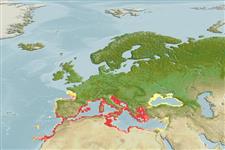
Eastern Atlantic: Canary islands, also found along the coast of Portugal northward to the Bay of Biscay, Mediterranean, Black Sea and Sea of Azov (Ref. 4781).
Length at first maturity / ຂະໜາດ / ນ້ຳໜັກ / Age
ການຈະເລີນເຕັມໄວ: Lm 11.6, range 8 - 19.6 cm
Max length : 28.0 cm TL ຕົວຜູ້/ບໍ່ມີເພດ; (Ref. 124816); common length : 13.0 cm TL ຕົວຜູ້/ບໍ່ມີເພດ; (Ref. 3397); ນ້ຳໜັກສູງສຸດທີ່ເຄຍຈັດພີມມາ: 330.00 g (Ref. 115876); ອາຍຸສູງສຸດທີ່ເຄຍລາຍງານມາ: 17 ປີ (Ref. 124518)
ຄີ (ໜາມ)ແຂງຢູ່ຫຼັງປາ (ທັງໝົດ) : 11; ຄີຫຼັງຂອງປາ (ຄີອ່ອນ) (ທັງໝົດ) : 11 - 13; ຄີ(ໜາມ) ແຂງຢູ່ຄີກົ້ນປາ
ກຸ່ມປາກະດູກແຂງ
ຄວາມຖີ່ຂອງກຸ່ມຖ່າຍທອດພັນ
ປາທີ່ມີການເຄື່ອນຍ້າຍຈາກທະເລໄປຫານ້ຳຈືດ ແລະນ້ຳຈືດຫາທະເລ
ປາທີ່ມີການເຄື່ອນຍ້າຍຈາກທະເລແລະໄປໄຂ່ຢູ່ນ້ຳຈືດ
ຄີກົ້ນຂອງປາ
ສັດທີ່ມີກະດູກສັນຫັຼງ
ການຖ່າຍທອດທາງກຳມະພັນຈາກພໍ່ແມ່ຫາລູກ: 3; ຄີກົ້ນຂອງປາ: 11 - 12.
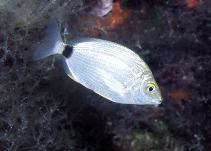
Body shape (shape guide): fusiform / normal; Cross section: compressed.
Inhabit chiefly Zostera seagrass beds but also found on Posidonia beds and sandy bottoms, rarely on rocky bottoms. Carnivorous, feed on worms, crustaceans, mollusks, echinoderms and hydrozoans. The sexes are separated, although these fish are potential hermaphrodites; certain individuals are protandric (Ref. 4781).
Normally sexes are separate but some individuals are protandrous due to geographical variation in sexual pattern (Ref. 103751). However, histological studies confirm no degenerating functional tissue of one sex (e.g. vitellogenic or later-stage follicles) and no proliferation of tissue of the other sex can be found on this species indicating the absence of sex change. This particular condition is also known as nonfunctional hermaphroditism previously known as rudimentary hermaphroditism (Ref. 91314). Also Ref. 28504.
Bauchot, M.-L. and J.-C. Hureau, 1990. Sparidae. p. 790-812. In J.C. Quero, J.C. Hureau, C. Karrer, A. Post and L. Saldanha (eds.) Check-list of the fishes of the eastern tropical Atlantic (CLOFETA). JNICT, Lisbon; SEI, Paris; and UNESCO, Paris. Vol. 2. (Ref. 3688)
IUCN Red List Status (Ref. 130435: Version 2025-1)
Threat to humans
Harmless
Human uses
ການປະມົງ: ເປັນສີນຄ້າ; ຊະນິດປາທີ່ຖືກນຳໃຊ້ເຂົ້າໃນການຫາເພື່ອເປັນເກມກິລາ: ແມ່ນ
ເຄື່ອງມື
Special reports
Download XML
ແຫຼ່ງອີນເຕີເນັດ
Estimates based on models
Preferred temperature (ເອກະສານອ້າງອີງ
123201): 14.8 - 21.1, mean 18.3 °C (based on 220 cells).
Phylogenetic diversity index (ເອກະສານອ້າງອີງ
82804): PD
50 = 0.5000 [Uniqueness, from 0.5 = low to 2.0 = high].
Bayesian length-weight: a=0.01202 (0.01096 - 0.01319), b=3.07 (3.05 - 3.09), in cm total length, based on LWR estimates for this species (Ref.
93245).
ຊັ້ນເຂດຮ້ອນ (ເອກະສານອ້າງອີງ
69278): 3.6 ±0.0 se; based on diet studies.
Generation time: 4.5 (2.4 - 6.4) years. Estimated as median ln(3)/K based on 18
growth studies.
ຄວາມຢືດຢຸ່ນ (ເອກະສານອ້າງອີງ
120179): ຂະໜາດກາງ, ປະຊາກອນຕຳ່ສຸດທີ່ໃຊ້ເວລາສອງເທົ່າ 1.4 - 4.4 ປີ (K=0.2-0.5; tmax=7; Fecundity=18,000 - 212,000).
Prior r = 0.54, 95% CL = 0.35 - 0.80, Based on 3 full stock assessments.
Fishing Vulnerability (Ref.
59153): Moderate vulnerability (36 of 100).
🛈
Climate Vulnerability (Ref.
125649): Moderate vulnerability (36 of 100).
🛈
Nutrients (Ref.
124155): Calcium = 83.2 [48.2, 160.3] mg/100g; Iron = 0.984 [0.561, 1.738] mg/100g; Protein = 19.3 [18.4, 20.3] %; Omega3 = 0.427 [0.224, 0.818] g/100g; Selenium = 23.7 [11.6, 43.4] μg/100g; VitaminA = 20.1 [6.8, 55.9] μg/100g; Zinc = 1.06 [0.72, 1.48] mg/100g (wet weight);