This website uses cookies to enhance your browsing experience and ensure the functionality of our site. For more detailed information about the types of cookies we use and how we protect your privacy, please visit our Privacy Information page.
×
Cookie Settings
This website uses different types of cookies to enhance your experience. Please select your preferences below:
> Salmoniformes (Salmons) > Salmonidae (Salmonids) > Salmoninae
Etymology: Salmo:Latin, salmo, Plinius = salmon (Ref. 45335); trutta:trutta is a Latin name for trout (Ref. 10294). More on author: Linnaeus.
Europe and Asia: Atlantic, North, White and Baltic Sea basins, from Spain to Chosha Bay (Russia). Found in Iceland and northernmost rivers of Great Britain and Scandinavia. In Rhône drainage, native only to Lake Geneva basin, which it entered after last glaciation. Native to upper Danube and Volga drainages. Introduced widely. Several countries report adverse ecological impact after introduction.
ການຈະເລີນເຕັມໄວ: Lm20.6, range 1 - 60 cm Max length : 140 cm SL ຕົວຜູ້/ບໍ່ມີເພດ; (Ref. 682); common length : 72.0 cm TL ຕົວຜູ້/ບໍ່ມີເພດ; (Ref. 3397); ນ້ຳໜັກສູງສຸດທີ່ເຄຍຈັດພີມມາ: 50.0 kg (Ref. 682); ອາຍຸສູງສຸດທີ່ເຄຍລາຍງານມາ: 38 ປີ (Ref. 32682)
ຄີ (ໜາມ)ແຂງຢູ່ຫຼັງປາ (ທັງໝົດ) : 3 - 4; ຄີຫຼັງຂອງປາ (ຄີອ່ອນ) (ທັງໝົດ) : 10 - 15; ຄີ(ໜາມ) ແຂງຢູ່ຄີກົ້ນປາ
ກຸ່ມປາກະດູກແຂງ
ຄວາມຖີ່ຂອງກຸ່ມຖ່າຍທອດພັນ
ປາທີ່ມີການເຄື່ອນຍ້າຍຈາກທະເລໄປຫານ້ຳຈືດ ແລະນ້ຳຈືດຫາທະເລ
ປາທີ່ມີການເຄື່ອນຍ້າຍຈາກທະເລແລະໄປໄຂ່ຢູ່ນ້ຳຈືດ
ຄີກົ້ນຂອງປາ
ສັດທີ່ມີກະດູກສັນຫັຼງ
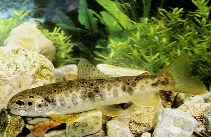
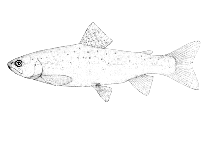
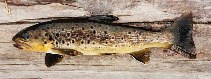
ການຖ່າຍທອດທາງກຳມະພັນຈາກພໍ່ແມ່ຫາລູກ: 3 - 4; ຄີກົ້ນຂອງປາ: 9 - 14; ສັດທີ່ມີກະດູກສັນຫຼັງ: 57 - 59. Fusiform body (Ref. 51442). Head little and pointed (Ref. 51442). Mouth large, extending mostly after the eye and has well developed teeth (Ref. 51442). Teeth on shaft of vomer numerous and strongly developed (Ref. 7251). Caudal fin with 18-19 rays (Ref. 2196). Caudal peduncle thick and rounded (Ref. 51442). Little scales (Ref. 51442). Body is grey-blue colored with numerous spots, also below the lateral line (Ref. 51442). Blackish colored on upper part of body, usually orange on sides, surrounded by pale halos. Adipose fin with red margin. Body shape (shape guide): fusiform / normal; Cross section: oval.
Found in streams, ponds, rivers and lakes (Ref. 5951). Individuals spend 1 to 5 years in fresh water and 6 months to 5 years in salt water (Ref. 51442). Juveniles mature in 3-4 years (Ref. 6885). Lacustrine populations undertake migration to tributaries and lake outlets to spawn, rarely spawning on stone, wave-washed lake shores. Spawns in rivers and streams with swift current, usually characterized by downward movement of water intro gravel (Ref. 59043). Spawning takes place normally more than one time (Ref. 51442). They prefer cold, well-oxygenated upland waters although their tolerance limits are lower than those of rainbow trout and favors large streams in the mountainous areas with adequate cover in the form of submerged rocks, undercut banks, and overhanging vegetation (Ref. 6465). Life history and spawning behavior is similar to the salmon Salmo salar (Ref. 51442). Each female produces about 10.000 eggs (Ref. 35388, Ref. 51442). Mainly diurnal (Ref. 682). Sea and lake trouts forage in pelagic and littoral habitats, while sea trouts mainly close to coast, not very far from estuary of natal river (Ref. 59043). Juveniles feed mainly on aquatic and terrestrial insects; adults on mollusks, crustaceans and small fish (Ref. 26523, Ref. 51442). Marketed fresh and smoked; eaten fried, broiled, boiled, cooked in microwave, and baked (Ref. 9988).
Female covers the eggs by restirring the sand and fine gravel (Ref. 9696). After hatching at 12 mm, larval brown trout remain in the gravel for 2-3 weeks until they are about 25 mm long, when they emerge to begin feeding in the water column. Brown trout are territorial and begin establishing territories as juveniles. Juvenile trout from lake populations move from their natal inlets to lakes during the first 2 years of life (Ref. 6390).
Svetovidov, A.N., 1984. Salmonidae. p. 373-385. In P.J.P. Whitehead, M.-L. Bauchot, J.-C. Hureau, J. Nielsen and E. Tortonese (eds.) Fishes of the north-eastern Atlantic and the Mediterranean. UNESCO, Paris. vol. 1. (Ref. 4779)
ສະຖານະພາບບັນຊີແດງຂອງ IUCN (Ref. 130435: Version 2025-2 (Global))