


Uploaden van uw Foto's en video's
Afbeeldingen | Google afbeelding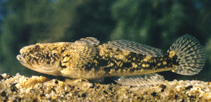 Ponticola kessleri
Afbeelding van Harka, A.
Afbeeldingen | Google afbeelding
Afbeelding van Harka, A.
Classificatie / Namen Lokale namen | Synoniemen | Catalog of Fishes(Genus, Soort(en)) | ITIS | CoL | WoRMS | Cloffa
> Gobiiformes (Gobies) > Gobiidae (Gobies) > Gobiinae
Eponymy: Karl Fedorovich (Theodorovich) Kessler (1815–1881) was a Russian-German zoologist and collector who was one of the founders of the St Petersburg Society of Naturalists (1868), and its President (1868–1879). [...] (Ref. 128868), visit book page.
More on author: Günther.
Eponymy: Karl Fedorovich (Theodorovich) Kessler (1815–1881) was a Russian-German zoologist and collector who was one of the founders of the St Petersburg Society of Naturalists (1868), and its President (1868–1879). [...] (Ref. 128868), visit book page.
More on author: Günther.
Milieu: milieu / Klimaatzone / Diepte / verspreidingsgebied Ecologie
; zoet water; brak water benthopelagisch. Temperate; 4°C - 20°C (Ref. 2059); 50°N - 43°N, 26°E - 52°E
Verspreiding Gebieden | FAO regio's | Ecosystemen | Voorkomen | Verspreidingskaart | Introducties | Faunafri
Europe and Asia: Danube delta (Braila, Lake Brates); Lakes Kagul, Yalpukh, Katlabukh, Kitai. Dniester from the liman to the region of Kamentes-Podol'sk. Dnieper to Dnepropetrovsk; Odessa and all coasts of the Caspian Sea; and Volga at Astrakhan. Absent from the Sea of Azov. In Ref. 92840, it reported that this species reached the North Sea basin through an artificial waterway connecting the Danube with the Rhine (well-documented) and within 4 years, the species colonized all suitable riverhabitats downstream of the invasion site.
Grootte / Gewicht / Leeftijd
Korte beschrijving Determinatiesleutels | Morfologie | Morfometrie
This species is distinguished from related species in the Black Sea basin by the following characters: 75-95 % of distance between its origin and anus; ctenoid scales completely cover predorsal area and nape; pelvic disc fraenum with angular lobes, fraenum length 1/6-1/2 of its width at base; scales in midlateral series 68-72 + 3-4; snout length 1.5-2.0 times in eye diameter; first branched ray of second dorsal about as long as penultimate ray; posterior part of first dorsal without black spot (Ref. 59043).
Body shape (shape guide): fusiform / normal.
Body shape (shape guide): fusiform / normal.
Usually in freshwater and brackish water with very low salinity (< 2 ppt); in lower rivers and lagoons, lakes, large rivers, harbours on rocky or well-vegetated bottom (reed thickets) in still waters as well as rapids. Initial spawning at 2 years, in March to May, where adhesive eggs are deposited on stones, shells and aquatic plants; while males guard the eggs until hatching. (Ref. 59043). Feeds on crustaceans (mysids, corophiid amphipods) and small fish (gobies) (Ref. 4696).
Levenscyclus en paargedrag Maturiteit | Voortplanting | Paaien | Eieren | Fecunditeit | Larven
Adhesive eggs deposited on stones, shells and aquatic plants. Males guard eggs until hatching. (Ref.59043).
Hoofdreferentie
Upload uw referenties | Referenties | Coördinator | Medewerkers
Kottelat, M., 1997. European freshwater fishes. An heuristic checklist of the freshwater fishes of Europe (exclusive of former USSR), with an introduction for non-systematists and comments on nomenclature and conservation. Biologia, Bratislava, 52/Suppl. 5:1-271. (Ref. 13696)
Status op de Rode Lijst van het IUCN (Ref. 130435: Version 2025-2 (Global))
Niet bedreigd (LC) ; Date assessed: 18 January 2023
CITES
Not Evaluated
Gevaar voor de mens
Harmless
Gebruik door de mens
Visserij: commercieel
FAO - Publication: search | FishSource |
Meer informatie
Trofische ecologie
Voedsel (prooien)
Dieetsamenstelling
Voedselconsumptie
Voedselrantsoenen
Predatoren
Voedsel (prooien)
Dieetsamenstelling
Voedselconsumptie
Voedselrantsoenen
Predatoren
Populatiedynamica
Groeiparameters
Max. leeftijden / maten
Lengte-gewicht rel.
Lengte-lengte rel.
Lengtefrequenties
Massaconversie
Rekrutering
Abundantie
Groeiparameters
Max. leeftijden / maten
Lengte-gewicht rel.
Lengte-lengte rel.
Lengtefrequenties
Massaconversie
Rekrutering
Abundantie
Levenscyclus
Voortplanting
Maturiteit
Rijpheid/kieuwen rel.
Fecunditeit
Paaien
Paaibestanden
Eieren
Ontwikkeling van de eieren
Larven
Larvale populatiedynamiek
Voortplanting
Maturiteit
Rijpheid/kieuwen rel.
Fecunditeit
Paaien
Paaibestanden
Eieren
Ontwikkeling van de eieren
Larven
Larvale populatiedynamiek
Anatomie
Kieuwoppervlak
Hersenen
Otoliet
Kieuwoppervlak
Hersenen
Otoliet
Fysiologie
Lichaamssamenstelling
Voedingsstoffen
Zuurstofverbruik
Type zwemmen
Zwemsnelheid
Visuele pigmenten
Vis geluid
Ziekten en parasieten
Toxiciteit (LC50)
Lichaamssamenstelling
Voedingsstoffen
Zuurstofverbruik
Type zwemmen
Zwemsnelheid
Visuele pigmenten
Vis geluid
Ziekten en parasieten
Toxiciteit (LC50)
Menselijk gerelateerd
Aquacultuursystemen
Aquacultuurprofielen
Kweeklijnen
Ciguatera gevallen
Postzegels, munten, diversen.
Aquacultuursystemen
Aquacultuurprofielen
Kweeklijnen
Ciguatera gevallen
Postzegels, munten, diversen.
Tools
Speciale rapporten
Bekijk gegevens voor het houden in een aquarium | Bekijk Fact Sheets voor de soort | Bekijk Aquacultuur Fact Sheets
Download XML
Internetbronnen
AFORO (otoliths) | Exoten/Invasieve soorten database | Aquatic Commons | BHL | Cloffa | Websites from users | Bekijk FishWatcher | CISTI | Catalog of Fishes: Genus, Soort(en) | DiscoverLife | ECOTOX | FAO - Publication: search | Faunafri | Fishipedia | Fishtrace | GloBI | Google Books | Google Scholar | Google | IGFA World Record | Nationale databanken | OneZoom | Open Tree of Life | Otolith Atlas of Taiwan Fishes | PubMed | Reef Life Survey | Socotra Atlas | TreeBase | Tree of Life | Wikipedia: ga naar, zoek | World Records Freshwater Fishing | Zoological Record
Schattingen op basis van modellen
Fylogenetische diversiteitsindex (Ref. 82804): PD50 = 0.5000 [Uniqueness, from 0.5 = low to 2.0 = high].
Bayesian length-weight: a=0.01023 (0.00477 - 0.02194), b=3.01 (2.83 - 3.19), in cm total length, based on LWR estimates for this (Sub)family-body shape (Ref. 93245).
Trofisch niveau (Ref. 69278): 3.5 ±0.53 se; based on food items.
Weerstandsvermogen (Ref. 120179): Gemiddeld, minimale populatieverdubbelingstijd 1,4-4,4 jaar (Preliminary K or Fecundity).