


Fontitrygon margaritella (Compagno & Roberts, 1984)
Pearl stingray
Masukkan pemerhatian anda di Fish Watcher
| Native range | All suitable habitat | Point map | Year 2050 |

|
| This map was computer-generated and has not yet been reviewed. |
| Fontitrygon margaritella AquaMaps Data sources: GBIF OBIS |
muatnaik fotos/gambar dan video
Gambar | imej Google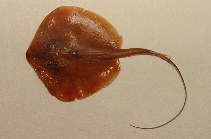 Fontitrygon margaritella
foto/gambar oleh CIPA
Gambar | imej Google
foto/gambar oleh CIPA
klasifikasi / Nama Nama-nama umum | Sinonim (persamaan) | Catalog of Fishes(Marga, Jenis) | ITIS | CoL | WoRMS | Cloffa
Ikan bertulang rawan (sharks and rays) > Myliobatiformes (Stingrays) > Dasyatidae (Stingrays) > Urogymninae
Etymology: margaritella: Named for the smaller size of this stingray and of its pearl (Latin: margarita) spine, as compared to Dasyatis margarita (Ref. 26277).
Eponymy: Margaritella is the diminutive of Margarita and is used to show this species is smaller than its relative (see Margarita above). The vernacular name is not only used to convey ‘Little Pearl’ but to reflect the fact that this species has a pearl spine. (Ref. 128868), visit book page.
More on authors: Compagno & Roberts.
Etymology: margaritella: Named for the smaller size of this stingray and of its pearl (Latin: margarita) spine, as compared to Dasyatis margarita (Ref. 26277).
Eponymy: Margaritella is the diminutive of Margarita and is used to show this species is smaller than its relative (see Margarita above). The vernacular name is not only used to convey ‘Little Pearl’ but to reflect the fact that this species has a pearl spine. (Ref. 128868), visit book page.
More on authors: Compagno & Roberts.
Taxonomic Remarks
Distribution will be corrected.
Lingkungan: lingkungan / zona iklim / kisaran kedalaman / jangkauan distribusi Ekologi
laut; payau dasar (demersal); kisaran kedalaman ? - 60 m (Ref. 114953). Tropical
Penyebaran Wilayah | Daerah-daerah FAO | Ekosistem | Kemunculan | peta titik | Introduksi | Faunafri
Eastern Central Atlantic: West African coast from Cape Blanc in Mauritania to Angola (Ref. 7397, 81259, 81625, 114953). Often confused with Dasyatis margarita (Günther, 1870) (Ref. 7397).
Ukuran / Berat / umur
Kematangan: Lm ? range ? - ? cm
Max length : 30.0 cm WD jantan/; (Ref. 81259); Berat maksimum terpublikasi: 1.0 kg (Ref. 81259)
Max length : 30.0 cm WD jantan/; (Ref. 81259); Berat maksimum terpublikasi: 1.0 kg (Ref. 81259)
deskripsi pendek Kunci identifiaksi (pengenalan) | Morfologi | Morfometrik
vertebrata, bertulang belakang: 116 - 128. Diagnosis: Dasyatis margaritella is the smallest dasyatid in West Africa (Ref. 26277). It is most similar to Dasyatis margarita, which is larger and has a larger pearl spine, and more numerous pectoral radials, 133-135 vs. 116-127 in D. margaritella (Ref. 26277). It is also similar to D. garouaensis, which has a much flatter disc and a longer snout (Ref. 26277).
Body shape (shape guide): other; Cross section: flattened.
Body shape (shape guide): other; Cross section: flattened.
Dasyatis margaritella is the most common littoral stingray on the West African coast and it enter lagoons, shallow bays and estuaries (Ref. 7397, 81259). Most likely feeds on small invertebrates (Ref. 114953). Ovoviviparous (Ref. 50449).
Siklus hidup dan perilaku kawin Kematangan | Reproduksi, perkembang biakan | Pemijahan | telur-telur | Fekunditas | Larva
Exhibit ovoviparity (aplacental viviparity), with embryos feeding initially on yolk, then receiving additional nourishment from the mother by indirect absorption of uterine fluid enriched with mucus, fat or protein through specialised structures (Ref. 50449). Distinct pairing with embrace (Ref. 205).
rujukan utama
Unggah referensi Anda | Acuan | Koordinator : McEachran, John | mitra
Séret, B., 2003. Dasyatidae. p. 81-96. In D. Paugy, C. Lévêque and G.G Teugels (eds.) The fresh and brackish water fishes of West Africa Volume 1. Collection Faune et Flore Tropicales 40. Institut de recherche de développement, Paris, France, Muséum national d'histoire naturelle, Paris, France and Musée royal de l'Afrique Central, Tervuren, Belgium, 457p. (Ref. 81259)
Status IUCN Red List (Ref. 130435: Version 2025-2 (Global))
hampir terancam (NT) (A2d); Date assessed: 04 August 2020
CITES
Not Evaluated
ancaman kepada manusia
Harmless
penggunaan manusia
FAO - Publication: search | FishSource |
informasi lanjut
Dinamika populasi
Parameter pertumbuhan
Maks. usia / ukuran
Panjang-berat rel.
Panjang-panjang rel.
ukuran frekuensi
Konversi massa
pemulihan
Kelimpahan
Parameter pertumbuhan
Maks. usia / ukuran
Panjang-berat rel.
Panjang-panjang rel.
ukuran frekuensi
Konversi massa
pemulihan
Kelimpahan
Siklus hidup
Reproduksi, perkembang biakan
Kematangan
Kedewasaan / insang rel.
Fekunditas
Pemijahan
Agregasi pemijahan
telur-telur
pekembangan telor
Larva
Dinamika larva
Reproduksi, perkembang biakan
Kematangan
Kedewasaan / insang rel.
Fekunditas
Pemijahan
Agregasi pemijahan
telur-telur
pekembangan telor
Larva
Dinamika larva
Anatomi
Area insang
Otak
Otolith
Area insang
Otak
Otolith
Fisiologi
Komposisi tubuh
Nutrisi
Konsumsi oksigen
Jenis renang
Kecepatan berenang
Pigmen visual
Suara ikan
Penyakit & Parasit
Toksisitas (LC50)
Komposisi tubuh
Nutrisi
Konsumsi oksigen
Jenis renang
Kecepatan berenang
Pigmen visual
Suara ikan
Penyakit & Parasit
Toksisitas (LC50)
Genetika
genom
Genetika
Heterozigositas
Diturunkan
Keanekaragaman Genetik
genom
Genetika
Heterozigositas
Diturunkan
Keanekaragaman Genetik
Yang berhubungan dengan manusia
Sistem akuakultur
profil budidaya air
Strain
Kasus Ciguatera
Perangko, koin, dll.
Sistem akuakultur
profil budidaya air
Strain
Kasus Ciguatera
Perangko, koin, dll.
Alat, peralatan
E-book | Penuntun lapangan | Kunci identifiaksi (pengenalan) | tanda freqkuenci panjang | peringkat sejarah hidup | peta titik |
Tangkap-MSY |
laporan khas
muat turun XML
Sumber internet
AFORO (otoliths) | Aquatic Commons | BHL | Cloffa | Websites from users | semak peneliti ikan | CISTI | Catalog of Fishes: Marga, Jenis | DiscoverLife | ECOTOX | FAO - Publication: search | Faunafri | Fishipedia | Fishtrace | GloBI | Google Books | Google Scholar | Google | IGFA World Record | OneZoom | Open Tree of Life | Otolith Atlas of Taiwan Fishes | PubMed | Reef Life Survey | Socotra Atlas | TreeBase | Tree of Life | Wikipedia: pergi, Cari | World Records Freshwater Fishing | Catatan Zoologi
Estimasi berdasarkan model
Suhu yang disukai (Acuan 123201): 23.7 - 28, mean 26.6 °C (based on 66 cells).
Indeks keanekaragaman filogenetik (Acuan 82804): PD50 = 0.5156 [Uniqueness, from 0.5 = low to 2.0 = high].
Bayesian length-weight: a=0.01023 (0.00482 - 0.02174), b=3.06 (2.86 - 3.26), in cm total length, based on LWR estimates for this (Sub)family-body shape (Ref. 93245).
Tingkat Trofik (Acuan 69278): 3.9 ±0.13 se; based on food items.
Daya lenting (Acuan 120179): Rendah, Waktu penggandaan populasi minimum 4.5 - 14 tahun (Assuming fecundity<100).
Nutrisi (Ref. 124155): Calcium = 63.4 [13.9, 304.2] mg/100g; Iron = 0.84 [0.21, 2.38] mg/100g; Protein = 21.7 [18.8, 24.8] %; Omega3 = 0.222 [0.061, 0.662] g/100g; Selenium = 27.6 [8.0, 80.2] μg/100g; VitaminA = 34.4 [12.4, 91.8] μg/100g; Zinc = 1.38 [0.67, 2.66] mg/100g (wet weight);