Environment: milieu / climate zone / rango de profundidad / distribution range
Ecología
marino demersal; oceanodromo (Ref. 51243); rango de profundidad ? - 91 m (Ref. 5951). Subtropical; 37°N - 24°N
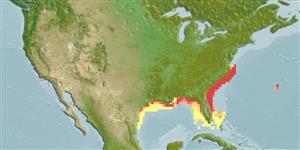
Western Atlantic: Canada (Ref. 5951) to North Carolina to Mississippi, USA, including the northern Gulf of Mexico.
Tamaño / Peso / Age
Madurez: Lm ? range ? - ? cm
Max length : 13.0 cm TL macho / no sexado; (Ref. 7251)
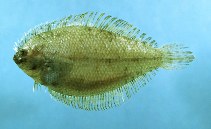
Radios blandos dorsales (total) : 68 - 83; Radios blandos anales: 53 - 62.
Body shape (shape guide): other (see remarks).
Life cycle and mating behavior
Madurez | Reproducción | Puesta | Huevos | Fecundidad | Larva
Oviparous (Ref. 101737). Distinct pairing (Ref. 205). Females produce numerous eggs in multiple spawnings during a prolonged spawning period (Ref. 101737).
Leslie, A.J. Jr. and D.J. Stewart, 1986. Systematics and distributional ecology of Etropus (Pisces, Bothidae) on the Atlantic Coast of the United States with description of a new species. Copeia 1986(1):140-156. (Ref. 39355)
IUCN Red List Status (Ref. 130435: Version 2025-1)
Threat to humans
Harmless
Human uses
Herramientas
Special reports
Download XML
Fuentes de Internet
Estimates based on models
Preferred temperature (Referencia
123201): 22.8 - 26.1, mean 24.1 °C (based on 218 cells).
Phylogenetic diversity index (Referencia
82804): PD
50 = 0.5010 [Uniqueness, from 0.5 = low to 2.0 = high].
Bayesian length-weight: a=0.00871 (0.00388 - 0.01954), b=3.03 (2.83 - 3.23), in cm total length, based on LWR estimates for this (Sub)family-body shape (Ref.
93245).
Nivel trófico (Referencia
69278): 3.4 ±0.2 se; based on size and trophs of closest relatives
Resiliencia (Referencia
120179): Alto, población duplicada en un tiempo mínimo inferior a 15 meses (Preliminary K or Fecundity.).
Fishing Vulnerability (Ref.
59153): Low vulnerability (10 of 100).
🛈