


Neolamprologus similis Büscher, 1992
Carregue seu(sua) Fotos e vídeos
Fotos | Imagem do Google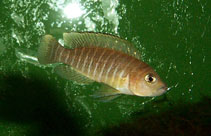 Neolamprologus similis
Foto de Germeau, G./ Doumont, Y.
Fotos | Imagem do Google
Foto de Germeau, G./ Doumont, Y.
Classificação / Nomes Nomes comuns | Sinônimos | Catalog of Fishes(Gênero, Espécies) | ITIS | CoL | WoRMS | Cloffa
> Cichliformes (Cichlids, convict blennies) > Cichlidae (Cichlids) > Pseudocrenilabrinae
Etymology: Neolamprologus: Greek, neos = new + Greek,lampros = torch + Greek, lagos = hare (Ref. 45335).
Etymology: Neolamprologus: Greek, neos = new + Greek,lampros = torch + Greek, lagos = hare (Ref. 45335).
Meio ambiente: milieu / Zona climática / intervalo de profundidade / faixa de distribuição Ecologia
; Água doce bentopelágico; pH range: 7.4 - 8.4; dH range: 7 - 30. Tropical; 23°C - 28°C (Ref. 12468)
Distribuição Territórios | Áreas da FAO | Ecossistemas | Ocorrências | Mapa de pontos | Introduções | Faunafri
Africa: endemic to Lake Tanganyika, occurs in the southern part of the lake in the Democratic Republic of the Congo (Ref. 46829, 93981) and in Tanzania (Ref. 46829).
Tamanho / Peso / Idade
Maturidade: Lm ? range ? - ? cm
Max length : 5.0 cm TL macho/indeterminado; (Ref. 46829); 3.5 cm TL (female)
Max length : 5.0 cm TL macho/indeterminado; (Ref. 46829); 3.5 cm TL (female)
Associated with large shell beds; also found among rubble of rocky habitats but only at deeper levels (deeper than 25 m); around shell beds species can be found as shallow as 10 metres (Ref. 46829). Maximal depth is 45 metres (Ref. 93981). Prefers shells to holes created by piling up pebbles and small stones; almost always found in colonies; spawning takes place inside the femal's shell (Ref. 46829). Copepods, ostracods, insect larvae, algal strands and sand grain found in stomach (Ref. 93981).
Ciclo de vida ou comportamento de acasalamento Maturidade | Reprodução | Desova | Ovos | Fecundidade | Larvas
Referência principal
Carregar suas referências | Referências | Coordenador : Kullander, Sven O. | Colaboradores
Konings, A., 1998. Tanganyika cichlids in their natural habitat. Cichlid Press. 272 p. (Ref. 46829)
CITES
Not Evaluated
Ameaça para os humanos
Harmless
Uso pelos humanos
Pescarias: sem interesse
FAO - Publication: search | FishSource |
Mais informação
Ecologia Trófica
Itens alimentares (presas)
Composição da dieta
Consumo alimentar
Rações alimentares
Predadores
Itens alimentares (presas)
Composição da dieta
Consumo alimentar
Rações alimentares
Predadores
Ecologia
Ecologia
Ecologia
Dinâmica populacional
Parâmetros de crescimento
Idade máxima / tamanhos
Relação comprimento-peso.
Relação comprimento-comprimento.
Frequências de comprimento
Conversão de massa
Recrutamento
Abundância
Parâmetros de crescimento
Idade máxima / tamanhos
Relação comprimento-peso.
Relação comprimento-comprimento.
Frequências de comprimento
Conversão de massa
Recrutamento
Abundância
Ciclo de vida
Reprodução
Maturidade
Maturidade/Rel. das guelras
Fecundidade
Desova
Agregações de desova
Ovos
Desenvolvimento dos ovos
Larvas
Dinâmica larval
Reprodução
Maturidade
Maturidade/Rel. das guelras
Fecundidade
Desova
Agregações de desova
Ovos
Desenvolvimento dos ovos
Larvas
Dinâmica larval
Anatomia
Área branquial
Cérebro
Otólito
Área branquial
Cérebro
Otólito
Fisiologia
Composição corporal
Nutrientes
Consumo de oxigênio
Tipo de natação
Velocidade de natação
Pigmentos visuais
Som de peixe
Doenças e Parasitas
Toxicidade (LC50s)
Composição corporal
Nutrientes
Consumo de oxigênio
Tipo de natação
Velocidade de natação
Pigmentos visuais
Som de peixe
Doenças e Parasitas
Toxicidade (LC50s)
Genética
genoma
Genética
Heterozigosidade
Hereditariedade
Diversidade genética
genoma
Genética
Heterozigosidade
Hereditariedade
Diversidade genética
Relacionado a humanos
Sistemas de aquicultura
Perfis para aquacultura
Estirpes
Casos de Ciguatera
Selos, moedas, diversos.
Sistemas de aquicultura
Perfis para aquacultura
Estirpes
Casos de Ciguatera
Selos, moedas, diversos.
Ferramentas
Livro eletrônico | Guia de campo | Ferramenta auxiliar de frequências de comprimento | Ferramenta sobre a história de vida | Mapa de pontos |
Catch-MSY |
Relatórios especiais
Checar Manutenção em Aquário | Checar Planilhas de Fatos sobre as Espécies | Checar Planilhas de Fatos sobre Aquicultura
Baixar XML
Fontes da internet
AFORO (otoliths) | Aquatic Commons | BHL | Cloffa | Websites from users | Checar Observador de Peixes (FishWatcher) | CISTI | Catalog of Fishes: Gênero, Espécies | DiscoverLife | ECOTOX | FAO - Publication: search | Faunafri | Fishipedia | Fishtrace | GloBI | Google Books | Google Scholar | Google | IGFA World Record | OneZoom | Open Tree of Life | Otolith Atlas of Taiwan Fishes | Aquários públicos | PubMed | Reef Life Survey | Socotra Atlas | TreeBase | Árvore da vida | Wikipedia: Ir para, procura | World Records Freshwater Fishing | Zoobank | Registro zoológico
Estimativas baseadas em modelos
Índice de diversidade filogenética (Ref. 82804): PD50 = 0.5000 [Uniqueness, from 0.5 = low to 2.0 = high].
Bayesian length-weight: a=0.00389 (0.00180 - 0.00842), b=3.12 (2.94 - 3.30), in cm total length, based on all LWR estimates for this body shape (Ref. 93245).
Nível Trófico (Ref. 69278): 3.3 ±0.5 se; based on size and trophs of closest relatives
Resiliência (Ref. 120179): Elevada, tempo mínimo de duplicação da população menor que 15 meses (Preliminary K or Fecundity.).