This website uses cookies to enhance your browsing experience and ensure the functionality of our site. For more detailed information about the types of cookies we use and how we protect your privacy, please visit our Privacy Information page.
×
Cookie Settings
This website uses different types of cookies to enhance your experience. Please select your preferences below:
> Blenniiformes (Blennies) > Tripterygiidae (Triplefin blennies) > Tripterygiinae
Etymology: Helcogramma:Greek, helkos, -eos, -ous = ulcer, sore + Greek, gramma = letter, mark (Ref. 45335); desa:The specific epithet is derived from the Latin "desa", meaning neglected. The name refers to the fact that this species has been overlooked in previous studies of the group. The name is treated as Noun in apposition.
Entorno: milieu / zona climática / rango de profundidad / gama de distribución Ecología
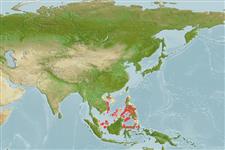
marino bentopelágico; rango de profundidad 0 - 7 m (Ref. 52308). Tropical
Madurez: Lm? range ? - ? cm Max length : 5.5 cm TL macho / no sexado; (Ref. 90102)
Descripción breve Claves de identificación | Morfología | Morfometría
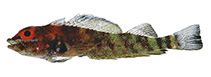
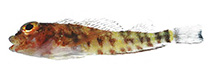
Espinas dorsales (total) : 17 - 18; Radios blandos dorsales (total) : 11 - 13; Espinas anales: 1; Radios blandos anales: 20 - 21. A species of Helcogramma (sensu Hansen, 1986) with 2 symphisial mandibular sensory pores, second dorsal fin spines XIV (three specimens with XV), third dorsal fin segmented rays 10-11, last ribs on vertebral centrum 10-11, vertebrae modally 10+28=38, pored lateral line scales modally 22 or 23, nape scales present, males with dusky anal fin. Body shape (shape guide): elongated.
Adults are found at depths of 7 m and shallower, in surge channels and exposed coasts of rocky boulders (Ref. 90102). Eggs are hemispherical and covered with numerous sticky threads that anchor them in the algae on the nesting sites (Ref. 240). Larvae are planktonic which occur primarily in shallow, nearshore waters (Ref. 94114).
Ciclo vital y comportamiento de apareamiento Madurez | Reproducción | Puesta | Huevos | Fecundidad | Larva
Williams, J.T. and J.C. Howe, 2003. Seven new species of the triplefin fish genus Helcogramma (Tripterygiidae) from the Indo-Pacific. aqua, J. Ichthyol. Aquat. Biol. 7(4):151-176. (Ref. 52308)
Situación en la Lista Roja de la UICN (Ref. 130435: Version 2025-2 (Global))
Ecología Trófica Alimentos (presas) Composición de la dieta consumo de alimento Raciones de comida Despredadores
Ecología Ecología
Dinámica de la población Coeficiente del crecimiento para Edades / tallas máximas Longitud-peso rel. Longitud-longitud rel. Longitud-frecuencias Conversión de masas Reclutamiento Abundancia
Ciclo de vida Reproducción Madurez Madurez/Gills rel. Fecundidad Puesta Agregaciones de desove Huevos Desarrollo de los huevos Larva Dinámica larvaria
Fisiología Composición corporal Nutrientes Consumo del oxígeno Tipo de natación Velocidad de natación Pigmentos visuales Sonido de peces Enfermedades y parásitos Toxicidad (CL50)
Temperatura preferida (Referencia 123201): 27.6 - 29.2, mean 28.8 °C (based on 346 cells).
Índice de diversidad filogenética (Referencia 82804): PD50 = 0.5000 [Uniqueness, from 0.5 = low to 2.0 = high].
Bayesian length-weight: a=0.00617 (0.00290 - 0.01310), b=3.04 (2.86 - 3.22), in cm total length, based on LWR estimates for this (Sub)family-body shape (Ref. 93245).
Nivel trófico (Referencia 69278): 3.1 ±0.3 se; based on size and trophs of closest relatives
Resiliencia (Referencia 120179): Alto, población duplicada en un tiempo mínimo inferior a 15 meses (Preliminary K or Fecundity.).
Vulnerabilidad pesquera (Ref. 59153): Low vulnerability (10 of 100). 🛈