


Dicentrarchus labrax (Linnaeus, 1758)
European seabass
مشاهدات خود را اضافه کنيد در Fish Watcher
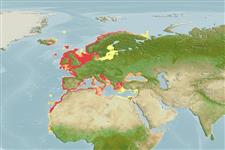
| Native range | All suitable habitat | Point map | Year 2050 |
|
| This map was computer-generated and has not yet been reviewed. |
| Dicentrarchus labrax AquaMaps Data sources: GBIF OBIS |
را بارگذاری کني تصاوير و فيلم ها
عکس ها | فيلم ها | تصوير گوگل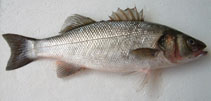 Dicentrarchus labrax
عکس از Crocetta, F.
عکس ها | فيلم ها | تصوير گوگل
عکس از Crocetta, F.
رده بندی / نامها اسامي عام | مترادف | Catalog of Fishes(جنس, گونه ها) | ITIS | CoL | WoRMS | Cloffa
> Eupercaria/misc (Various families in series Eupercaria) > Moronidae (Temperate basses)
Etymology: Dicentrarchus: Greek, di = two + Greek, kentron = sting + Greek, archos = anus (Ref. 45335).
More on author: Linnaeus.
Etymology: Dicentrarchus: Greek, di = two + Greek, kentron = sting + Greek, archos = anus (Ref. 45335).
More on author: Linnaeus.
محیط زیست: محیط زیست / منطقه آب و هوایی / تغييرات عمق / محدوده توزیع بوم شناسي
دريايي; آب شيرين; لب شور نزديك كف زي; دريا كوچ (Ref. 138297); تغييرات عمق 10 - 100 m (Ref. 9987). Subtropical; 8°C - 24°C (Ref. 4944); 72°N - 11°N, 19°W - 42°E (Ref. 54221)
پراكنش سرزمینها | مناطق سازمان خوار و بار جهاني (FAO) | اکوسیستمها | ظهور | نقشه نقطه ای | معرفي | Faunafri
NE Atlantic Ocean (Morocco to Norway, including the British Isles); the Mediterranean and southern Black Sea basins; occasional records of vagrant individuals from the Baltic Sea and Atlantic coastline of North Africa as far south as Senegal; with recent records suggesting it has invaded the northern Red Sea basin via the Suez Canal.
طول در اولین بلوغ / اندازه / وزن / سن
بلوغ: Lm 36.1, range 23 - 46 cm
Max length : 103 cm TL جنس نر / بدون خواص جنسي; (Ref. 40637); common length : 50.0 cm TL جنس نر / بدون خواص جنسي; (Ref. 6916); بيشينه وزن گزارش شده: 12.0 kg (Ref. 1468); بيشينه سن گزارش شده: 30 سال ها (Ref. 59043)
Max length : 103 cm TL جنس نر / بدون خواص جنسي; (Ref. 40637); common length : 50.0 cm TL جنس نر / بدون خواص جنسي; (Ref. 6916); بيشينه وزن گزارش شده: 12.0 kg (Ref. 1468); بيشينه سن گزارش شده: 30 سال ها (Ref. 59043)
توصيف مختصر كليدهاي شناسايي | ريخت شناسي | ريخت ستجي بوسيله انداره گيري
خارهاي باله پشتي (کل) : 8 - 10; شعاع نرم باله پشتي (کل) : 12 - 13; خارهاي باله مخرجي: 3; شعاع نرم باله مخرجي: 10 - 12. Diagnosis: head with cycloid scales above; mouth moderately protractile (Ref. 231). Vomerine teeth only anteriorly (Ref. 231), in a crescentic band (Ref. 231, 57391). Scales on interorbital space cycloid (Ref. 57391). Posterior edge of opercle finely serrated, lower edge with strong forward- directed denticles (Ref. 231). 2 flat opercular spines (Ref. 231, 57391). Young with some dark spots on upper part of body (Ref. 231).
Body shape (shape guide): fusiform / normal.
Body shape (shape guide): fusiform / normal.
Adults manifest demersal behavior, inhabit coastal waters down to about 100 m depth but more common in shallow waters (Ref. 54221, 57391). Found in the littoral zone on various kinds of bottoms on estuaries, lagoons and occasionally rivers. They enter coastal waters and river mouths in summer, but migrate offshore in colder weather and occur in deep water during winter in the northern range. Young fish form school, but adults appear to be less gregarious (Ref. 9987). Feed chiefly on shrimps and mollusks, also on fishes (Ref. 5990). Juveniles feed on invertebrates, taking increasingly more fish with age. Adults piscivorous . (Ref. 59043). Spawn in batches (Ref. 51846). Spawning takes place in the spring near the British Isles, and earlier in its southern range. Eggs are pelagic (Ref. 35388). Marketed fresh or smoked (Ref. 9987). Highly sought by sport fishermen (Ref. 30578).
چرخه زندگی و رفتار جفتگیری بلوغ | تولید مثل | تخم ریزی | تخم ها | باروری | توزاد ( لارو)
Spawn in groups. Eggs are pelagic. In the Mediterranean, first sexual maturity occurs generally between 2 and 4 years of age while in the Atlantic sexual maturity happens a little later (males between 4-7 years and females between 5-8 years). Spawning happens just once a year and it tends to be in winter, although in southern areas it can occur in spring. Eggs have 1-2 fat drops that fuse about 12 hours after laying. Embryo development lasts about three days at 13-14°C and larval development about 40 days at 19°C. Egg size 1.1-1.5 mm, larval length at hatching 3 mm.
مآخذ اصلی
مراجع خود را بارگذاری کنید | مراجع | هماهنگ كننده : Heemstra, Phillip C. | همكاران
Smith, C.L., 1990. Moronidae. p. 692-694. In J.C. Quero, J.C. Hureau, C. Karrer, A. Post and L. Saldanha (eds.) Check-list of the fishes of the eastern tropical Atlantic (CLOFETA). JNICT, Lisbon; SEI, Paris; and UNESCO, Paris. Vol. 2. (Ref. 6916)
وضعيت در فهرست قرمز IUCN (Ref. 130435: Version 2025-2 (Global))
نزديک به تهديد شدن (NT) (A2bcde); Date assessed: 03 March 2022
CITES
Not Evaluated
خطر برای انسان ها
Harmless
استفاده انسانی
ماهي گيري – شيلات: تجاري; آبزي پروري: تجاري; ماهي ها ي سرگرم كننده: بله
FAO - سیستمهای آبزیپروری: تولید, نمايه گونه; ماهي گيري – شيلات: فرودها, نمايه گونه; Publication: search | FishSource | دریای اطراف ما
اطلاعات بيشتر
پویایی جمعیت
پارامترهای رشد
حداکثر سن/اندازه
نسبت طول-وزن.
طول-طول نسبی.
نوسانات طولی
تبدیل انبوه
بازسازی
فراواني
پارامترهای رشد
حداکثر سن/اندازه
نسبت طول-وزن.
طول-طول نسبی.
نوسانات طولی
تبدیل انبوه
بازسازی
فراواني
چرخه زندگی
تولید مثل
بلوغ
بلوغ/آبششها
باروری
تخم ریزی
تجمعات تخمریزی
تخم ها
نمو تخم
توزاد ( لارو)
پويايي لاروي
تولید مثل
بلوغ
بلوغ/آبششها
باروری
تخم ریزی
تجمعات تخمریزی
تخم ها
نمو تخم
توزاد ( لارو)
پويايي لاروي
فیزیولوژی
ترکیب بدن
مواد مغذی
مصرف اکسیژن
نوع شنا
سرعت شنا
رنگدانههای بصری
صدای ماهی
بیماریها و انگلها
سمیت (LC50s)
ترکیب بدن
مواد مغذی
مصرف اکسیژن
نوع شنا
سرعت شنا
رنگدانههای بصری
صدای ماهی
بیماریها و انگلها
سمیت (LC50s)
مرتبط با انسان
سیستمهای آبزیپروری
نمايه هاي آبزي پروري
نژادها
موارد سیگواترا
تمبر، سکه، متفرقه.
سیستمهای آبزیپروری
نمايه هاي آبزي پروري
نژادها
موارد سیگواترا
تمبر، سکه، متفرقه.
ابزارها
کتاب الکترونیکی | راهنماي صحرايي | كليدهاي شناسايي | امكان نرم افزاري بسامد طولي | ابزار تاريخ زيستي | نقشه نقطه ای |
گرفتن-MSY |
گزارش های ويژه
راجع به نگهداری آکواريم ملاحظه کنيد | برگه اطلاعات و مشخصات گونه ها را ملاحظه کنيد | برگه اطلاعات و مشخصات آبزی پروری را ببينيد
بارگيری XML
منابع اينترنتي
AFORO (otoliths) | Alien/Invasive Species database | Aquatic Commons | BHL | Cloffa | Websites from users | فيش واچر را ببينيد | CISTI | Catalog of Fishes: جنس, گونه ها | DiscoverLife | DORIS | ECOTOX | FAO - سیستمهای آبزیپروری: تولید, نمايه گونه; ماهي گيري – شيلات: فرودها, نمايه گونه; Publication: search | Faunafri | Fishipedia | Fishtrace | GloBI | Google Books | Google Scholar | Google | IGFA World Record | پايگاه هاي داده ها | OneZoom | Open Tree of Life | OsteoBase: skull, spine | Otolith Atlas of Taiwan Fishes | آکواریوم عمومی | PubMed | Reef Life Survey | Socotra Atlas | TreeBase | Tree of Life | Wikipedia: برو, جستجو | World Records Freshwater Fishing | سوابق جانورشناسی
تخمینها بر اساس مدلها
دمای ترجیحی (مرجع 123201): 7.3 - 19.5, mean 10.7 °C (based on 788 cells).
شاخص تنوع فیلوژنتیکی (مرجع 82804): PD50 = 0.7656 [Uniqueness, from 0.5 = low to 2.0 = high].
Bayesian length-weight: a=0.00933 (0.00776 - 0.01123), b=3.02 (2.96 - 3.08), in cm total length, based on LWR estimates for this species (Ref. 93245).
سطح تروفیک (مرجع 69278): 3.5 ±0.50 se; based on food items.
Generation time: 7.8 (5.0 - 11.0) years. Estimated as median ln(3)/K based on 33 growth studies.
جهندگی (مرجع 120179): پايين ، كم, كمينه زمان لازم براي دو برابر شدن جمعيت 5/4 – 14 سال (K=0.06-0.33; tm=2-8; tmax=30; Fec=230,000).
Prior r = 0.37, 95% CL = 0.25 - 0.56, Based on 10 full stock assessments.
مواد مغذی (Ref. 124155): Calcium = 37.1 [4.5, 189.2] mg/100g; Iron = 0.869 [0.355, 2.011] mg/100g; Protein = 20.2 [19.3, 21.1] %; Omega3 = 0.3 [0.2, 0.5] g/100g; Selenium = 14.6 [7.0, 32.5] μg/100g; VitaminA = 7.01 [2.63, 20.46] μg/100g; Zinc = 0.519 [0.256, 1.128] mg/100g (wet weight); based on nutrient studies.