التصنيف / الأسماء
الأسماء الشائعة | مرادفات | Catalog of Fishes(جنس, الانواع) | ITIS | CoL | WoRMS | Cloffa
>
Siluriformes (Catfishes) >
Pimelodidae (Long-whiskered catfishes)
Etymology: Pimelodus: Greek, pimele = fat + Greek, odous = teeth (Ref. 45335); joannis: Named for John Lundberg, in recognition of his many contributions to catfishes systematics.
Eponymy: Dr John Graham Lundberg (d: 1942). Joannis is a Latinized version of John, here referring to “…John Lundberg, in recognition of his many contributions to catfish systematics”. (See Lundberg, JG) (Ref. 128868), visit book page.
البيئة: الوسط / المنطقة المناخية / نطاق العمق / نطاق التوزيع
البيئة
; المياه العذبة القاع. Tropical
South America: Rio Tocantins drainage, Brazil.
الحجم / وزن / العمر
النضج: Lm ? range ? - ? cm
Max length : 7.7 cm SL ذكر/ مختلط الجنس; (Ref. 79502)
وصف مختصر
مفاتيح التعريف | الوصف الخارجي | قياسات المظهر الخارجي
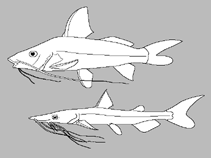
الأشواك الظهرية (المجموع) : 2; الأشعة الظهرية الناعمة (المجموع) : 6; فقرات: 40. Diagnosed from all other species of the genus Pimelodus, except Pimelodus halisodous, Pimelodus jivaro, Pimelodus ornatus, Pimelodus pictus, and Pimelodus stewarti, by its supraoccipital process with a dorsal median crest; posterior nostril closer to anterior orbital border (vs. posterior nostril closer to anterior nostril than to anterior orbital border); distal portion of dorsal-fin rays 2-4 with a dark spot; caudal- fin base with two dark blotches. Distinguished from Pimelodus jivaro by having a shorter maxillary barbel, extending only slightly past caudal-fin base (vs. maxillary barbel extending beyond caudal-fin base); distal portion of dorsal-fin rays 2-4 with a dark spot, and caudal-fin base with two dark blotches. Differs from Pimelodus ornatus and Pimelodus pictus by the uniform grayish to yellowish coloration (vs. presence of bands or dark dots along flanks, respectively); from Pimelodus stewarti by its shorter posterior cleithral process (10.2-12.4 vs. 12.7-15.6 % of SL); caudal-fin base two dark blotches; and supraoccipital process with dorsal median crest; from Pimelodus halisodous by its shorter pectoral-spine (15.5-18.5 vs. 20.0-23.5% of SL); shorter snout (35.8-41.8 vs. 43.1-47.9% of HL); and fewer premaxillary tooth rows (5-9 vs. 13-16) (Ref. 79502).
Body shape (shape guide): elongated.
دورة الحياة وسلوك التزاوج
النضج | التكاثر | وضع البيض | بيض | الخصوبة | اليرقات
Ribeiro, F.R.V., C.A.S. Lucena and P.H.F. Lucinda, 2008. Three new Pimelodus species (Siluriformes: Pimelodidae) from the rio Tocantins drainage, Brazil. Neotrop. Ichthyol. 6(3):455-464. (Ref. 79502)
حالة القائمة الحمراء للاتحاد الدولي لحفظ الطبيعة والموارد الطبيعية (Ref. 130435: Version 2025-2)
استخدامات بشرية
أدوات
تقارير خاصة
تنزيل XML
مصادر علي الأنترنت
تقديرات تستند إلى النماذج
مؤشر التنوع الشُعبي الوراثي (مرجع
82804): PD
50 = 0.5000 [Uniqueness, from 0.5 = low to 2.0 = high].
Bayesian length-weight: a=0.00676 (0.00301 - 0.01516), b=3.09 (2.91 - 3.27), in cm total length, based on LWR estimates for this Genus-body shape (Ref.
93245).
مستوى غذائي (مرجع
69278): 3.2 ±0.5 se; based on size and trophs of closest relatives
المرونه (مرجع
120179): عالي, الحد الزمني الأدني لتضاعف عدد أفراد المجتمع أقل من 15 شهر (Preliminary K or Fecundity.).
ضعف الصيد (Ref.
59153): Low vulnerability (10 of 100).
🛈