>
Gobiiformes (Gobies) >
Gobiidae (Gobies) > Gobiinae
Etymology: Eviota: No etymology given, suggested by Christopher Scharpt: from Latin 'eu' for 'true' and 'iota' for anything very small, in combination 'truly very small' referring to it as being the smallest vertebrate at the time it has benn described by Jenkins (thus, making the suggestion by Scharpt plausible.
Eponymy: Korechika Yano is a Japanese diving instructor and underwater photographer who provided the holotype of this goby. (See Yano). (Ref. 128868), visit book page.
Environment: milieu / climate zone / ລະດັບຄວາມເລິກ / distribution range
ນິເວດວິທະຍາ
ສັດທະເລ ກ່ຽວກັນຫີນ; ລະດັບຄວາມເລິກ 0 - 60 m (Ref. 85778). Tropical
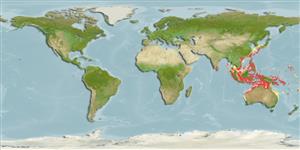
Eastern Indian Ocean to Western Pacific: Ryukyu Islands, Brunei, Indonesia (N. Sulawesi & West Papua), Papua New Guinea, Philippines, Palau, Western Australia, and Sri Lanka.
ຂະໜາດ / ນ້ຳໜັກ / Age
ການຈະເລີນເຕັມໄວ: Lm ? range ? - ? cm
Max length : 2.4 cm SL ຕົວຜູ້/ບໍ່ມີເພດ; (Ref. 81713)
Short description
ຕົວທີ່ໃຊ້ໃນການຈຳແນກຊະນິດ | ສະລີລະວິທະຍາ | ການວັດແທກຮູບຮ່າງລັກສະນະພາຍນອກຂອງດິນ,ສັດ,ປາ…
ຄີ (ໜາມ)ແຂງຢູ່ຫຼັງປາ (ທັງໝົດ) : 6 - 7; ຄີຫຼັງຂອງປາ (ຄີອ່ອນ) (ທັງໝົດ) : 8 - 9; ຄີ(ໜາມ) ແຂງຢູ່ຄີກົ້ນປາ
ກຸ່ມປາກະດູກແຂງ
ຄວາມຖີ່ຂອງກຸ່ມຖ່າຍທອດພັນ
ປາທີ່ມີການເຄື່ອນຍ້າຍຈາກທະເລໄປຫານ້ຳຈືດ ແລະນ້ຳຈືດຫາທະເລ
ປາທີ່ມີການເຄື່ອນຍ້າຍຈາກທະເລແລະໄປໄຂ່ຢູ່ນ້ຳຈືດ
ຄີກົ້ນຂອງປາ
ສັດທີ່ມີກະດູກສັນຫັຼງ
ການຖ່າຍທອດທາງກຳມະພັນຈາກພໍ່ແມ່ຫາລູກ: 1; ຄີກົ້ນຂອງປາ: 8 - 9. This species have the complete cephalic sensory-canal pore configuration, pores B', C (unpaired), D (unpaired), E, F, H', N' and O'. It differs from the other species of this subgroup in having the following set of characters: usually 9 dorsal-fin and 8 anal-fin segmented rays; well-developed membranes between pelvic-fin segmented rays; densely pigmented on edge of scale pockets, forming dusky reticulations on body; middle of first dorsal fin with a narrow arc-shaped, diagonal pale band (subtranslucent in preserved specimen); 5-7 diagonal bright-blue to pale-blue bars (translucent and sometimes quite indistinct in preserved specimens) on second dorsal and anal fins in each; 2 ovoid dusky spots on dorsal and ventral parts of pectoral-fin base; absence of an enlarged, distinct subcutaneous dusky spot on mid-lateral caudal peduncle; caudal fin with no conspicuous dusky markings (Ref. 81713).
Body shape (shape guide): elongated; Cross section: compressed.
Inhabits coral reefs (Ref 90102).
Life cycle and mating behavior
ການຈະເລີນເຕັມໄວ | ການສືບພັນ | ການວາງໄຂ່ | ໄຂ່ | ຄວາມດົກຂອງໄຂ່ປາ | ຕົວອ່ອນ
Shibukawa, K. and T. Suzuki, 2005. Two new species of the gobiid fish genus Eviota (Teleostei, Perciformes, Gobioidei) from the Western Pacific. Bull. Natl. Sci. Mus. Ser A 31(2):65-76. (Ref. 81713)
IUCN Red List Status (Ref. 130435: Version 2025-1)
Threat to humans
Harmless
Human uses
ເຄື່ອງມື
Special reports
Download XML
ແຫຼ່ງອີນເຕີເນັດ
Estimates based on models
Preferred temperature (ເອກະສານອ້າງອີງ
123201): 25.4 - 29, mean 28.1 °C (based on 538 cells).
Phylogenetic diversity index (ເອກະສານອ້າງອີງ
82804): PD
50 = 0.5000 [Uniqueness, from 0.5 = low to 2.0 = high].
Bayesian length-weight: a=0.00692 (0.00284 - 0.01683), b=3.10 (2.92 - 3.28), in cm total length, based on LWR estimates for this Genus-body shape (Ref.
93245).
ຊັ້ນເຂດຮ້ອນ (ເອກະສານອ້າງອີງ
69278): 3.1 ±0.3 se; based on size and trophs of closest relatives
Fishing Vulnerability (Ref.
59153): Low vulnerability (10 of 100).
🛈