


Alosa algeriensis Regan, 1916
North African shad
Adicionar o seu Fotografias e vídeos
Fotografias | Imagem do Google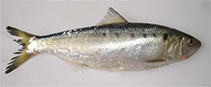 Alosa algeriensis
Fotografia de Bacha, M.
Fotografias | Imagem do Google
Fotografia de Bacha, M.
Classificação / Nomes Nomes comuns | Sinónimos | Catalog of Fishes(Género, Espécies) | ITIS | CoL | WoRMS | Cloffa
> Clupeiformes (Herrings) > Alosidae (Shads and Sardines)
Etymology: Alosa: Latin, alausa = a fish cited by Ausonius and Latin, halec = pickle, dealing with the Greek word hals = salt; it is also the old Saxon name for shad = "alli" ; 1591 (Ref. 45335).
More on author: Regan.
Etymology: Alosa: Latin, alausa = a fish cited by Ausonius and Latin, halec = pickle, dealing with the Greek word hals = salt; it is also the old Saxon name for shad = "alli" ; 1591 (Ref. 45335).
More on author: Regan.
Ambiente: milieu / zona climática / intervalo de profundidade / gama de distribuição Ecologia
marinhas; Água doce; estuarina pelagic-neritic; anádromo (Ref. 59043). Subtropical
Distribuição Territórios | Áreas FAO | Ecossistemas | Ocorrências | Mapa dos pontos | Introduções | Faunafri
Africa: along North African coasts of Mediterranean Sea from the Rif Peninsula in Morocco to northern Tunisia (Ref. 10538), also entering permanent rivers in Algeria and Tunisia (Ref. 10538, 59043). A landlocked population exists in Lake Ichkeul, Tunisia (Ref. 59043). In Europe, it is restricted to western Sardinia, Italy (Ref. 59043).
Tamanho / Peso / Idade
Maturidade: Lm ? range ? - ? cm
Max length : 43.5 cm SL macho/indeterminado; (Ref. 10538); 50.0 cm SL (female)
Max length : 43.5 cm SL macho/indeterminado; (Ref. 10538); 50.0 cm SL (female)
Descrição breve Chaves de identificação | Morfologia | Morfometria
Espinhos dorsais (total) : 0; Raios dorsais moles (total) : 18 - 22; Espinhos anais: 0; Raios anais moles: 20 - 25; Vértebras: 53 - 57. Diagnosis: This species is distinguished from other species of Alosa entering freshwater in the Mediterranean basin by: dorsal profile convex; 40-60 thin gill rakers in individuals larger than 200 mm standard length, with 25 to 38 on its lower part; and no teeth on palatine (Ref. 10538, 59043).
Body shape (shape guide): fusiform / normal.
Body shape (shape guide): fusiform / normal.
This species undertakes anadromous breeding migrations from the sea, where it spends most of its life, into the freshwater sections of rivers; it can also live permanently in brackish water (Ref. 10538). Males migrate upriver at 3-4 years, females at 4-5 years; it starts entering rivers when temperatures reach 14-18°C, mainly in May, and spawning commences when temperature rises above 20°C in May and June (Ref. 59043). The spawners return downstream immediately after spawning, but many die after spawning; most juveniles migrate to river mouth in first summer and remain at sea until they mature (Ref. 10538, 59043). Spawning occurs close to estuaries in fresh and brackish water (Ref. 59043).
In the marine and brackish water habitats, this shad consumes small fishes, such as species of Engraulis, Sardina, and Sardinella, and small benthic crustaceans, mainly isopods and amphipods (Ref. 10538).
Ciclo de vida e comportamento de acasalamento Maturidade | Reprodução | Desova | Ovos | Fecundidade | Larvas
Most juveniles migrate to river mouth in first summer and remain at sea until they mature. Males migrate upriver at 3-4 years, females at 4-5. They start entering rivers when temperatures reach 14-18°C, mainly in May to spawn when temperatures rises above 20°C. After spawning, spent individuals migrate back to sea, but many die before they do (Ref. 59043).
Referência principal
Carregar as suas referências | Referências | Coordenador | Colaboradores
Kottelat, M. and J. Freyhof, 2007. Handbook of European freshwater fishes. Publications Kottelat, Cornol and Freyhof, Berlin. 646 pp. (Ref. 59043)
Categoria na Lista Vermelha da IUCN (Ref. 130435: Version 2025-2 (Global))
Ameaçada (EN) (B2ab(i,ii,iii,iv,v)); Date assessed: 17 May 2021
CITES
Not Evaluated
Ameaça para o homem
Harmless
Utilização humana
Pescarias: espécies comerciais
FAO - Publication: search | FishSource |
Mais informação
Ecologia Trófica
Produtos alimentares (presas)
Composição da dieta
Consumo alimentar
Rações alimentares
Predadores
Produtos alimentares (presas)
Composição da dieta
Consumo alimentar
Rações alimentares
Predadores
Dinâmica das populações
Parâmetros de crescimento
Idades / tamanhos máximos
Comprimento-peso rel.
Comprimento-comprimento rel.
Frequência de comprimento
Conversão de massa
Recrutamento
Abundância
Parâmetros de crescimento
Idades / tamanhos máximos
Comprimento-peso rel.
Comprimento-comprimento rel.
Frequência de comprimento
Conversão de massa
Recrutamento
Abundância
Ciclo de vida
Reprodução
Maturidade
Maturidade/Rel. das guelras
Fecundidade
Desova
Agregações de desova
Ovos
Desenvolvimento dos ovos
Larvas
Dinâmica larvar
Reprodução
Maturidade
Maturidade/Rel. das guelras
Fecundidade
Desova
Agregações de desova
Ovos
Desenvolvimento dos ovos
Larvas
Dinâmica larvar
Anatomia
Área branquial
Cérebro
Otólitos
Área branquial
Cérebro
Otólitos
Fisiologia
Composição corporal
Nutrientes
Consumo de oxigénio
Tipo de natação
Velocidade de natação
Pigmentos visuais
Som de peixe
Doenças e Parasitas
Toxicidade (LC50s)
Composição corporal
Nutrientes
Consumo de oxigénio
Tipo de natação
Velocidade de natação
Pigmentos visuais
Som de peixe
Doenças e Parasitas
Toxicidade (LC50s)
Genética
genoma
Genética
Heterozigotia
Hereditariedade
Diversidade genética
genoma
Genética
Heterozigotia
Hereditariedade
Diversidade genética
Relacionado com o ser humano
Sistemas de aquacultura
Perfis para aquacultura
Estirpes
Casos de Ciguatera
Selos, moedas, diversos.
Sistemas de aquacultura
Perfis para aquacultura
Estirpes
Casos de Ciguatera
Selos, moedas, diversos.
Ferramentas
E-book | Guia de campo | Ferramenta auxiliar de frequências de comprimento | Ferramenta sobre a história de vida | Mapa dos pontos |
Captura-MSY |
Relatórios especiais
Descarregue XML
Fontes da internet
AFORO (otoliths) | Aquatic Commons | BHL | Cloffa | Websites from users | Consultar FishWatcher | CISTI | Catalog of Fishes: Género, Espécies | DiscoverLife | ECOTOX | FAO - Publication: search | Faunafri | Fishipedia | Fishtrace | GloBI | Google Books | Google Scholar | Google | IGFA World Record | Bases de dados nacionais | OneZoom | Open Tree of Life | Otolith Atlas of Taiwan Fishes | PubMed | Reef Life Survey | Socotra Atlas | TreeBase | Árvore da vida | Wikipedia: ir para, procurar | World Records Freshwater Fishing | Registo zoológico
Estimativas baseadas em modelos
Índice de diversidade filogenética (Ref. 82804): PD50 = 0.5000 [Uniqueness, from 0.5 = low to 2.0 = high].
Bayesian length-weight: a=0.00708 (0.00338 - 0.01484), b=3.08 (2.91 - 3.25), in cm total length, based on LWR estimates for this Genus-body shape (Ref. 93245).
Nível Trófico (Ref. 69278): 3.9 ±0.5 se; based on size and trophs of closest relatives
Resiliência (Ref. 120179): Médio, tempo mínimo de duplicação da população 1,4 - 4,4 anos (Preliminary K or Fecundity.).