


Salmo ciscaucasicus Dorofeeva, 1967
Caspian salmon
上傳你的 相片 和 影像
照片 | Google 影像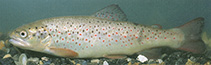 Salmo ciscaucasicus
拍攝者 Naseka, A.M.
照片 | Google 影像
拍攝者 Naseka, A.M.
分類 / 名稱 俗名 | 同種異名 | Catalog of Fishes(屬, 種) | ITIS | CoL | WoRMS | Cloffa
Teleostei > Salmoniformes (Salmons) 鮭形目 (Salmons) > Salmonidae (Salmonids) 鮭科 (Salmonids) > Salmoninae
Etymology: Salmo: Latin, salmo, Plinius = salmon (Ref. 45335).
Etymology: Salmo: Latin, salmo, Plinius = salmon (Ref. 45335).
環境: 環境 / 氣候帶 / 深度上下限 / 配送範圍 生態學
; 淡水 底中水層性; 深度上下限 ? - 50 m (Ref. 59043).
分布 領土 | FAO區域 | 生態系 | 發現紀錄 | 分布圖 | 簡介 | Faunafri
Eurasia: Coastal zone of western Caspian Sea, drainages from northern Azerbaijan to Volga and Ural. Terek is the main spawning river. Status of threat: least concern.
大小 / 重量 / 年齡
簡短描述 檢索表 | 型態特徵 | 形態測量圖
Distinguished from the only congener Salmo ezenami in European Caspian basin by the following unique characters: maxilla reaching posterior margin of eye; and gill rakers pointed, tips never club-changed. Diagnosed from Salmo capius, a species restricted to southern Caspian basin, by its unique body depth about 15-20% SL (vs. 21-26); differs further by the combination of having head depth about 59-65% HL (vs. 68-75) and interorbital distance about 30-42% HL (vs. 37-48) (Ref. 59043).
Body shape (shape guide): fusiform / normal.
Body shape (shape guide): fusiform / normal.
At the sea, it occurs along coast at depths of up to 50 m. Resident part of populations live in streams and uppermost reaches with fast current, cold clear water and stone or gravel bottom. Parrs and resident adults prey on aquatic and terrestrial invertebrates. Anadromous and large lacustrine individuals feed predominantly on fish, but also take large crustaceans. Undertakes migration to hill streams. Usually spawns in the upper reaches of rivers with fast current. Damming hinders both migrating juveniles to reach the sea and returning adults to reach spawning sites. Species survival depends solely on resident populations (Ref. 59043).
生命週期和交配行為 成熟度 | 繁殖 | 產卵場 | 卵 | 孕卵數 | 仔魚
主要參考資料
上傳您的推薦信 | 參考文獻 | 合作者 | 合作者
Kottelat, M. and J. Freyhof, 2007. Handbook of European freshwater fishes. Publications Kottelat, Cornol and Freyhof, Berlin. 646 pp. (Ref. 59043)
CITES
Not Evaluated
對人類具威脅
人類使用
漁業: 潛在的興趣
FAO - Publication: search | FishSource |
更多資訊
解剖學
鰓區
腦部
耳石
鰓區
腦部
耳石
生理學
身體成分
營養素
耗氧量
游泳類型
游泳速度
視覺色素
魚聲
疾病與寄生蟲
毒性 (LC50s)
身體成分
營養素
耗氧量
游泳類型
游泳速度
視覺色素
魚聲
疾病與寄生蟲
毒性 (LC50s)
遺傳學
基因組
遺傳學
異種性
遺傳率
遺傳多樣性
基因組
遺傳學
異種性
遺傳率
遺傳多樣性
工具
特別的報告
下載 XML
網路資源
AFORO (otoliths) | Aquatic Commons | BHL | Cloffa | Websites from users | 檢查 FishWatcher | CISTI | Catalog of Fishes: 屬, 種 | DiscoverLife | ECOTOX | FAO - Publication: search | Faunafri | Fishipedia | Fishtrace | GloBI | Google Books | Google Scholar | Google | IGFA World Record | OneZoom | Open Tree of Life | Otolith Atlas of Taiwan Fishes | PubMed | Reef Life Survey | Socotra Atlas | TreeBase | 樹狀分類階層 | Wikipedia: 去, 搜尋 | World Records Freshwater Fishing | 動物學的記錄
基於模型的估計
系統發育多樣性指數 (參考文獻 82804): PD50 = 0.5000 [Uniqueness, from 0.5 = low to 2.0 = high].
Bayesian length-weight: a=0.01047 (0.00486 - 0.02255), b=3.03 (2.86 - 3.20), in cm total length, based on LWR estimates for this Genus-body shape (Ref. 93245).
營養階層 (參考文獻 69278): 3.8 ±0.5 se; based on size and trophs of closest relatives
回復力 (參考文獻 120179): 非常低的, 最小族群倍增時間超過14 年 (Preliminary K or Fecundity.).