


Sarotherodon lamprechti Neumann, Stiassny & Schliewen, 2011
را بارگذاری کني تصاوير و فيلم ها
تصوير گوگل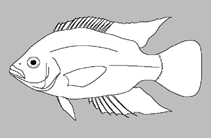 No image available for this species;
drawing shows typical species in Cichlidae.
تصوير گوگل
drawing shows typical species in Cichlidae.
رده بندی / نامها اسامي عام | مترادف | Catalog of Fishes(جنس, گونه ها) | ITIS | CoL | WoRMS | Cloffa
> Cichliformes (Cichlids, convict blennies) > Cichlidae (Cichlids) > Pseudocrenilabrinae
Etymology: Sarotherodon: Greek, saros, -ou = sawdust + Greek, ther = animal * Greek, odous = teeth (Ref. 45335); lamprechti: Named for Jürg Lamprecht (1941–2000), who worked for his PhD on haplotilapiine cichlids, and who supported UKS as a mentor, teacher and friend at the Max-Planck-Institut (Seewiesen), and DN as a teacher (Ref. 86429).
Eponymy: Jürg Lamprecht (1941–2000) was a Swiss fish behaviourist, researcher and teacher. [...] (Ref. 128868), visit book page.
Etymology: Sarotherodon: Greek, saros, -ou = sawdust + Greek, ther = animal * Greek, odous = teeth (Ref. 45335); lamprechti: Named for Jürg Lamprecht (1941–2000), who worked for his PhD on haplotilapiine cichlids, and who supported UKS as a mentor, teacher and friend at the Max-Planck-Institut (Seewiesen), and DN as a teacher (Ref. 86429).
Eponymy: Jürg Lamprecht (1941–2000) was a Swiss fish behaviourist, researcher and teacher. [...] (Ref. 128868), visit book page.
محیط زیست: محیط زیست / منطقه آب و هوایی / تغييرات عمق / محدوده توزیع بوم شناسي
; آب شيرين سطح زی. Tropical; 6°N - 5°N, 8°E - 9°E
پراكنش سرزمینها | مناطق سازمان خوار و بار جهاني (FAO) | اکوسیستمها | ظهور | نقشه نقطه ای | معرفي | Faunafri
Africa: Lake Ejagham in Cameroon (Ref. 86429).
اندازه / وزن / سن
توصيف مختصر كليدهاي شناسايي | ريخت شناسي | ريخت ستجي بوسيله انداره گيري
خارهاي باله پشتي (کل) : 15 - 16; شعاع نرم باله پشتي (کل) : 12 - 14; خارهاي باله مخرجي: 3; شعاع نرم باله مخرجي: 10 - 12. Diagnosis: Sarotherodon lamprechti is distinguished from all congeners by a lack of scales over the pectoral-fin base (Ref. 86429). Further distinguished from its sympatric sibling species, S. knauerae, and other S. galilaeus populations, by a combination of a prognathous lower jaw and an elongate ventral keel on the lower pharyngeal jaw; it also differs from the sympatric S. knauerae in a lower gill raker number, 20–25 vs. 24–30; longer pelvic fins reaching to or beyond first anal fin-spine, vs. not reaching beyond anus; from S. knauerae and other S. galilaeus populations and subspecies by long pectorals reaching the last anal fin-spine, vs. ending either in front of or at first anal fin-spine; upper lip large and prominent, upper lip length 22.5–28.4% of head length vs. 19.1– 25.4% in S. knauerae, 19.3–23.6% in neighbouring riverine S. galilaeus, 18.9–24.2% in S. g. borkuanus and 6.9–12.3% in S. g. multifasciatus; it differs from S. g. sanagaensis in lower preorbital depth, 16.3–25.2% of standard length vs. 25.0–27.8%; and from S. g. boulengeri in lower body depth, 36.3–40.4% of standard length vs. 44.5–50.0% (Ref. 86429). Finally it differs from phenotypically similar S. caroli and S. linnellii in lower gill raker number, 20–25 vs. 18–20 and 15–18; and from other Barombi Mbo Sarotherodon in higher number of dorsal fin-rays, 13–15 vs. 10–12 (Ref. 86429).
Body shape (shape guide): short and / or deep.
Body shape (shape guide): short and / or deep.
A pelagic phytoplanctivore found in Lake Ejagham; common in large swarms in open water, or on the lake bottom in deeper zones during the main breeding season (Ref. 86429). Nuptial males excavate shallow pits with narrow rims over sand, which serve as courtship territories and spawning sites; bower diameter ranges from 16-47 cm; larger bowers appear to be more common in deeper sandy areas, 3-9 m deep, where the majority of bowers are concentrated often in close proximity; neighbouring males often engage in agonistic interactions between bowers; only rarely, and only in shallow water less than 3 m deep, males in full nuptial colouration can be observed without bowers, but over natural depressions above fallen trees or flat stones (Ref. 86429). This species is a female mouth-brooder (Ref. 86429).
pelagic phytoplanctivore found in open water or on lake bottom in deeper zones; nuptial males excavate shallow pits with narrow rims over sand which serve as courtship territories and spawning sites; neighbouring males often engage in agonistic interactions between bowers; female mouth-brooder; reproduction takes place in the rainy season (August/September) (Ref. 86429).
چرخه زندگی و رفتار جفتگیری بلوغ | تولید مثل | تخم ریزی | تخم ها | باروری | توزاد ( لارو)
Nuptial males excavate shallow pits with narrow rims over sand, which serve as courtship territories and spawning sites; bower diameter ranges from 16-47 cm; larger bowers appear to be more common in deeper sandy areas, 3-9 m deep, where the majority of bowers are concentrated often in close proximity; neighbouring males often engage in agonistic interactions between bowers; only rarely, and only in shallow water less than 3 m deep, males in full nuptial colouration can be observed without bowers, but over natural depressions above fallen trees or flat stones (Ref. 86429). This species is a female mouth-brooder (Ref. 86429).
مآخذ اصلی
مراجع خود را بارگذاری کنید | مراجع | هماهنگ كننده : Kullander, Sven O. | همكاران
Neumann, D., M.L.J. Stiassny and U.K. Schliewen, 2011. Two new sympatric Sarotherodon species (Pisces: Cichlidae) endemic to Lake Ejagham, Cameroon, west-central Africa, with comments on the Sarotherodon galilaeus species complex. Zootaxa 2765:1-20 (Ref. 86429)
وضعيت در فهرست قرمز IUCN (Ref. 130435: Version 2025-2 (Global))
درمعرض خطر بحرانی (CR) (B1ab(iii)+2ab(iii)); Date assessed: 15 October 2014
CITES
Not Evaluated
خطر برای انسان ها
Harmless
استفاده انسانی
FAO - Publication: search | FishSource |
اطلاعات بيشتر
بومشناسی گرمسیری
اقلام غذایی (طعمهها)
تركيب غذايي
مصرف غذايي
جیره غذایی
شکارچیان
اقلام غذایی (طعمهها)
تركيب غذايي
مصرف غذايي
جیره غذایی
شکارچیان
پویایی جمعیت
پارامترهای رشد
حداکثر سن/اندازه
نسبت طول-وزن.
طول-طول نسبی.
نوسانات طولی
تبدیل انبوه
بازسازی
فراواني
پارامترهای رشد
حداکثر سن/اندازه
نسبت طول-وزن.
طول-طول نسبی.
نوسانات طولی
تبدیل انبوه
بازسازی
فراواني
چرخه زندگی
تولید مثل
بلوغ
بلوغ/آبششها
باروری
تخم ریزی
تجمعات تخمریزی
تخم ها
نمو تخم
توزاد ( لارو)
پويايي لاروي
تولید مثل
بلوغ
بلوغ/آبششها
باروری
تخم ریزی
تجمعات تخمریزی
تخم ها
نمو تخم
توزاد ( لارو)
پويايي لاروي
آناتومی
منطقه آبششي
مغز
اتولیت
منطقه آبششي
مغز
اتولیت
فیزیولوژی
ترکیب بدن
مواد مغذی
مصرف اکسیژن
نوع شنا
سرعت شنا
رنگدانههای بصری
صدای ماهی
بیماریها و انگلها
سمیت (LC50s)
ترکیب بدن
مواد مغذی
مصرف اکسیژن
نوع شنا
سرعت شنا
رنگدانههای بصری
صدای ماهی
بیماریها و انگلها
سمیت (LC50s)
ژنتيك
ژنوم
ژنتيك
هتروزیگوسیتی
وارث
تنوع ژنتیکی
ژنوم
ژنتيك
هتروزیگوسیتی
وارث
تنوع ژنتیکی
مرتبط با انسان
سیستمهای آبزیپروری
نمايه هاي آبزي پروري
نژادها
موارد سیگواترا
تمبر، سکه، متفرقه.
سیستمهای آبزیپروری
نمايه هاي آبزي پروري
نژادها
موارد سیگواترا
تمبر، سکه، متفرقه.
ابزارها
کتاب الکترونیکی | راهنماي صحرايي | امكان نرم افزاري بسامد طولي | ابزار تاريخ زيستي | نقشه نقطه ای |
گرفتن-MSY |
گزارش های ويژه
راجع به نگهداری آکواريم ملاحظه کنيد | برگه اطلاعات و مشخصات گونه ها را ملاحظه کنيد | برگه اطلاعات و مشخصات آبزی پروری را ببينيد
بارگيری XML
منابع اينترنتي
AFORO (otoliths) | Aquatic Commons | BHL | Cloffa | Websites from users | فيش واچر را ببينيد | CISTI | Catalog of Fishes: جنس, گونه ها | DiscoverLife | ECOTOX | FAO - Publication: search | Faunafri | Fishipedia | Fishtrace | GloBI | Google Books | Google Scholar | Google | IGFA World Record | OneZoom | Open Tree of Life | Otolith Atlas of Taiwan Fishes | PubMed | Reef Life Survey | Socotra Atlas | TreeBase | Tree of Life | Wikipedia: برو, جستجو | World Records Freshwater Fishing | Zoobank | سوابق جانورشناسی
تخمینها بر اساس مدلها
شاخص تنوع فیلوژنتیکی (مرجع 82804): PD50 = 0.5001 [Uniqueness, from 0.5 = low to 2.0 = high].
Bayesian length-weight: a=0.01905 (0.00846 - 0.04293), b=3.01 (2.82 - 3.20), in cm total length, based on LWR estimates for this (Sub)family-body shape (Ref. 93245).
سطح تروفیک (مرجع 69278): 2.4 ±0.2 se; based on size and trophs of closest relatives