


Vanderhorstia lepidobucca Allen, Peristiwady & Erdmann, 2014
Scalycheek shrimpgoby
muatnaik fotos/gambar dan video
Gambar | imej Google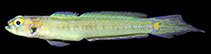 Vanderhorstia lepidobucca
Male foto/gambar oleh Erdmann, M.V.
Gambar | imej Google
Male foto/gambar oleh Erdmann, M.V.
klasifikasi / Nama Nama-nama umum | Sinonim (persamaan) | Catalog of Fishes(Marga, Jenis) | ITIS | CoL | WoRMS | Cloffa
> Gobiiformes (Gobies) > Gobiidae (Gobies) > Gobiinae
Etymology: lepidobucca: Name from Latin word meaning scaly-cheek, with reference to the unique head scalation.
Eponymy: Professor Cornelius Jan van der Horst (1889–1951) was a Dutch zoologist who moved to South Africa (1928) and became Head of the Zoology Department, Witwatersrand University, Johannesburg. [...] (Ref. 128868), visit book page.
Etymology: lepidobucca: Name from Latin word meaning scaly-cheek, with reference to the unique head scalation.
Eponymy: Professor Cornelius Jan van der Horst (1889–1951) was a Dutch zoologist who moved to South Africa (1928) and became Head of the Zoology Department, Witwatersrand University, Johannesburg. [...] (Ref. 128868), visit book page.
Lingkungan: lingkungan / zona iklim / kisaran kedalaman / jangkauan distribusi Ekologi
laut pelagic-neritic; kisaran kedalaman 30 - 40 m (Ref. 95856). Tropical
Penyebaran Wilayah | Daerah-daerah FAO | Ekosistem | Kemunculan | peta titik | Introduksi | Faunafri
Western Pacific: Indonesia.
Ukuran / Berat / umur
Kematangan: Lm ? range ? - ? cm
Max length : 4.0 cm SL (female)
Max length : 4.0 cm SL (female)
deskripsi pendek Kunci identifiaksi (pengenalan) | Morfologi | Morfometrik
Duri punggung (Keseluruhan (total)) : 7; duri punggung lunak (Keseluruhan (total)) : 13; Duri dubur: 1; Sirip dubur lunak: 14. This species is distinguished by the following characters: D VI-I,13; A I,14; pectoral rays 18; 51-55 scales in longitudinal series; 17-18 predorsal scales; scales on upper anterior corner of operculum; fully-scaled cheeks; with pre-pectoral scales; posterior scales ctenoid but cycloid on head and anterodorsal part of body; 3-5 + 12-15 gill rakers; gill opening extends forward nearly to a vertical at posterior edge of orbit; relatively low dorsal fin, no elongated spines, longest spine 1.9-2.8 in HL; long and pointed caudal fin, 2.2-2.8 in SL; sexual dichromatism none; mid-dorsal, neon blue stripe on head; on side of snout and cheek are irregular orange bands; middle of operculum with prominent yellow and blue-margined black spot; along middle of side with about 16-18 short brown bars; first dorsal fin blue, pale yellow low basally, just below middle of fin with row of large, irregular yellow spots (one between each spine), and tip of each spine yellow; second dorsal fin blue with a pair of yellow stripes; anal fin mainly yellow except blue on distal third; caudal fin blue with a large yellow spot medially at base from which pale yellow rays radiate posteriorly; pectoral fins with pair of large yellow spots at base and neon blue marking on uppermost part of base (Ref. 95856).
Body shape (shape guide): elongated; Cross section: oval.
Body shape (shape guide): elongated; Cross section: oval.
Occurs on silty-sand bottoms in sheltered water exposed to periodic strong currents. It lives in burrows and presumably, like other members of the genus, is associated with snapping shrimps of the genus Alpheus (Ref. 95856).
Siklus hidup dan perilaku kawin Kematangan | Reproduksi, perkembang biakan | Pemijahan | telur-telur | Fekunditas | Larva
rujukan utama
Unggah referensi Anda | Acuan | Koordinator | mitra
Allen, G.R., T. Peristiwady and M,V. erdmann, 2014. Vanderhorstia lepidobucca, a new species of shrimpgoby from Sulawesi, Indonesia. aqua, Int. J. Ichthyol. 20(2):81-86. (Ref. 95856)
Status IUCN Red List (Ref. 130435: Version 2025-2 (Global))
kekurangan data (DD) ; Date assessed: 14 November 2023
CITES
Not Evaluated
ancaman kepada manusia
Harmless
penggunaan manusia
FAO - Publication: search | FishSource |
informasi lanjut
Ekologi trofik
Item makanan (mangsa)
Komposisi makanan
Konsumsi makanan
Ransum makanan
Pemangsa
Item makanan (mangsa)
Komposisi makanan
Konsumsi makanan
Ransum makanan
Pemangsa
Ekologi
Ekologi
Ekologi
Dinamika populasi
Parameter pertumbuhan
Maks. usia / ukuran
Panjang-berat rel.
Panjang-panjang rel.
ukuran frekuensi
Konversi massa
pemulihan
Kelimpahan
Parameter pertumbuhan
Maks. usia / ukuran
Panjang-berat rel.
Panjang-panjang rel.
ukuran frekuensi
Konversi massa
pemulihan
Kelimpahan
Siklus hidup
Reproduksi, perkembang biakan
Kematangan
Kedewasaan / insang rel.
Fekunditas
Pemijahan
Agregasi pemijahan
telur-telur
pekembangan telor
Larva
Dinamika larva
Reproduksi, perkembang biakan
Kematangan
Kedewasaan / insang rel.
Fekunditas
Pemijahan
Agregasi pemijahan
telur-telur
pekembangan telor
Larva
Dinamika larva
Anatomi
Area insang
Otak
Otolith
Area insang
Otak
Otolith
Fisiologi
Komposisi tubuh
Nutrisi
Konsumsi oksigen
Jenis renang
Kecepatan berenang
Pigmen visual
Suara ikan
Penyakit & Parasit
Toksisitas (LC50)
Komposisi tubuh
Nutrisi
Konsumsi oksigen
Jenis renang
Kecepatan berenang
Pigmen visual
Suara ikan
Penyakit & Parasit
Toksisitas (LC50)
Genetika
genom
Genetika
Heterozigositas
Diturunkan
Keanekaragaman Genetik
genom
Genetika
Heterozigositas
Diturunkan
Keanekaragaman Genetik
Yang berhubungan dengan manusia
Sistem akuakultur
profil budidaya air
Strain
Kasus Ciguatera
Perangko, koin, dll.
Sistem akuakultur
profil budidaya air
Strain
Kasus Ciguatera
Perangko, koin, dll.
Alat, peralatan
E-book | Penuntun lapangan | tanda freqkuenci panjang | peringkat sejarah hidup | peta titik |
Tangkap-MSY |
laporan khas
muat turun XML
Sumber internet
AFORO (otoliths) | Aquatic Commons | BHL | Cloffa | Websites from users | semak peneliti ikan | CISTI | Catalog of Fishes: Marga, Jenis | DiscoverLife | ECOTOX | FAO - Publication: search | Faunafri | Fishipedia | Fishtrace | GloBI | Google Books | Google Scholar | Google | IGFA World Record | OneZoom | Open Tree of Life | Otolith Atlas of Taiwan Fishes | PubMed | Reef Life Survey | Socotra Atlas | TreeBase | Tree of Life | Wikipedia: pergi, Cari | World Records Freshwater Fishing | Zoobank | Catatan Zoologi
Estimasi berdasarkan model
Indeks keanekaragaman filogenetik (Acuan 82804): PD50 = 0.5000 [Uniqueness, from 0.5 = low to 2.0 = high].
Bayesian length-weight: a=0.00741 (0.00347 - 0.01582), b=3.09 (2.91 - 3.27), in cm total length, based on LWR estimates for this (Sub)family-body shape (Ref. 93245).
Tingkat Trofik (Acuan 69278): 3.2 ±0.3 se; based on size and trophs of closest relatives
Daya lenting (Acuan 120179): Tinggi, Waktu penggandaan populasi minimum kurang dari 15 bulan (Preliminary K or Fecundity.).