


Trichomycterus steindachneri DoNascimiento, Prada-Pedreros & Guerrero-Kommritz, 2014
ارفع صور و مقاطع فيديو
صور قوقل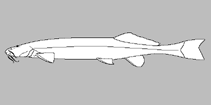 No image available for this species;
drawing shows typical species in Trichomycteridae.
صور قوقل
drawing shows typical species in Trichomycteridae.
التصنيف / الأسماء الأسماء الشائعة | مرادفات | Catalog of Fishes(جنس, الانواع) | ITIS | CoL | WoRMS | Cloffa
> Siluriformes (Catfishes) > Trichomycteridae (Pencil or parasitic catfishes) > Trichomycterinae
Etymology: Trichomycterus: Greek, thrix = hair + Greek, mykter, -eros = nose (Ref. 45335); steindachneri: Named for Austrian zoologist Franz Steindachner (1834-1919) in recognition of his dedicated life and significant work in documenting the fish biodiversity, especially that from South America. His profuse morphological descriptions mainly contributed to settle the current standard in ichthyological taxonomic works.
Eponymy: Franz Steindachner (1834–1919) was an Austrian zoologist who specialised in herpetology and ichthyology. [...] (Ref. 128868), visit book page.
Etymology: Trichomycterus: Greek, thrix = hair + Greek, mykter, -eros = nose (Ref. 45335); steindachneri: Named for Austrian zoologist Franz Steindachner (1834-1919) in recognition of his dedicated life and significant work in documenting the fish biodiversity, especially that from South America. His profuse morphological descriptions mainly contributed to settle the current standard in ichthyological taxonomic works.
Eponymy: Franz Steindachner (1834–1919) was an Austrian zoologist who specialised in herpetology and ichthyology. [...] (Ref. 128868), visit book page.
البيئة: الوسط / المنطقة المناخية / نطاق العمق / نطاق التوزيع البيئة
; المياه العذبة قاعية التغذية و المعيشة. Tropical
التوزيع الأقاليم | مناطق الفاو | النظام البيئي | الظهور | نقطة علي الخريطة | مقدمة | Faunafri
South America: Colombia.
الحجم / وزن / العمر
وصف مختصر مفاتيح التعريف | الوصف الخارجي | قياسات المظهر الخارجي
الأشعة الظهرية الناعمة (المجموع) : 9; فقرات: 40 - 41. Trichomycterus steindachneri is diagnosed from most of its congeners, with the exception of T. cachiraensis, by having several broad foramina on cleithrum lamina (vs. cleithrum not pierced). It differs from most congeners except T. cachiraensis and T. brachykechenos by having a small posterior cranial fontanel, restricted to the parieto-supraoccipital (vs. a long somewhat rectangular fontanel extending anteriorly between frontal bones and posteriorly into anteromedian region of parietosupraoccipital). It can be distinguished from T. cachiraensis by having 40 or 41 free vertebrae (vs. 37-39), 14-18 ribs (vs. 12), a single upper hypural plate: 3+4+5 (vs. two hypural plates: 3,4+5), and by its coloration pattern consisting of ground color dark brown with a thin mid-lateral dark stripe (vs. ground colorlight brown with three lateral rows of small dark spots). It differs from T. brachykechenos by the possession of four rows of premaxillary and dentary teeth (vs. three), 13-14 opercular odontodes (vs. 8-11), 41-43 interopercular odontodes (vs. 22-30), 6-7 branchiostegal rays (vs. 8), anterior portion of sphenotic anterolaterally directed in dorsal view (vs. directed anteriorly), autopalatine with mesial margin straight(vs. concave), 12-16 teeth on ceratobranchial 5 (vs. 21-22), 11-14 teeth on upper dentigerous plate (vs. 22-25), infraorbital sensory pores i1 and i3 present (vs. absent), 40 or 41 free vertebrae (vs. 37 or 38), 14-18 ribs (vs. 12), first ray of pectoral fin slightly projected as a short filament(vs. not prolonged as a filament), pectoral fin with 7-8 branched rays (vs. 5-6), dorsal-fin origin at same level of pelvic-fin insertion (vs. at vertical through last third of pelvic fin), anal-fin origin posterior to dorsal-fin base(vs. at vertical through middle of dorsal-fin base), anal fin with seven basal radials (vs. six), procurrent caudal-fin rays 16-21 dorsally and 14-17 ventrally (vs. 15-16 and 10-13, respectively), and by the color pattern of lateral surface of body consisting of background dark brown with a thin mid-lateral dark stripe (vs. background light yellow with superficial layer of densely mottled dark brown). It further differs from T. dorsostriatus, which is also found in the río Meta system, by having 40 or 41 free vertebrae (vs. 37), dorsal fin inserted just posterior to neural spine of vertebrae 18 or 19 (vs. vertebra 16), anal-fin origin behind posterior end of dorsal-fin base, inserted just posterior to hemal spine of vertebrae 22-24 (vs. under posterior portion of dorsal-fin base, just posterior to vertebra 20), a single upper hypural plate (vs. two upper hypural plates), and by the color pattern consisting of a thin mid-lateral dark stripe (vs. a dark band or row of spots from just above the gill-opening to the base of the upper caudal-fin rays). It differs from T. migrans, the only other species described from western tributaries of the Orinoco (río Guaviare system) in Colombia, by its maxillary barbel reaching beyond pectoral-fin origin(vs. scarcely reaching this point), anal-fin origin entirely behind dorsal-fin base (vs. at vertical through base of last dorsal-fin ray), and caudal-fin margin slightly rounded (vs. deeply emarginated). It is readily distinguished from remaining species of Trichomycterus described or recorded from Colombia, except T. retropinnis, by having relatively rare pigmentation pattern composed of background dark brown with a single thin dark stripe along middle of side of body (vs. background light; either plain, with more than one stripe on lateral surface of body, with a single but wide mid-lateral band, or variably spotted or dotted). It differs from T. retropinnis by its pectoral-fin ray slightly projected beyond margin of fin as a short filament of less than 20% length of adjacent branched ray (vs. projecting as a long filament of ca. 40% length of adjacent branched ray), pectoral fin with 7-8 branched rays (vs. 6 branched rays), pelvic fin covering anus (vs. not reaching anus), relative position of the dorsal fin, expressed as dorsal-fin origin at same level of pelvic-fin insertion (vs. dorsal-fin origin behind distal margin of pelvic fin), and anal-fin origin entirely behind of dorsal-fin base (vs. anal-fin origin under anterior third of dorsal-fin base) (Ref. 102659).
Body shape (shape guide): elongated.
Body shape (shape guide): elongated.
Collected in a typical lotic environment of high altitude (2700 m), about 50 cm wide, with small pools and falls (not higher than 40 cm). Stream banks of the collection site have dense riparian vegetation, composed of shrubs and grasses, and dominated by the chusque Chusquea scandens (Ref. 102659).
دورة الحياة وسلوك التزاوج النضج | التكاثر | وضع البيض | بيض | الخصوبة | اليرقات
المرجع الرئيسي
قم بتحميل مراجعك | مراجع | المنظم : Pinna, Mário de | المتعاونين
DoNascimiento, C., S. Prada-Pedreros and J. Guerrero-Kommritz, 2014. A new catfish species of the genus Trichomycterus (Siluriformes: Trichomycteridae) from the río Orinoco versant of Páramo de Cruz Verde, Eastern Cordillera of Colombia. Neotrop. Ichthyol. 12(4:717-728. (Ref. 102659)
حالة القائمة الحمراء للاتحاد الدولي لحفظ الطبيعة والموارد الطبيعية (Ref. 130435: Version 2025-2 (Global))
نقص البينات (DD) ; Date assessed: 07 October 2020
CITES
Not Evaluated
خطر للأنسان
Harmless
استخدامات بشرية
FAO - Publication: search | FishSource |
مزيد من المعلومات
علم البيئة الغذائية
المواد الغذائية (الفرائس)
التركيبة الغذائية
استهلاك الأغذية
الحصص الغذائية
مفتريسات
المواد الغذائية (الفرائس)
التركيبة الغذائية
استهلاك الأغذية
الحصص الغذائية
مفتريسات
الديناميكيات السكانية
معاملات النمو
الحد الأقصى للأعمار/الأحجام
علاقة الطول بالوزن.
علاقة الطول بالطول.
الطول- الترددات
التحويل الجماعي
توظيف
الوفرة
معاملات النمو
الحد الأقصى للأعمار/الأحجام
علاقة الطول بالوزن.
علاقة الطول بالطول.
الطول- الترددات
التحويل الجماعي
توظيف
الوفرة
دورة الحياة
التكاثر
النضج
النضج/الخياشيم المتعلقة.
الخصوبة
وضع البيض
تجمعات التفريخ
بيض
تطور البيضة
اليرقات
حركة انتقال اليرقات
التكاثر
النضج
النضج/الخياشيم المتعلقة.
الخصوبة
وضع البيض
تجمعات التفريخ
بيض
تطور البيضة
اليرقات
حركة انتقال اليرقات
التشريح
منطقة الخياشيم
الدماغ
الأوتوليث
منطقة الخياشيم
الدماغ
الأوتوليث
علم وظائف الأعضاء
تكوين الجسم
المغذيات
استهلاك الأوكسجين
نوع السباحة
سرعة السباحة
الأصباغ البصرية
صوت السمك
الأمراض والطفيليات
السمية (LC50s)
تكوين الجسم
المغذيات
استهلاك الأوكسجين
نوع السباحة
سرعة السباحة
الأصباغ البصرية
صوت السمك
الأمراض والطفيليات
السمية (LC50s)
جيني
الوراثة
جيني
التغاير
التوريث
التنوع الوراثي
الوراثة
جيني
التغاير
التوريث
التنوع الوراثي
ذات الصلة بالبشر
أنظمة الاستزراع المائي
ملامح تربية الأحياء المائية
سلالات
حالات سيغواتيرا
طوابع بريدية وعملات معدنية ومتنوعة
أنظمة الاستزراع المائي
ملامح تربية الأحياء المائية
سلالات
حالات سيغواتيرا
طوابع بريدية وعملات معدنية ومتنوعة
أدوات
كتاب إلكتروني | دليل الميدان | معالج تردد الطول-التردد | أداة تاريخ الحياة | نقطة علي الخريطة |
Catch-MSY |
تقارير خاصة
البحث عن صيانت الأحواض المائيه | التحقق من وجود صفحات حقائق الأنواع | البحث عنا حقائق حول الأحواض المائيه
تنزيل XML
مصادر علي الأنترنت
AFORO (otoliths) | Aquatic Commons | BHL | Cloffa | Websites from users | البحث في مراقبي الأسماك | CISTI | Catalog of Fishes: جنس, الانواع | DiscoverLife | ECOTOX | FAO - Publication: search | Faunafri | Fishipedia | Fishtrace | GloBI | Google Books | Google Scholar | Google | IGFA World Record | OneZoom | Open Tree of Life | Otolith Atlas of Taiwan Fishes | PubMed | Reef Life Survey | Socotra Atlas | TreeBase | شجرة الحياة | Wikipedia: ذهب, بحث | World Records Freshwater Fishing | Zoobank | سجلات علم الحيوانات
تقديرات تستند إلى النماذج
مؤشر التنوع الشُعبي الوراثي (مرجع 82804): PD50 = 0.5000 [Uniqueness, from 0.5 = low to 2.0 = high].
Bayesian length-weight: a=0.00912 (0.00396 - 0.02102), b=2.97 (2.79 - 3.15), in cm total length, based on LWR estimates for this Genus-body shape (Ref. 93245).
مستوى غذائي (مرجع 69278): 3.3 ±0.4 se; based on size and trophs of closest relatives