


Carassius praecipuus Kottelat, 2017
Uploaden van uw Foto's en video's
Google afbeelding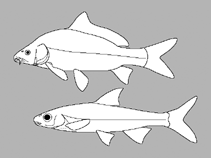 No image available for this species;
drawing shows typical species in Cyprinidae.
Google afbeelding
drawing shows typical species in Cyprinidae.
Classificatie / Namen Lokale namen | Synoniemen | Catalog of Fishes(Genus, Soort(en)) | ITIS | CoL | WoRMS | Cloffa
> Cypriniformes (Carps) > Cyprinidae (Minnows or carps) > Cyprininae
Etymology: Carassius: Latinization of , karass, karausche, European crucian carp (Ref. 45335); praecipuus: Derived from the Latin adjective praecipuus, -a, -um, means ‘which is not common’, in allusion to the unexpected presence of a Carassius in the Mekong drainage and the very low dorsal-fi n ray, lateral line scale and gill-raker counts.
Etymology: Carassius: Latinization of , karass, karausche, European crucian carp (Ref. 45335); praecipuus: Derived from the Latin adjective praecipuus, -a, -um, means ‘which is not common’, in allusion to the unexpected presence of a Carassius in the Mekong drainage and the very low dorsal-fi n ray, lateral line scale and gill-raker counts.
Milieu: milieu / Klimaatzone / Diepte / verspreidingsgebied Ecologie
; zoet water benthopelagisch. Tropical
Verspreiding Gebieden | FAO regio's | Ecosystemen | Voorkomen | Verspreidingskaart | Introducties | Faunafri
Asia: upper Nam Chat in central Laos.
Grootte / Gewicht / Leeftijd
Korte beschrijving Determinatiesleutels | Morfologie | Morfometrie
Dorsale zachte stralen (totaal) : 13 - 15; Anale zachte stralen: 8. Carassius praecipuus is diagnosed from all other species of Carassius by having the origin of the anal fin located behind a vertical through the base of last dorsal-fin ray (vs. under dorsal-fi n base), 9-11½ branched dorsal-fin rays (vs. 11-21½), 25-27 +1 scales on lateral line (vs. 27-36 [total]), and 20-21 total gill rakers (vs. 23-128) (Ref. 116770).
Body shape (shape guide): fusiform / normal.
Body shape (shape guide): fusiform / normal.
Inhabits stream with 2-4 m width, about 30-50 cm depth, up to about 1 m depth in one of the curves, moderate current, and bottom consisted of gravel and pebble, with some areas cogvered by a thin layer of sediments. Occurs mainly in the deepest areas, under the roots of overhanging trees and bushes. Other fish species found were Opsarius pulchellus (Cyprinidae), Schistura coruscans, S. defectiva, S. personata, S. quaesita (Nemacheilidae), Oreoglanis sp. (Sisoridae) and Rhinogobius mekongianus (Gobiidae). Sexual maturity is attained at around 60-70 mm SL (Ref. 116770).
Levenscyclus en paargedrag Maturiteit | Voortplanting | Paaien | Eieren | Fecunditeit | Larven
Hoofdreferentie
Upload uw referenties | Referenties | Coördinator | Medewerkers
Kottelat, M., 2017. Carassius praecipuus, a dwarf new species of goldfish from the Mekong drainage in central Laos (Teleostei: Cyprinidae). Revue suisse de Zoologie 124(2):323-329. (Ref. 116770)
CITES
Not Evaluated
Gevaar voor de mens
Harmless
Gebruik door de mens
FAO - Publication: search | FishSource |
Meer informatie
Trofische ecologie
Voedsel (prooien)
Dieetsamenstelling
Voedselconsumptie
Voedselrantsoenen
Predatoren
Voedsel (prooien)
Dieetsamenstelling
Voedselconsumptie
Voedselrantsoenen
Predatoren
Populatiedynamica
Groeiparameters
Max. leeftijden / maten
Lengte-gewicht rel.
Lengte-lengte rel.
Lengtefrequenties
Massaconversie
Rekrutering
Abundantie
Groeiparameters
Max. leeftijden / maten
Lengte-gewicht rel.
Lengte-lengte rel.
Lengtefrequenties
Massaconversie
Rekrutering
Abundantie
Levenscyclus
Voortplanting
Maturiteit
Rijpheid/kieuwen rel.
Fecunditeit
Paaien
Paaibestanden
Eieren
Ontwikkeling van de eieren
Larven
Larvale populatiedynamiek
Voortplanting
Maturiteit
Rijpheid/kieuwen rel.
Fecunditeit
Paaien
Paaibestanden
Eieren
Ontwikkeling van de eieren
Larven
Larvale populatiedynamiek
Anatomie
Kieuwoppervlak
Hersenen
Otoliet
Kieuwoppervlak
Hersenen
Otoliet
Fysiologie
Lichaamssamenstelling
Voedingsstoffen
Zuurstofverbruik
Type zwemmen
Zwemsnelheid
Visuele pigmenten
Vis geluid
Ziekten en parasieten
Toxiciteit (LC50)
Lichaamssamenstelling
Voedingsstoffen
Zuurstofverbruik
Type zwemmen
Zwemsnelheid
Visuele pigmenten
Vis geluid
Ziekten en parasieten
Toxiciteit (LC50)
Genetica
genoom
Genetica
Heterozygositeit
Erfelijkheid
Genetische diversiteit
genoom
Genetica
Heterozygositeit
Erfelijkheid
Genetische diversiteit
Menselijk gerelateerd
Aquacultuursystemen
Aquacultuurprofielen
Kweeklijnen
Ciguatera gevallen
Postzegels, munten, diversen.
Aquacultuursystemen
Aquacultuurprofielen
Kweeklijnen
Ciguatera gevallen
Postzegels, munten, diversen.
Tools
Speciale rapporten
Bekijk gegevens voor het houden in een aquarium | Bekijk Fact Sheets voor de soort | Bekijk Aquacultuur Fact Sheets
Download XML
Internetbronnen
AFORO (otoliths) | Aquatic Commons | BHL | Cloffa | Websites from users | Bekijk FishWatcher | CISTI | Catalog of Fishes: Genus, Soort(en) | DiscoverLife | ECOTOX | FAO - Publication: search | Faunafri | Fishipedia | Fishtrace | GloBI | Google Books | Google Scholar | Google | IGFA World Record | OneZoom | Open Tree of Life | Otolith Atlas of Taiwan Fishes | PubMed | Reef Life Survey | Socotra Atlas | TreeBase | Tree of Life | Wikipedia: ga naar, zoek | World Records Freshwater Fishing | Zoobank | Zoological Record
Schattingen op basis van modellen
Fylogenetische diversiteitsindex (Ref. 82804): PD50 = 0.5156 [Uniqueness, from 0.5 = low to 2.0 = high].
Bayesian length-weight: a=0.01202 (0.00546 - 0.02648), b=3.03 (2.86 - 3.20), in cm total length, based on LWR estimates for this Genus-body shape (Ref. 93245).
Trofisch niveau (Ref. 69278): 2.9 ±0.2 se; based on size and trophs of closest relatives
Weerstandsvermogen (Ref. 120179): Hoog, minimale populatieverdubbelingstijd minder dan 15 maanden (Preliminary K or Fecundity.).