>
Gobiiformes (Gobies) >
Gobiidae (Gobies) > Gobiinae
Etymology: Acentrogobius: Greek, a = without + Greek, kentron = sting + Latin gobius = gudgeon (Ref. 45335); limarius: Name from Latin 'limarius' meaning 'off mud'; referring to its mud-bottom habitat.
Environment: milieu / climate zone / rango de profundidad / distribution range
Ecología
marino demersal; rango de profundidad ? - 26 m (Ref. 101679), usually 1 - 4 m (Ref. 101679). Tropical
Western Central Pacific: Indonesia.
Tamaño / Peso / Age
Madurez: Lm ? range ? - ? cm
Max length : 3.4 cm SL macho / no sexado; (Ref. 101679); 2.8 cm SL (female)
Short description
Claves de identificación | Morfología | Morfometría
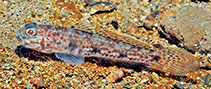
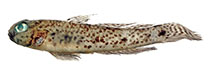
Espinas dorsales (total) : 7; Radios blandos dorsales (total) : 10; Espinas anales: 1; Radios blandos anales: 10. This species is distinguished by the following characters: D VI + I,10, where dorsal spines are thin and flexible, the third occasionally with long filamentous tip, reaching as far as sixth or seventh segmented ray of second dorsal fin when adpressed; A I,10; pectoral-fin rays 18-19 (rarely 18); lanceolate caudal fin, about equal to head length or slightly longer; scales in longitudinal scales 27-28, 9 transverse-scales; 8-9 predorsal-scales; finely ctenoid scales cover the body, becoming cycloid on breast (prepelvic), the pectoral-fin base, nape, and head; opercle and cheek are fully scaled; anterior extent of gill opening is below middle of opercle; transverse pattern of cheek papillae; single transverse row of papillae on chin; when alive, colour brown, grading to tan ventrally with scattered dark-edged, orange spots midlaterally on the side of the body, midlateral row of four, large squarish black spots from behind pectoral fin to caudal-fin base, pair of orange-brown stripes across cheek, and brown spotting on dorsal and caudal fins (Ref. 101679).
Body shape (shape guide): elongated; Cross section: compressed.
Occurs in mud-bottom habitat (Ref. 101679).
Life cycle and mating behavior
Madurez | Reproducción | Puesta | Huevos | Fecundidad | Larva
Allen, G.R., M.V. Erdmann and R.K. Hadiaty, 2015. Acentrogobius limarius, a new species of goby (Pisces: Gocbiidae) from West Papua Province, Indonesia. J. Ocean Sci. Found. 15:33-40. (Ref. 101679)
IUCN Red List Status (Ref. 130435: Version 2025-1)
Threat to humans
Harmless
Human uses
Herramientas
Special reports
Download XML
Fuentes de Internet
Estimates based on models
Phylogenetic diversity index (Referencia
82804): PD
50 = 0.5000 [Uniqueness, from 0.5 = low to 2.0 = high].
Bayesian length-weight: a=0.00794 (0.00345 - 0.01831), b=3.09 (2.92 - 3.26), in cm total length, based on LWR estimates for this Genus-body shape (Ref.
93245).
Nivel trófico (Referencia
69278): 3.2 ±0.4 se; based on size and trophs of closest relatives
Resiliencia (Referencia
120179): Alto, población duplicada en un tiempo mínimo inferior a 15 meses (Preliminary K or Fecundity.).
Fishing Vulnerability (Ref.
59153): Low vulnerability (10 of 100).
🛈