


Trachinocephalus trachinus (Temminck & Schlegel, 1846)
Uploaden van uw Foto's en video's
Afbeeldingen | Google afbeelding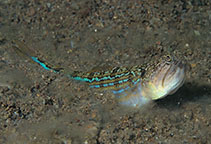 Trachinocephalus trachinus
Afbeelding van Hazes, B.
Afbeeldingen | Google afbeelding
Afbeelding van Hazes, B.
Classificatie / Namen Lokale namen | Synoniemen | Catalog of Fishes(Genus, Soort(en)) | ITIS | CoL | WoRMS | Cloffa
> Aulopiformes (Grinners) > Synodontidae (Lizardfishes) > Synodontinae
Etymology: Trachinocephalus: Greek, trachys, -eia, -ys = rough + Greek, kephale = head (Ref. 45335).
Etymology: Trachinocephalus: Greek, trachys, -eia, -ys = rough + Greek, kephale = head (Ref. 45335).
Milieu: milieu / Klimaatzone / Diepte / verspreidingsgebied Ecologie
marien; brak water rifbewoner; diepte 3 - 388 m (Ref. 58302), usually 40 - 183 m (Ref. 110386). Tropical
Verspreiding Gebieden | FAO regio's | Ecosystemen | Voorkomen | Verspreidingskaart | Introducties | Faunafri
Indo-West Pacific: East African coasts and the Red Sea to Hawaii.
Lengte bij maturiteit / Grootte / Gewicht / Leeftijd
Maturiteit: Lm ?, range 19 - ? cm
Max length : 22.8 cm SL mannelijk / geslacht onbekend; (Ref. 110386)
Max length : 22.8 cm SL mannelijk / geslacht onbekend; (Ref. 110386)
Korte beschrijving Determinatiesleutels | Morfologie | Morfometrie
Dorsale zachte stralen (totaal) : 11 - 14; Anale zachte stralen: 13 - 18. This species is distinguished from its congeners by the following characters: snout length (LSn) 40.4-108.5% eye diameter (DE), mean 74.8% (vs. mean 40.1% in T. gauguini and 79.1% in T. trachinus); LSn 15.0-26.0% body depth (DB), mean 21.2 (vs. mean 14.7% in T. gauguini); interorbital width 5.2-12.0%, mean 8.7% LH (vs. mean 5.6% in T. gauguini); DE 11.0-22.6% LH, mean 16.6% (vs. mean 19.6% in T. gauguini and 15.7% in T. myops); length of the last dorsal-fin ray 8.7-11.8% LS, mean 10.1% (vs. mean 10.8% in T. gauguini and 9.4% in T. myops); anal-fin rays 13-18, mode 16 (vs. mode 14 in T. gauguini and 15 in T. myops); pectoral-fin rays 11-13, mode 12 (vs. mode 11 in T. gauguini); predorsal scales 14-18, mode 16 (vs. mode 17 in T. myops). differs further from T. gauguini and T. myops by the deep mitochondrial distances (15.7-19.0 and 15.1-17.8%, respectively) (Ref. 110386).
Cross section: oval.
Cross section: oval.
Occurs in estauries and inshore waters to 200 m (Ref. 110386); benthic at 3-388 m (Ref. 58302). Found near shore above 40 m over sandy bottoms of deep outer reef slopes (Ref. 11230). Reported to be common in estuaries (Ref. 11228, 48635). Rest on or more often burrow into substrate, leaving eyes exposed and when disturbed, it may swim a short distance but quickly buries itself again (Ref. 48635). Feed on fishes (Ref. 5213) and small crustaceans (Ref. 36558).
Levenscyclus en paargedrag Maturiteit | Voortplanting | Paaien | Eieren | Fecunditeit | Larven
Hoofdreferentie
Upload uw referenties | Referenties | Coördinator | Medewerkers
Polanco, F.A., P.A. Acero and R. Betancur-R, 2016. No longer a circumtropical species: revision of the lizardfishes in the Trachinocephalus myops species complex, with description of a new species from the Marquesas Islands. J. Fish Biol. 89(2):1302-1323. (Ref. 110386)
Status op de Rode Lijst van het IUCN (Ref. 130435: Version 2025-2 (Global))
Niet bedreigd (LC) ; Date assessed: 28 June 2018
CITES
Not Evaluated
Gevaar voor de mens
Harmless
Gebruik door de mens
FAO - Publication: search | FishSource |
Meer informatie
Trofische ecologie
Voedsel (prooien)
Dieetsamenstelling
Voedselconsumptie
Voedselrantsoenen
Predatoren
Voedsel (prooien)
Dieetsamenstelling
Voedselconsumptie
Voedselrantsoenen
Predatoren
Ecologie
Ecologie
Ecologie
Populatiedynamica
Groeiparameters
Max. leeftijden / maten
Lengte-gewicht rel.
Lengte-lengte rel.
Lengtefrequenties
Massaconversie
Rekrutering
Abundantie
Groeiparameters
Max. leeftijden / maten
Lengte-gewicht rel.
Lengte-lengte rel.
Lengtefrequenties
Massaconversie
Rekrutering
Abundantie
Levenscyclus
Voortplanting
Maturiteit
Rijpheid/kieuwen rel.
Fecunditeit
Paaien
Paaibestanden
Eieren
Ontwikkeling van de eieren
Larven
Larvale populatiedynamiek
Voortplanting
Maturiteit
Rijpheid/kieuwen rel.
Fecunditeit
Paaien
Paaibestanden
Eieren
Ontwikkeling van de eieren
Larven
Larvale populatiedynamiek
Fysiologie
Lichaamssamenstelling
Voedingsstoffen
Zuurstofverbruik
Type zwemmen
Zwemsnelheid
Visuele pigmenten
Vis geluid
Ziekten en parasieten
Toxiciteit (LC50)
Lichaamssamenstelling
Voedingsstoffen
Zuurstofverbruik
Type zwemmen
Zwemsnelheid
Visuele pigmenten
Vis geluid
Ziekten en parasieten
Toxiciteit (LC50)
Genetica
genoom
Genetica
Heterozygositeit
Erfelijkheid
Genetische diversiteit
genoom
Genetica
Heterozygositeit
Erfelijkheid
Genetische diversiteit
Menselijk gerelateerd
Aquacultuursystemen
Aquacultuurprofielen
Kweeklijnen
Ciguatera gevallen
Postzegels, munten, diversen.
Aquacultuursystemen
Aquacultuurprofielen
Kweeklijnen
Ciguatera gevallen
Postzegels, munten, diversen.
Tools
Speciale rapporten
Bekijk gegevens voor het houden in een aquarium | Bekijk Fact Sheets voor de soort | Bekijk Aquacultuur Fact Sheets
Download XML
Internetbronnen
AFORO (otoliths) | Aquatic Commons | BHL | Cloffa | Websites from users | Bekijk FishWatcher | CISTI | Catalog of Fishes: Genus, Soort(en) | DiscoverLife | ECOTOX | FAO - Publication: search | Faunafri | Fishipedia | Fishtrace | GloBI | Google Books | Google Scholar | Google | IGFA World Record | Nationale databanken | OneZoom | Open Tree of Life | Otolith Atlas of Taiwan Fishes | PubMed | Reef Life Survey | Socotra Atlas | TreeBase | Tree of Life | Wikipedia: ga naar, zoek | World Records Freshwater Fishing | Zoological Record
Schattingen op basis van modellen
Fylogenetische diversiteitsindex (Ref. 82804): PD50 = 0.5625 [Uniqueness, from 0.5 = low to 2.0 = high].
Bayesian length-weight: a=0.02344 (0.01334 - 0.04121), b=3.39 (3.23 - 3.55), in cm total length, based on LWR estimates for this species & (Sub)family-body (Ref. 93245).
Trofisch niveau (Ref. 69278): 4.1 ±0.7 se; based on size and trophs of closest relatives
Weerstandsvermogen (Ref. 120179): Hoog, minimale populatieverdubbelingstijd minder dan 15 maanden (Preliminary K or Fecundity.).