


Amblygobius phalaena (Valenciennes, 1837)
Whitebarred goby
अपना अपलोड करें तस्वीरें और वीडियो
तस्वीरे | वीडियो | Google image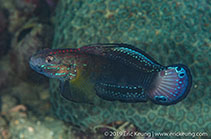 Amblygobius phalaena
चित्र स्रोत: AP Eric Keung@114°E Hong Kong Reef Fish Survey
तस्वीरे | वीडियो | Google image
चित्र स्रोत: AP Eric Keung@114°E Hong Kong Reef Fish Survey
वर्गीकरण / नाम आम नाम | उपशब्द | Catalog of Fishes(वर्ग, प्रजाति) | ITIS | CoL | WoRMS | Cloffa
> Gobiiformes (Gobies) > Gobiidae (Gobies) > Gobiinae
Etymology: Amblygobius: Greek, amblys = darkness + Latin gobius = gudgeon (Ref. 45335).
More on author: Valenciennes.
Etymology: Amblygobius: Greek, amblys = darkness + Latin gobius = gudgeon (Ref. 45335).
More on author: Valenciennes.
पर्यावरण: पर्यावरण / जलवायु क्षेत्र / गहराई सीमा / वितरण सीमा पारिस्थितिकी
समुद्री प्रवाल-भित्ति संयुक्त; गैर प्रवासी (Ref. 52884); गहराई सीमा ? - 52 m (Ref. 86942), usually 2 - 20 m (Ref. 27115). Tropical; 22°C - 30°C (Ref. 27115); 30°N - 32°S
वितरण प्रदेशों | ऐफ ऐ ओ क्षेत्र | पारिस्थितिकी प्रणालियों | संयोग | बिन्दु नक्शा | भूमिका | Faunafri
Pacific Ocean: Philippines to the Society Islands, north to Ryukyu Islands, south to southern Australia (including Lord Howe Island) and Rapa Island; throughout Micronesia.
आकार / वज़न / आयु
संक्षिप्त वर्णन पहचान कुंजी | आकृति विज्ञान | मौरफोमैटरिक्स
पृष्ठीय रीढ़ (सम्पूर्ण) : 7; पृष्ठीय सौफट रेज़ (सम्पूर्ण) : 13 - 15; गुदा कांटा: 1; ऐनल सौफट रेज़: 14. Characterized by overall greenish brown body color with five dark brown to blackish bars; presence of pale edged dark stripe through eye and another across cheek; head with white streaks; small white spots in 3-4 horizontal rows on body; first dorsal fin with black spot and another on upper caudal fin base; prolonged third and fourth dorsal spines as short filaments, first dorsal spine longer than second; rounded caudal fin; longitudinal scale series 50-55; ctenoid scales; cycloid scales on nape, abdomen, and breast; predorsal scales extending to interorbital space; scales dorsally on opercle, absent on cheek; depth of body 3.4-4.6 in SL (Ref. 90102).
Body shape (shape guide): fusiform / normal.
Body shape (shape guide): fusiform / normal.
Solitary or in pairs (Ref. 90102). Adults inhabit coastal reefs and lagoons on sand and rubble margins of algal reefs and sometimes near seagrass beds (Ref. 48637). Feed by sifting mouthfuls of sand and expelling it through the gills, to capture small invertebrates, organic matter, and large quantities of algae. Monogamous (Ref. 52884). Spawning is synchronous with semilunar periods (Ref. 84980). Eggs are deposited in burrows which are tended by the male parent (Ref. 55919, 84980). Minimum depth reported from Ref. 27115. Also Ref. 58652.
जीवन चक्र और संभोग व्यवहार परिपक्व अवधि | पुनरुत्पत्ति | मछलीऔ का अंडे देना | अंडे | उपजाऊपन | लार्वा
Monogamous mating is observed as both facultative and social (Ref. 52884, 58559). Although a few pairs changed partners, most pairs remained together over successive rounds of spawnings according to a study (Ref. 84980). Spawning cycle is semilunar. Males construct burrows where the eggs are deposited. Only the males guard the burrows, occassionaly fanning the eggs to provide oxygenated sea water to the burrow. They do this about 41% of the time at the expense of feeding. Egg guarding lasts for 3-4 days after which the eggs hatch in time for the full or new moon phases (Ref. 84980). Parental care shifted from male to female in a study where the male parent was removed from the burrow which according to the study could be attributed to the spatial closeness of the parents and no requirement of special structures for guarding the offsprings (Ref. ).
मुख्य संदर्भ
अपने संदर्भ अपलोड करें | संदर्भ | संयोजक | सहयोगीयो
Myers, R.F., 1991. Micronesian reef fishes. Second Ed. Coral Graphics, Barrigada, Guam. 298 p. (Ref. 1602)
आईयूसीएन रेड लिस्ट स्थिति (Ref. 130435: Version 2025-2 (Global))
Least Concern (LC) ; Date assessed: 27 August 2020
CITES
Not Evaluated
मनुष्यों के लिए ख़तरा
Harmless
मानव उपयोग
मात्स्यिकी: लघु वाणिज्य; जलजीवालय: व्यापारिक
FAO - Publication: search | FishSource | हमारे चारों ओर समुद्र
अधिक जानकारी
जनसंख्या गतिशीलता
विकास मापदंड
अधिकतम आयु/आकार
लंबाई-वजन संबंध
लंबाई-लंबाई संबंध
लंबाई-आवृत्तियाँ
सामूहिक रूपांतरण
भर्ती
बहुतायत
विकास मापदंड
अधिकतम आयु/आकार
लंबाई-वजन संबंध
लंबाई-लंबाई संबंध
लंबाई-आवृत्तियाँ
सामूहिक रूपांतरण
भर्ती
बहुतायत
जीवन चक्र
पुनरुत्पत्ति
परिपक्व अवधि
परिपक्वता/गिल्स संबंध
उपजाऊपन
मछलीऔ का अंडे देना
स्पॉनिंग एकत्रीकरण
अंडे
अंडे का विकास
लार्वा
लारवल गतिकी
पुनरुत्पत्ति
परिपक्व अवधि
परिपक्वता/गिल्स संबंध
उपजाऊपन
मछलीऔ का अंडे देना
स्पॉनिंग एकत्रीकरण
अंडे
अंडे का विकास
लार्वा
लारवल गतिकी
फिजियोलॉजी
शारीरिक संरचना
पोषक तत्व
प्राणवायु की खपत
तैराकी का प्रकार
तैराकी की गति
दृश्य वर्णक
मछली की आवाज
रोग एवं परजीवी
विषाक्तता (LC50s)
शारीरिक संरचना
पोषक तत्व
प्राणवायु की खपत
तैराकी का प्रकार
तैराकी की गति
दृश्य वर्णक
मछली की आवाज
रोग एवं परजीवी
विषाक्तता (LC50s)
आनुवंशिकी
जीनोम
आनुवंशिकी
विषमयुग्मजी
हैरेटिबिलटी
आनुवंशिक विविधता
जीनोम
आनुवंशिकी
विषमयुग्मजी
हैरेटिबिलटी
आनुवंशिक विविधता
मानव संबंधी
जलकृषि प्रणालियाँ
जलीयकृषि रूपरेखाऐ
खींच
सिगुएटेरा के मामले
टिकट, सिक्के, विविध.
जलकृषि प्रणालियाँ
जलीयकृषि रूपरेखाऐ
खींच
सिगुएटेरा के मामले
टिकट, सिक्के, विविध.
साधन
बायो क्विज़ | ई-पुस्तक | कार्यक्षेत्र पथप्रदर्शक | लंबाई आवृति इंद्रजालिक | जीवन-इतिहास उपकरण | बिन्दु नक्शा |
कैच-एमएसवाई |
विशेष रिपोर्ट
एक्वेरियम के रखरखाव की जांच करें | प्रजातियों के तथ्य पत्रक की जाँच करें | जलीय कृषि तथ्य पत्रक की जाँच करें
XML डाउनलोड करें
सारांश पृष्ठ | बिंदु डेटा | आम नाम | तस्वीरें
इंटरनेट स्रोत
AFORO (otoliths) | Aquatic Commons | BHL | Cloffa | Websites from users | Check FishWatcher | CISTI | Catalog of Fishes: वर्ग, प्रजाति | DiscoverLife | ECOTOX | FAO - Publication: search | Faunafri | Fishipedia | Fishtrace | GloBI | Google Books | Google Scholar | Google | IGFA World Record | राष्ट्रीय आंकड़ासंचय | OneZoom | Open Tree of Life | Otolith Atlas of Taiwan Fishes | सार्वजनिक लजीवालय | PubMed | Reef Life Survey | Socotra Atlas | TreeBase | Tree of Life | Wikipedia: Go, खोज | World Records Freshwater Fishing | प्राणीशास्त्रीय अभिलेख
मॉडल पर आधारित अनुमान
जातिवृति विविधता सूचकांक (संदर्भ 82804): PD50 = 0.5000 [Uniqueness, from 0.5 = low to 2.0 = high].
Bayesian length-weight: a=0.00794 (0.00501 - 0.01259), b=3.03 (2.90 - 3.16), in cm total length, based on LWR estimates for this species & (Sub)family-body (Ref. 93245).
ट्रॉफिक स्तर (संदर्भ 69278): 3.6 ±0.4 se; based on diet studies.
Generation time: 0.4 ( na - na) years. Estimated as median ln(3)/K based on 2 growth studies.
लौटाव (संदर्भ 120179): ऊंचा, न्यूनतम जनसंख्या दुगनी समय अवलागत 15 महीने। (Fec = 37,665 (clutch size)).
पोषक तत्व (Ref. 124155): Calcium = 128 [69, 285] mg/100g; Iron = 1.1 [0.5, 2.1] mg/100g; Protein = 18.8 [16.8, 20.5] %; Omega3 = 0.151 [0.068, 0.307] g/100g; Selenium = 44.5 [20.0, 92.8] μg/100g; VitaminA = 47.6 [13.1, 159.7] μg/100g; Zinc = 1.92 [1.23, 2.89] mg/100g (wet weight);