>
Gobiiformes (Gobies) >
Gobiidae (Gobies) > Gobiinae
Etymology: Eviota: No etymology given, suggested by Christopher Scharpt: from Latin 'eu' for 'true' and 'iota' for anything very small, in combination 'truly very small' referring to it as being the smallest vertebrate at the time it has benn described by Jenkins (thus, making the suggestion by Scharpt plausible.
More on authors: Lachner & Karnella.
Environment: milieu / climate zone / ລະດັບຄວາມເລິກ / distribution range
ນິເວດວິທະຍາ
ສັດທະເລ ກ່ຽວກັນຫີນ; ລະດັບຄວາມເລິກ 0 - 9 m (Ref. 58018). Tropical
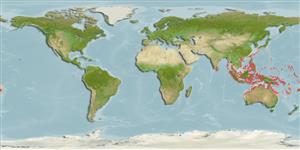
East Indian to Western Pacific: East Andaman Sea (coast of Thailand), Malaysia, Vietnam, Philippines and Palau, Indonesia (Java and Kalimantan to West Papua), and Papua New Guinea.
ຂະໜາດ / ນ້ຳໜັກ / Age
ການຈະເລີນເຕັມໄວ: Lm ? range ? - ? cm
Max length : 2.1 cm SL ຕົວຜູ້/ບໍ່ມີເພດ; (Ref. 51740)
ຄີ (ໜາມ)ແຂງຢູ່ຫຼັງປາ (ທັງໝົດ) : 6 - 7; ຄີຫຼັງຂອງປາ (ຄີອ່ອນ) (ທັງໝົດ) : 8 - 9; ຄີ(ໜາມ) ແຂງຢູ່ຄີກົ້ນປາ
ກຸ່ມປາກະດູກແຂງ
ຄວາມຖີ່ຂອງກຸ່ມຖ່າຍທອດພັນ
ປາທີ່ມີການເຄື່ອນຍ້າຍຈາກທະເລໄປຫານ້ຳຈືດ ແລະນ້ຳຈືດຫາທະເລ
ປາທີ່ມີການເຄື່ອນຍ້າຍຈາກທະເລແລະໄປໄຂ່ຢູ່ນ້ຳຈືດ
ຄີກົ້ນຂອງປາ
ສັດທີ່ມີກະດູກສັນຫັຼງ
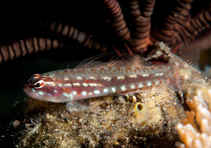
ການຖ່າຍທອດທາງກຳມະພັນຈາກພໍ່ແມ່ຫາລູກ: 1; ຄີກົ້ນຂອງປາ: 7 - 8. Characterized by translucent body with internal reddish-brown stripe, white dash-like markings immediately above and similar markings at level of upper pectoral fin base extending to middle of body; cheek with short brown stripe across; snout to occiput with white line on dorsal midline, side of snout with dark stripe; pupil-sized bluish spot at upper pectoral fin base; spots along base of dorsal fin, small and red-brown color; posteroventral body with six short internal brownish bars; longitudinal scale series 23-25; ctenoid scales except on head, nape, breast and base of pectoral fin; separated pelvic fins, bases joins by thin membrane; fourth pelvic ray with 3-8 branches; depth of body 3.9-4.5 in SL (Ref. 90102).
Body shape (shape guide): elongated; Cross section: compressed.
Found in coral reefs, inshore (Ref. 75154).
Life cycle and mating behavior
ການຈະເລີນເຕັມໄວ | ການສືບພັນ | ການວາງໄຂ່ | ໄຂ່ | ຄວາມດົກຂອງໄຂ່ປາ | ຕົວອ່ອນ
Lachner, E.A. and S.J. Karnella, 1980. Fishes of the Indo-Pacific genus Eviota with descriptions of eight new species (Teleostei:Gobiidae). Smithson. Contrib. Zool. (315):127 p. (Ref. 5293)
IUCN Red List Status (Ref. 130435: Version 2025-1)
Threat to humans
Harmless
Human uses
ເຄື່ອງມື
Special reports
Download XML
ແຫຼ່ງອີນເຕີເນັດ
Estimates based on models
Preferred temperature (ເອກະສານອ້າງອີງ
123201): 25.2 - 29.3, mean 28.6 °C (based on 2249 cells).
Phylogenetic diversity index (ເອກະສານອ້າງອີງ
82804): PD
50 = 0.5000 [Uniqueness, from 0.5 = low to 2.0 = high].
Bayesian length-weight: a=0.00692 (0.00284 - 0.01683), b=3.10 (2.92 - 3.28), in cm total length, based on LWR estimates for this Genus-body shape (Ref.
93245).
ຊັ້ນເຂດຮ້ອນ (ເອກະສານອ້າງອີງ
69278): 3.1 ±0.3 se; based on size and trophs of closest relatives
ຄວາມຢືດຢຸ່ນ (ເອກະສານອ້າງອີງ
120179): ສູງ, ປະຊາກອນຕຳ່ສຸດທີ່ໃຊ້ເວລາສອງໜ້ອຍກວ່າ 15 ເດືອນ (Preliminary K or Fecundity.).
Fishing Vulnerability (Ref.
59153): Low vulnerability (10 of 100).
🛈
Nutrients (Ref.
124155): Calcium = 1400 [600, 5,893] mg/100g; Iron = 3.26 [1.37, 8.30] mg/100g; Protein = 16.8 [14.7, 18.7] %; Omega3 = 0.151 [0.041, 0.520] g/100g; Selenium = 46.7 [11.7, 158.1] μg/100g; VitaminA = 31.3 [5.5, 172.1] μg/100g; Zinc = 5.37 [2.83, 9.53] mg/100g (wet weight);