


Acipenser gueldenstaedtii Brandt & Ratzeburg, 1833
Danube sturgeon
Beobachtung melden im Fish Watcher
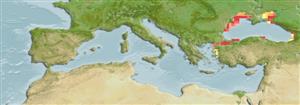
| Native range | All suitable habitat | Point map | Year 2050 |
|
| This map was computer-generated and has not yet been reviewed. |
| Acipenser gueldenstaedtii AquaMaps Data sources: GBIF OBIS |
Hochladen Photos und videos
Bilder | videos | Briefmarken, Münzen, Verschiedenes. | Google Bild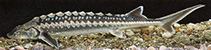 Acipenser gueldenstaedtii
Photo von Hartl, A.
Bilder | videos | Briefmarken, Münzen, Verschiedenes. | Google Bild
Photo von Hartl, A.
Klassifizierung / Names Namen | Synonyme | Catalog of Fishes(Gattung, Arten) | ITIS | CoL | WoRMS | Cloffa
> Acipenseriformes (Sturgeons and paddlefishes) > Acipenseridae (Sturgeons)
Etymology: Acipenser: Latin, acipenser = sturgeon, 1853 (Ref. 45335); gueldenstaedtii: Named for Johann Anton Güldenstädt (1745-1781).
Eponymy: Professor Johann Anton Gueldenstaedt (or Güldenstädt) (1745–1781) was a Baltic-German, born in Riga (Latvia), then part of the Russian Empire. [...] (Ref. 128868), visit book page.
Etymology: Acipenser: Latin, acipenser = sturgeon, 1853 (Ref. 45335); gueldenstaedtii: Named for Johann Anton Güldenstädt (1745-1781).
Eponymy: Professor Johann Anton Gueldenstaedt (or Güldenstädt) (1745–1781) was a Baltic-German, born in Riga (Latvia), then part of the Russian Empire. [...] (Ref. 128868), visit book page.
Taxonomic Remarks
Acipenser colchicus was described as a subspecies of A. gueldenstaedti, then considered as a subspecies of A. persicus, and is now recognized as a species by some works. On the other end, other works suggest that A. persicus, which is similar to A. gueldenstaedti, is a synonym of the latter. We will wait that the taxonomoic situation gets more clarity before changing the list of valid species, which follows the World Sturgeon Conservation Society one. Check ECoF, IUCN and FAO for more details. Anyway in FishBase, it is possible to retrieve the information under the name that was used as valid in each publication.
Umwelt: Milieu / Klimazone / Tiefenbereich / Verbreitungsgebiet Ökologie
seewasser; süßwasser; brackwasser demersal; anadrom (Ref. 138126); tiefenbereich 2 - 100 m, usually 10 - 25 m. Temperate; 10°C - 20°C (Ref. 2059); 61°N - 35°N, 26°E - 54°E
Verbreitung Territorien | FAO Gebiete | Ökosysteme | Vorkommen | Punkt Karte | Einführungen | Faunafri
Eurasia: Black Sea and Caspian Sea.
Länge bei der ersten Reifung / Größe / Gewicht / Alter
Geschlechtsreife: Lm ? range ? - ? cm
Max length : 236 cm TL Männchen/unbestimmt; (Ref. 59043); common length : 145 cm TL Männchen/unbestimmt; (Ref. 3561); max. veröff. Gewicht: 115.0 kg (Ref. 6866); max. veröff. Alter: 46 Jahre (Ref. 3561)
Max length : 236 cm TL Männchen/unbestimmt; (Ref. 59043); common length : 145 cm TL Männchen/unbestimmt; (Ref. 3561); max. veröff. Gewicht: 115.0 kg (Ref. 6866); max. veröff. Alter: 46 Jahre (Ref. 3561)
Kurzbeschreibung Bestimmungsschlüssel | Morphologie | Morphometrie
Rückenflossenstacheln (insgesamt) : 0; Rückenflossenweichstrahlen (insgesamt) : 27 - 48; Afterflossenweichstrahlen: 16 - 35. Under the name A. g. colchicus. Lower lip not continuous, interrupted at center. Five rows of scutes: dorsal 7-19, lateral 24-44 on each side, ventral 6-13 on each side, with lines of smaller stellate bony plates between the dorsal and ventral rows. Color of back olivaceous grey, flanks lighter, and belly white.
Body shape (shape guide): elongated; Cross section: circular.
Body shape (shape guide): elongated; Cross section: circular.
Anadromous and freshwater populations exist (Refs. 9953, 131118). At the sea, it occurs in shallow coastal and estuarine zones. In freshwaters, it inhabits deep parts of large rivers with moderate to swift current (Ref. 59043). Found mainly near the shore over sand and mud. Usually solitary, but swarms when hibernating or during spawning migrations. Occasionally forms schools (Ref. 3241). Feeds on benthic molluscs, crustaceans and small fishes. Spawns on stone or gravel bottom in large and deep rivers with strong current, 1-1.5 m/s (Ref. 59043). Mainly propagated through artificial reproduction.
Lebenszyklus und Paarungsverhalten Geschlechtsreife | Fortpflanzung | Ablaichen | Eier | Fruchtbarkeit | Larven
Under the name A. g. colchicus. Spawns in rivers. Natural spawning not extensive, maintained chiefly by artificial propagation. Enters rivers from April to June (a few in autumn).
Hauptreferenz
Laden Sie Ihre Referenzen hoch | Referenzen | Koordinator | Partner
Sokolov, L.I. and L.S. Berdicheskii, 1989. Acipenseridae. p. 150-153. In J. Holcík (ed.) The freshwater fishes of Europe. Vol. 1, Part II. General introduction to fishes Acipenseriformes. AULA-Verlag Wiesbaden. 469 p. (Ref. 9953)
IUCN Rote Liste Status (Ref. 130435: Version 2025-2 (Global))
vom Aussterben bedroht (CR) (A2bcde); Date assessed: 14 September 2019
Bedrohung für Menschen
Harmless
Nutzung durch Menschen
Fischereien: kommerziell; Aquakultur: kommerziell; Aquarium: Öffentliche Aquarien
FAO - Aquakultur-Systeme: produktion; Fischereien: landungen, Artbeschreibung; Publication: search | FishSource | Das Meer um uns herum
Mehr Information
Trophische Ökologie
Lebensmittel (Beutetiere)
Nahrungszusammensetzung
Nahrungsaufnahme
Lebensmittelrationen
Räuber
Lebensmittel (Beutetiere)
Nahrungszusammensetzung
Nahrungsaufnahme
Lebensmittelrationen
Räuber
Populationsdynamik
Wachstumsparameter
Max. Alter/Größen
Länge-Gewicht-Rel.
Länge-Länge-Verhältnis.
Längenhäufigkeiten
Massenkonvertierung
Rekrutierung
Dichte
Wachstumsparameter
Max. Alter/Größen
Länge-Gewicht-Rel.
Länge-Länge-Verhältnis.
Längenhäufigkeiten
Massenkonvertierung
Rekrutierung
Dichte
Lebenszyklus
Fortpflanzung
Geschlechtsreife
Reifung/Kiemen rel.
Fruchtbarkeit
Ablaichen
Laichaggregationen
Eier
Eientwicklung
Larven
Larven Pop.Dyn.
Fortpflanzung
Geschlechtsreife
Reifung/Kiemen rel.
Fruchtbarkeit
Ablaichen
Laichaggregationen
Eier
Eientwicklung
Larven
Larven Pop.Dyn.
Anatomie
Kiemenoberfläche
Gehirn
Otolith
Kiemenoberfläche
Gehirn
Otolith
Physiologie
Körperliche Zusammensetzung
Nährstoffe
Sauerstoffverbrauch
Schwimmart
Schwimmgeschwindigkeit
Visuelle Pigmente
Fischgeräusche
Krankheiten und Parasiten
Toxizität (LC50s)
Körperliche Zusammensetzung
Nährstoffe
Sauerstoffverbrauch
Schwimmart
Schwimmgeschwindigkeit
Visuelle Pigmente
Fischgeräusche
Krankheiten und Parasiten
Toxizität (LC50s)
Menschenbezogen
Aquakultur-Systeme
Aquakultur Profile
Zuchtlinien
Ciguatera-Fälle
Briefmarken, Münzen, Verschiedenes.
Aquakultur-Systeme
Aquakultur Profile
Zuchtlinien
Ciguatera-Fälle
Briefmarken, Münzen, Verschiedenes.
Tools
Bio-Quiz | E-Book | Feldführer | Bestimmungsschlüssel | Längenhäufigkeits Tool | Lebensdaten Tool | Punkt Karte |
Catch-MSY |
Zusatzinformationen
Download XML
Zusammenfassung | Punktdaten | Namen | Photos
Internet Quellen
AFORO (otoliths) | Alien/Invasive Species database | Aquatic Commons | BHL | Cloffa | Websites from users | FishWatcher Einträge suchen | CISTI | Catalog of Fishes: Gattung, Arten | DiscoverLife | ECOTOX | FAO - Aquakultur-Systeme: produktion; Fischereien: landungen, Artbeschreibung; Publication: search | Faunafri | Fishipedia | Fishtrace | GloBI | Google Books | Google Scholar | Google | IGFA World Record | Nationale Datenbanken | OneZoom | Open Tree of Life | Otolith Atlas of Taiwan Fishes | Öffentliche Aquarien | PubMed | Reef Life Survey | Socotra Atlas | TreeBase | Tree of Life | Wikipedia: Gehe zu, Suchen | World Records Freshwater Fishing | Zoobank | Zoologischer Rekord
Schätzungen auf der Grundlage von Modellen
Bevorzugte Temperatur (Ref. 123201): 10.7 - 15.9, mean 13.8 °C (based on 32 cells).
Phylogenetischer Diversitätsindex (Ref. 82804): PD50 = 0.5000 [Uniqueness, from 0.5 = low to 2.0 = high].
Bayesian length-weight: a=0.00417 (0.00258 - 0.00673), b=3.12 (2.99 - 3.25), in cm total length, based on LWR estimates for this species & Genus-body shape (Ref. 93245).
Trophische Ebene (Ref. 69278): 3.3 ±0.1 se; based on diet studies.
Widerstandsfähigkeit (Ref. 120179): sehr niedrig, Verdopplung der Population dauert mehr als 14 Jahre. (tm=11; tmax=46; Fec = 26,000).
Nährstoffe (Ref. 124155): Calcium = 14.6 [8.4, 25.7] mg/100g; Iron = 0.247 [0.150, 0.396] mg/100g; Protein = 17.4 [14.9, 20.1] %; Omega3 = 0.342 [0.189, 0.611] g/100g; Selenium = 23.6 [12.0, 45.3] μg/100g; VitaminA = 5.63 [1.97, 16.00] μg/100g; Zinc = 0.512 [0.365, 0.722] mg/100g (wet weight);