


Nothobranchius guentheri (Pfeffer, 1893)
Redtail notho
Ανεβάστε το φωτογραφίες και Βίντεο
Φωτογραφίες | Γραμματόσημα, νομίσματα, διάφορα. | Google image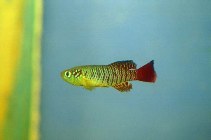 Nothobranchius guentheri
Εικόνα από JJPhoto
Φωτογραφίες | Γραμματόσημα, νομίσματα, διάφορα. | Google image
Εικόνα από JJPhoto
Ταξινόμηση / Ονόματα Κοινά ονόματα | Συνώνυμα | Catalog of Fishes(Γένος, Είδη) | ITIS | CoL | WoRMS | Cloffa
> Cyprinodontiformes (Rivulines, killifishes and live bearers) > Nothobranchiidae (African rivulines)
Etymology: Nothobranchius: Greek, nothos = false + Greek, brangchia = gill (Ref. 45335).
Eponymy: Dr Albert Karl Ludwig Gotthilf Günther (1830–1914) was a German-born British zoologist, ichthyologist and herpetologist. [...] (Ref. 128868), visit book page.
Etymology: Nothobranchius: Greek, nothos = false + Greek, brangchia = gill (Ref. 45335).
Eponymy: Dr Albert Karl Ludwig Gotthilf Günther (1830–1914) was a German-born British zoologist, ichthyologist and herpetologist. [...] (Ref. 128868), visit book page.
Περιβάλλον: περιβάλλον / κλιματική ζώνη / εύρος βάθους / εύρος διανομής Οικολογία
; Γλυκού νερού βενθοπελαγικό; pH range: 6.0 - 7.0; dH range: 4 - 10; μη μεταναστευτικό(ά) (Ref. 126106). Tropical; 22°C - 25°C (Ref. 1672)
Κατανομή Εδάφη | Περιοχές FAO | Οικοσυστήματα | Παρουσίες | Σημειακός χάρτης | Εισαγωγές | Faunafri
Africa: endemic to Unguja Island, Zanzibar archipelago, eastern Tanzania (Ref. 122075).
Μέγεθος / Βάρος / Ηλικία
Γεννητική Ωρίμανση: Lm ? range ? - ? cm
Max length : 3.5 cm SL αρσενικό/απροσδιόριστο; (Ref. 122075); 3.2 cm SL (female)
Max length : 3.5 cm SL αρσενικό/απροσδιόριστο; (Ref. 122075); 3.2 cm SL (female)
Σύντομη περιγραφή Κλείδες προσδιορισμού | Μορφολογία | Μορφομετρία
Ραχιαίες άκανθες (συνολικά) : 0; Μαλακές ραχιαίες ακτίνες (συνολικά) : 15 - 16; Εδρικές άκανθες: 0; Μαλακές εδρικές ακτίνες: 15 - 16; Σπόνδυλοι: 28. Diagnosis: It is distinguished from all congeners by the combination of the following character states: caudal fin red with black posterior margin in males; flank and fins without dark spots in females; pre-dorsal length in males 57.5-61.4% of standard length; 3 + 12-14 gill-rakers on first branchial arch; 27-28 scales in longitudinal series; 14 series of scales around caudal peduncle; single longitudinal row of scales between anterior supraorbital series of neuromasts; anterior supraorbital series of neuromasts arranged in two sections, anterior section with one well-developed neuromast, posterior with two; three neuromasts in posterior supraorbital series; 26-27 caudal-fin rays; 28 vertebrae; second proximal radial of dorsal fin between neural spines of 10th and 12th vertebrae (Ref. 122075).
Body shape (shape guide): fusiform / normal; Cross section: compressed.
Body shape (shape guide): fusiform / normal; Cross section: compressed.
Found in temporary pools, swamps, ditches and small streams (Ref. 3788). Used for biological control of mosquitos (Ref. 3788). One of the so called 'annual fishes' which has eggs that can withstand seasonal droughts (Ref. 1739). A bottom spawner, 3-4 months incubation. Quite popular with aquarists; difficult to maintain in an aquarium (Ref. 27139).
Κύκλος ζωής και συμπεριφορά ζευγαρώματος Γεννητική Ωρίμανση | Αναπαραγωγή | Γεννοβολία | Αβγά | Γονιμότητα | Προνύμφες
Thrives in seasonal rainwater pools. Spawns throughout the short breeding period until the pool dries up and all fish die except their drought-resistant eggs. Eggs go through a dry period of many weeks. When rain comes and pool fills, most of the eggs begin to develop and hatch within hours. Fry grow very fast. In only 6 to 8 weeks they are sexually mature and start breeding (Ref. 7062). In aquaria, males showed aggressive behavior toward each other. Females were being pushed down to the substratum by the males as a prelude to spawning.
Κύρια αναφορά
Ανεβάστε τις αναφορές σας | Αναφορές | Συντονιστής | Συνεργάτες
Huber, J.H., 1996. Killi-Data 1996. Updated checklist of taxonomic names, collecting localities and bibliographic references of oviparous Cyprinodont fishes (Atherinomorpha, Pisces). Société Française d'Ichtyologie, Muséum National d'Histoire Naturelle, Paris, France, 399 p. (Ref. 27139)
Κατάσταση Κόκκινου Καταλόγου IUCN (Ref. 130435: Version 2025-2 (Global))
Endangered (EN) (B1ab(iii,iv)+2ab(iii,iv)); Date assessed: 09 December 2018
CITES
Not Evaluated
Απειλή για τον άνθρωπο
Harmless
Ανθρώπινες χρήσεις
αλιεία: χωρίς ενδιαφέρον; Ενυδρείο: Εμπορικό(ά)
FAO - Publication: search | FishSource |
Περισσότερες πληροφορίες
Τροφική Οικολογία
Τρόφιμα (θηράματα)
Σύσταση δίαιτας
Κατανάλωση τροφής
Μερίδες τροφίμων
Θηρευτές
Τρόφιμα (θηράματα)
Σύσταση δίαιτας
Κατανάλωση τροφής
Μερίδες τροφίμων
Θηρευτές
Πληθυσμιακή δυναμική
Παράμετροι Αύξησης
Μέγιστες ηλικίες / μεγέθη
Μήκος-βάρος σχετ.
Μήκος-μήκος rel.
Μήκος-συχνότητες
Μετατροπή μάζας
Στρατολόγηση
Αφθονία
Παράμετροι Αύξησης
Μέγιστες ηλικίες / μεγέθη
Μήκος-βάρος σχετ.
Μήκος-μήκος rel.
Μήκος-συχνότητες
Μετατροπή μάζας
Στρατολόγηση
Αφθονία
Κύκλος ζωής
Αναπαραγωγή
Γεννητική Ωρίμανση
Ωριμότητα / Gills rel.
Γονιμότητα
Γεννοβολία
Συγκεντρώσεις αναπαραγωγής
Αβγά
Ανάπτυξη αυγών
Προνύμφες
Δυναμική προνυμφών
Αναπαραγωγή
Γεννητική Ωρίμανση
Ωριμότητα / Gills rel.
Γονιμότητα
Γεννοβολία
Συγκεντρώσεις αναπαραγωγής
Αβγά
Ανάπτυξη αυγών
Προνύμφες
Δυναμική προνυμφών
Ανατομία
Επιφάνεια βραγχίων
Εγκέφαλος
Ωτόλιθος
Επιφάνεια βραγχίων
Εγκέφαλος
Ωτόλιθος
Φυσιολογία
Σύνθεση σώματος
Θρεπτικά συστατικά
Κατανάλωση οξυγόνου
Τύπος κολύμβησης
Ταχύτητα κολύμβησης
Οπτικές χρωστικές ουσίες
Ήχος ψαριών
Ασθένειες & παράσιτα
Τοξικότητα (LC50)
Σύνθεση σώματος
Θρεπτικά συστατικά
Κατανάλωση οξυγόνου
Τύπος κολύμβησης
Ταχύτητα κολύμβησης
Οπτικές χρωστικές ουσίες
Ήχος ψαριών
Ασθένειες & παράσιτα
Τοξικότητα (LC50)
Ανθρώπινη σχέση
Συστήματα υδατοκαλλιέργειας
Προφίλ υδατοκαλλιεργειών
Στελέχοι
Περιπτώσεις Ciguatera
Γραμματόσημα, νομίσματα, διάφορα.
Συστήματα υδατοκαλλιέργειας
Προφίλ υδατοκαλλιεργειών
Στελέχοι
Περιπτώσεις Ciguatera
Γραμματόσημα, νομίσματα, διάφορα.
Εργαλεία
Ηλεκτρονικό βιβλίο | Οδηγός πεδίου | Ανάλυση κατά μήκος συνθέσεων | Εργαλείο ιστορίας ζωής | Σημειακός χάρτης |
Catch-MSY |
Ειδικές εκθέσεις
Έλεγχος για συντήρηση ενυδρείου | Ελέγξτε για ενημερωτικά δελτία ειδών | Ελέγξτε για ενημερωτικά δελτία υδατοκαλλιέργειας
Λήψη XML
Διαδικτυακές πηγές
AFORO (otoliths) | Alien/Invasive Species database | Aquatic Commons | BHL | Cloffa | Websites from users | Check FishWatcher | CISTI | Catalog of Fishes: Γένος, Είδη | DiscoverLife | ECOTOX | FAO - Publication: search | Faunafri | Fishipedia | Fishtrace | GloBI | Google Books | Google Scholar | Google | IGFA World Record | OneZoom | Open Tree of Life | Otolith Atlas of Taiwan Fishes | PubMed | Reef Life Survey | Socotra Atlas | TreeBase | Δέντρο Ζωής | Wikipedia: Go, αναζήτηση | World Records Freshwater Fishing | Zoological Record
Εκτιμήσεις βάσει μοντέλων
Δείκτης φυλογενετικής ποικιλότητας (Αναφ. 82804): PD50 = 0.5000 [Uniqueness, from 0.5 = low to 2.0 = high].
Bayesian length-weight: a=0.01096 (0.00461 - 0.02608), b=2.94 (2.74 - 3.14), in cm total length, based on LWR estimates for this (Sub)family-body shape (Ref. 93245).
Τροφικό Επίπεδο (Αναφ. 69278): 3.2 ±0.4 se; based on size and trophs of closest relatives
Ελαστικότητα (Αναφ. 120179): Υψηλό, ελάχιστος χρόνος για διπλασιασμό πληθυσμού < 15 μήνες (tm= 0.12-0.15; tmax < 1 yr).