


Oncorhynchus gorbuscha (Walbaum, 1792)
Pink salmon
Thêm quan sát của bạn vào Fish Watcher
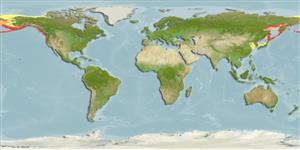
| Native range | All suitable habitat | Point map | Year 2050 |
|
| This map was computer-generated and has not yet been reviewed. |
| Oncorhynchus gorbuscha AquaMaps Data sources: GBIF OBIS |
Tải lên của bạn hình ảnh Và Video
Các tranh (Ảnh) | Video | Google image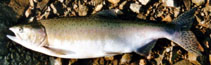 Oncorhynchus gorbuscha
Female Hình ảnh của Østergaard, T.
Các tranh (Ảnh) | Video | Google image
Female Hình ảnh của Østergaard, T.
Phân loại / Tên Tên thường gặp | Các synonym ( Các tên trùng) | Catalog of Fishes(Giống, Các loài) | ITIS | CoL | WoRMS | Cloffa
> Salmoniformes (Salmons) > Salmonidae (Salmonids) > Salmoninae
Etymology: Oncorhynchus: Greek, onyx, -ychos = nail + Greek, rhyngchos = snout (Ref. 45335); gorbuscha: gorbuscha which is the Russian name for this fish in Alaska (Ref. 1998).
More on author: Walbaum.
Etymology: Oncorhynchus: Greek, onyx, -ychos = nail + Greek, rhyngchos = snout (Ref. 45335); gorbuscha: gorbuscha which is the Russian name for this fish in Alaska (Ref. 1998).
More on author: Walbaum.
Môi trường: môi trường / vùng khí hậu / Mức độ sâu / phạm vi phân phối Sinh thái học
biển; nước ngọt; thuộc về nước lợ gần đáy; di cư biển sông (để đẻ trứng) (Ref. 132363); mức độ sâu 0 - 250 m (Ref. 50550). Subtropical; ? - 21°C (Ref. 12741); 79°N - 32°N, 117°E - 120°W (Ref. 117423)
Sự phân bố Lãnh thổ | Các khu vực của FAO | Các hệ sinh thái | Những lần xuất hiện | Bản đồ điểm | Những chỉ dẫn | Faunafri
Arctic and Pacific drainages from Mackenzie River delta, Northwest Territories, Canada to Sacramento River drainage, in California, USA; occasionally as far as La Jolla, southern California; also in northeast Asia (Ref. 86798). On Asia side, from North Korea to Jana and Lena drainages in Artic Russia. In Bering Sea north of about 40°N and from Bering Strait northeast to Point Barrow and northwest to Lena estuary (Ref. 59043). Introduced elsewhere. Occasionally hybridizes with Oncorhynchus keta producing fertile offspring (Ref. 28983).
Chiều dài lúc trưởng thành đầu tiên / Bộ gần gũi / Khối lượng (Trọng lượng) / Tuổi
Chín muồi sinh dục: Lm 45.0, range 40 - 50 cm
Max length : 76.0 cm TL con đực/không giới tính; (Ref. 86798); common length : 50.5 cm TL con đực/không giới tính; (Ref. 12193); Khối lượng cực đại được công bố: 7.0 kg (Ref. 57875); Tuổi cực đại được báo cáo: 3.00 các năm (Ref. 27547)
Max length : 76.0 cm TL con đực/không giới tính; (Ref. 86798); common length : 50.5 cm TL con đực/không giới tính; (Ref. 12193); Khối lượng cực đại được công bố: 7.0 kg (Ref. 57875); Tuổi cực đại được báo cáo: 3.00 các năm (Ref. 27547)
Mô tả ngắn gọn Khóa để định loại | Hình thái học | Sinh trắc học
Các tia vây lưng cứng (tổng cộng) : 0; Các vây lưng mềm (tổng cộng) : 10 - 15; Tia cứng vây hậu môn: 0; Tia mềm vây hậu môn: 11 - 19; Động vật có xương sống: 63 - 72. Distinguished by the presence of large black spots on the back and on both lobes of the caudal fin; the young have no parr marks (Ref. 27547). Body fusiform, streamlined, somewhat laterally compressed; moderately, deeper in breeding males (Ref. 1998). Mouth terminal, normally very little oblique but greatly deformed in breeding males, with lower jaw enlarged, turned up at tip, mouth unable to close (Ref. 1998). Adipose fin large; pelvic fins with axillary process (Ref. 27547). Fish in the sea are steel blue to blue-green on the back, silver on the sides and white on the belly; large oval spots present on the back, adipose fin and both lobes of the caudal fin (Ref. 27547). Breeding males become dark on the back, red with brownish green blotches on the sides; breeding females are similar but less distinctly colored (Ref. 27547). Differs from Oncorhynchus mykiss by having the following unique characters: anal fin with 11-15½ (usually 13½ ) branched rays; 177-240 scales in midlateral row; 26-33 gill rakers; large mature males with enormous hump; juveniles lacking parr marks; and lacking pink to red stripe on flank (Ref. 59043).
Body shape (shape guide): fusiform / normal; Cross section: compressed.
Body shape (shape guide): fusiform / normal; Cross section: compressed.
An anadromous species which inhabits ocean and coastal streams (Ref. 5723, 86798). Epipelagic (Ref. 58426). Pelagic at the sea. In freshwater, lives in Montane and Piedmont rivers with moderate to fast current and gravel bottom. Spawns in riffles or at head of riffles in shallow water with current up to 1.5 m/s, and clean coarse gravel (Ref. 59043). Spends 18 months at sea after which spawning migration to the natal river or stream occurs; but because the species is less certain of its homing and there is a certain degree of wandering, streams as much as 640 km from natal streams may be used (Ref. 1998, 27547). Upon emerging from the gravel, fry immediately move downstream and remain inshore for a few months before going out to sea. Fry may feed on nymphal and larval insects while in fresh water, but may not feed at all. In the sea, young feed on copepods and larvacean tunicates, its diet shifting to amphipods, euphausiids and fishes as the fish grows (Ref. 27547). Other food include ostracods, decapod larvae, cirripeds, tunicates, dipterous insects (Ref. 1998, 27547). Fry may be preyed upon by birds and mammals while adults by marine mammals and large fish (Ref. 1998). Mostly sold canned (Ref. 1998) but also utilized fresh, smoked, and frozen; also valued for caviar, especially in Japan; eaten steamed, fried, broiled, boiled, microwaved, and baked (Ref. 9988). The smallest of the true salmon (Ref. 12218).
Vòng đời và hành vi giao phối Chín muồi sinh dục | Sự tái sinh sản | Đẻ trứng | Các trứng | Sự sinh sản | Ấu trùng
Adults develop secondary sexual characteristics during their upstream migration (Ref. 1998), which occurs any time from June to late September, depending on location (Ref. 27547). Male develop a humpback, an enlarged head and large teeth on both jaws that form a pronounced hooked type (Ref. 59043). The upstream run seems to be triggered by high water (Ref. 27547). Female builds the redd by lying on one side and using its tail, it displaces silt and light gravel to produce a deep trough. Male spends most of the time driving off intruding males. When the redd is completed, the female drops into it, followed immediately by the male. They open their mouths, vibrate and release eggs and sperm. In some cases, several males spawn with a single female. The eggs are then covered as the female digs a new redd at the upstream edge of the previous one. Adults live up to a few weeks after spawning before they die (Ref. 1998, 27547). Reported to die 10-20 days after spawning (Ref. 59043). About 1200-1800 eggs are laid. After hatching and the yellow egg yolk is absorbed, if the hatchling doesn't have a parr mark they go to the ocean and come again to the same birthplace stream the next year during spring after growing for 16-18 months. Survival rates are low, at 1-25% (taken from a Canadian river) (Ref. 12218). Reproductive strategy: synchronous ovarian organization, determinate fecundity (Ref. 51846).
Tài liệu tham khảo chính
Tải lên tài liệu tham khảo của bạn | Các tài liệu tham khảo | Người điều phối | Người cộng tác
Page, L.M. and B.M. Burr, 2011. A field guide to freshwater fishes of North America north of Mexico. Boston : Houghton Mifflin Harcourt, 663p. (Ref. 86798)
Tình trạng Sách đỏ IUCN (Ref. 130435: Version 2025-2 (Global))
Least Concern (LC) ; Date assessed: 23 July 2020
CITES
Not Evaluated
Mối đe dọa đối với con người
Harmless
Sử dụng của con người
Các nghề cá: tính thương mại cao; Nuôi trồng thủy sản: tính thương mại; cá để chơi: đúng
FAO - Các nghề cá: hạ cánh, hồ sơ loài; Publication: search | FishSource | Biển chung quanh ta
Thêm thông tin
Sinh thái dinh dưỡng
Thức ăn (con mồi)
Thành phần thức ăn
Thành phần thức ăn
Khẩu phần ăn
Các động vật ăn mồi
Thức ăn (con mồi)
Thành phần thức ăn
Thành phần thức ăn
Khẩu phần ăn
Các động vật ăn mồi
Biến động dân số
Các thông số tăng trưởng
Độ tuổi / kích thước tối đa
Chiều dài-trọng lượng tương đối
Chiều dài-chiều dài tương đối.
Chiều dài-tần số
Chuyển đổi khối lượng
Bổ xung
Sự phong phú
Các thông số tăng trưởng
Độ tuổi / kích thước tối đa
Chiều dài-trọng lượng tương đối
Chiều dài-chiều dài tương đối.
Chiều dài-tần số
Chuyển đổi khối lượng
Bổ xung
Sự phong phú
Vòng đời
Sự tái sinh sản
Chín muồi sinh dục
Độ trưởng thành/Mang liên quan
Sự sinh sản
Đẻ trứng
Tập hợp sinh sản
Các trứng
Sự phát triển của trứng
Ấu trùng
Sự biến động ấu trùng
Sự tái sinh sản
Chín muồi sinh dục
Độ trưởng thành/Mang liên quan
Sự sinh sản
Đẻ trứng
Tập hợp sinh sản
Các trứng
Sự phát triển của trứng
Ấu trùng
Sự biến động ấu trùng
Sự phân bố
Lãnh thổ
Các khu vực của FAO
Các hệ sinh thái
Những lần xuất hiện
Những chỉ dẫn
BRUVS - Video
Lãnh thổ
Các khu vực của FAO
Các hệ sinh thái
Những lần xuất hiện
Những chỉ dẫn
BRUVS - Video
Giải phẫu
Vùng mang
Não
sỏi tai
Vùng mang
Não
sỏi tai
Sinh lý học
Thành phần cơ thể
Chất dinh dưỡng
Thành phần ô-xy
Kiểu bơi
Tốc độ bơi
Sắc tố thị giác
Tiếng cá
Bệnh tật & Ký sinh trùng
Độc tính (LC50)
Thành phần cơ thể
Chất dinh dưỡng
Thành phần ô-xy
Kiểu bơi
Tốc độ bơi
Sắc tố thị giác
Tiếng cá
Bệnh tật & Ký sinh trùng
Độc tính (LC50)
Liên quan đến con người
Hệ thống nuôi trồng thủy sản
Các tổng quan nuôi trồng thủy sản
Các giống
Các trường hợp ngộ độc Ciguatera
Tem, tiền xu, v.v.
Hệ thống nuôi trồng thủy sản
Các tổng quan nuôi trồng thủy sản
Các giống
Các trường hợp ngộ độc Ciguatera
Tem, tiền xu, v.v.
Các công cụ
Trắc nghiệm sinh học | Sách điện tử | Hướng dẫn hiện trường | Khóa để định loại | Tần suất chiều dài Wizard | Công cụ của vòng đời | Bản đồ điểm |
Bắt-MSY |
Báo cáo đặc biệt
Kiểm tra bảo trì bể cá | Kiểm tra các tờ thông tin về loài | Kiểm tra các tờ thông tin về nuôi trồng thủy sản
Tải xuống XML
Các nguồn internet
AFORO (otoliths) | Alien/Invasive Species database | Aquatic Commons | BHL | Cloffa | Websites from users | Check FishWatcher | CISTI | Catalog of Fishes: Giống, Các loài | DiscoverLife | ECOTOX | FAO - Các nghề cá: hạ cánh, hồ sơ loài; Publication: search | Faunafri | Fishipedia | Fishtrace | GloBI | Google Books | Google Scholar | Google | IGFA World Record | Các cơ sở dữ liệu quốc gia | OceanAdapt | OneZoom | Open Tree of Life | Otolith Atlas of Taiwan Fishes | PubMed | Reef Life Survey | RFE Identification | Socotra Atlas | TreeBase | Cây Đời sống | Wikipedia: Go, tìm | World Records Freshwater Fishing | Tạp chí Zoological Record
Ước tính dựa trên mô hình
Nhiệt độ ưa thích (Tài liệu tham khảo 123201): 0.5 - 9.3, mean 3.3 °C (based on 572 cells).
Chỉ số đa dạng phát sinh loài (Tài liệu tham khảo 82804): PD50 = 0.5000 [Uniqueness, from 0.5 = low to 2.0 = high].
Bayesian length-weight: a=0.01148 (0.00639 - 0.02064), b=3.08 (2.93 - 3.23), in cm total length, based on LWR estimates for this species & Genus-body shape (Ref. 93245).
Mức dinh dưỡng (Tài liệu tham khảo 69278): 4.5 ±0.4 se; based on diet studies.
Thích nghi nhanh (Tài liệu tham khảo 120179): Trung bình, thời gian nhân đôi của chủng quần tối thiểu là 1.4 - 4.4 năm (tm=2; tmax=3; Fec=800).
Prior r = 0.55, 95% CL = 0.37 - 0.83, Based on 4 full stock assessments.
Chất dinh dưỡng (Ref. 124155): Calcium = 45.6 [17.1, 112.4] mg/100g; Iron = 1.15 [0.61, 2.52] mg/100g; Protein = 19.6 [18.5, 20.7] %; Omega3 = 1.17 [0.59, 2.42] g/100g; Selenium = 186 [56, 609] μg/100g; VitaminA = 12.2 [3.4, 44.5] μg/100g; Zinc = 0.496 [0.313, 0.982] mg/100g (wet weight); based on nutrient studies.