


Oncorhynchus tshawytscha (Walbaum, 1792)
Chinook salmon
Προσθέστε την παρατήρησή σας στο Fish Watcher
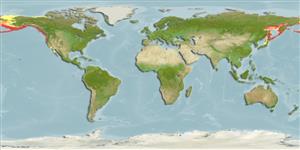
| Native range | All suitable habitat | Point map | Year 2050 |
|
| This map was computer-generated and has not yet been reviewed. |
| Oncorhynchus tshawytscha AquaMaps Data sources: GBIF OBIS |
Ανεβάστε το φωτογραφίες και Βίντεο
Φωτογραφίες | Βίντεο | Google image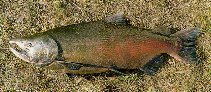 Oncorhynchus tshawytscha
Male Εικόνα από McDowall, R.M.
Φωτογραφίες | Βίντεο | Google image
Male Εικόνα από McDowall, R.M.
Ταξινόμηση / Ονόματα Κοινά ονόματα | Συνώνυμα | Catalog of Fishes(Γένος, Είδη) | ITIS | CoL | WoRMS | Cloffa
> Salmoniformes (Salmons) > Salmonidae (Salmonids) > Salmoninae
Etymology: Oncorhynchus: Greek, onyx, -ychos = nail + Greek, rhyngchos = snout (Ref. 45335); tshawytscha: tshawytscha which is the vernacular name of this species in Kamchatka (Ref. 1998).
More on author: Walbaum.
Etymology: Oncorhynchus: Greek, onyx, -ychos = nail + Greek, rhyngchos = snout (Ref. 45335); tshawytscha: tshawytscha which is the vernacular name of this species in Kamchatka (Ref. 1998).
More on author: Walbaum.
Περιβάλλον: περιβάλλον / κλιματική ζώνη / εύρος βάθους / εύρος διανομής Οικολογία
Θαλασσινό(ά); Γλυκού νερού; Υφάλμυρο βενθοπελαγικό; ανάδρομο (Ref. 132363); εύρος βάθους 0 - 375 m (Ref. 58426). Temperate; 0°C - 25°C (Ref. 35682); 71°N - 27°N, 136°E - 112°W (Ref. 54251)
Κατανομή Εδάφη | Περιοχές FAO | Οικοσυστήματα | Παρουσίες | Σημειακός χάρτης | Εισαγωγές | Faunafri
Arctic, Northwest to Northeast Pacific: drainages from Point Hope, Alaska to San Joanquin and King rivers in California, USA (Ref. 86798). Also in Honshu, Japan (Ref. 6793), Sea of Japan (Ref. 1998), Bering Sea (Ref. 2850) and Sea of Okhotsk (Ref. 1998). Found in Coppermine River in the Arctic. Several countries report adverse ecological impact after introduction.
Μήκος κατά την πρώτη ωρίμανση / Μέγεθος / Βάρος / Ηλικία
Γεννητική Ωρίμανση: Lm 82.2 range ? - ? cm
Max length : 150 cm TL αρσενικό/απροσδιόριστο; (Ref. 40637); common length : 70.0 cm TL αρσενικό/απροσδιόριστο; (Ref. 9258); μεγ. δημοσιευμένο βάρος: 61.4 kg (Ref. 27547); μεγ. αναφερόμενη ηλικία: 9 έτη (Ref. 12193)
Max length : 150 cm TL αρσενικό/απροσδιόριστο; (Ref. 40637); common length : 70.0 cm TL αρσενικό/απροσδιόριστο; (Ref. 9258); μεγ. δημοσιευμένο βάρος: 61.4 kg (Ref. 27547); μεγ. αναφερόμενη ηλικία: 9 έτη (Ref. 12193)
Σύντομη περιγραφή Κλείδες προσδιορισμού | Μορφολογία | Μορφομετρία
Ραχιαίες άκανθες (συνολικά) : 0; Μαλακές ραχιαίες ακτίνες (συνολικά) : 10 - 14; Εδρικές άκανθες: 0; Μαλακές εδρικές ακτίνες: 13 - 19; Σπόνδυλοι: 67 - 75. Distinguished by the small black spots on the back and on the upper and lower lobes of the caudal fin, and the black gums of the lower jaw (Ref. 27547). Body fusiform, streamlined, noticeably laterally compressed in large adults, somewhat deeper than other species (Ref. 6885). Gill rakers wide-spaced and rough; pelvic fins with axillary process (Ref. 27547). Fish in the sea are dark greenish to blue black on top of head and back, silvery to white on the lower sides and belly; numerous small, dark spots along back and upper sides and on both lobes of caudal; gum line of lower jaw black (Ref. 27547). In fresh water, with the approach of the breeding condition, the fish change to olive brown, red or purplish, the color change being more marked in males than in females (Ref. 27547).
Body shape (shape guide): fusiform / normal; Cross section: compressed.
Body shape (shape guide): fusiform / normal; Cross section: compressed.
Adults return to natal streams from the sea to spawn (Ref. 27547). Fry may migrate to the sea after only 3 months in fresh water, some may stay for as long as 3 years, but generally most stay a year in the stream before migrating (Ref. 27547). Some individuals remain close inshore throughout their lives, but some make extensive migrations (Ref. 27547, 44894). Also found in lakes (Ref. 1998). Possibly up to 375 m depth (Ref. 6793). Epipelagic (Ref. 58426). Food in streams is mainly terrestrial insects and small crustaceans; in the sea, major food items include fishes, crustaceans, and other invertebrates (Ref. 27547). Young are preyed upon by fishes and birds (such as mergansers and kingfishers); adults are prey of large mammals and large birds (Ref. 1998). Highly regarded game fish (Ref. 27547). Flesh is usually red, but some are white; the red meat commands a higher price (Ref. 27547). Marketed fresh, smoked, frozen, and canned. Eaten steamed, fried, broiled, boiled, microwaved, and baked (Ref. 9988). Viscera said to contain high vitamin A content and used successfully as food for hatchery fish (Ref. 28971, 28977).
Κύκλος ζωής και συμπεριφορά ζευγαρώματος Γεννητική Ωρίμανση | Αναπαραγωγή | Γεννοβολία | Αβγά | Γονιμότητα | Προνύμφες
Adults migrate up to 4,827 km upstream to spawn (Ref. 6850). Migration from the sea begins in December so that the the first fish are near river mouths by spring (Ref. 27547). Once a female selects a spot, she begins to dig a nest, driving away other females during the period of nest building. The female is attended by a larger, dominant male and several smaller males who drive away other males. While the female digs the nest, the male courts her by coming to rest beside her and quivering; by swimming about over her, touching her dorsal fin with his body and fins; and occasionally nudging her side gently with his snout (Ref. 28978). Upon completion of the nest, the female drops into it and is immediately joined by the dominant male. The fish open their mouths, vibrate, and eggs and sperm are released. At this point smaller males may dart into the nest and release sperm. The female then quickly moves to the upstrem edge of the nest and begins to dig. The eggs are covered and a new nest is made. The whole process is repeated until the female releases all her eggs, which may take several days. The male then leaves the female and may mate with another female. The female guards the nest for as long as she can. Spent adults usually die a few days after spawning. (Ref. 1998, 27547).
Reproductive strategy: synchronous ovarian organization, determinate fecundity (Ref. 51846).
Κύρια αναφορά
Ανεβάστε τις αναφορές σας | Αναφορές | Συντονιστής | Συνεργάτες
Page, L.M. and B.M. Burr, 2011. A field guide to freshwater fishes of North America north of Mexico. Boston : Houghton Mifflin Harcourt, 663p. (Ref. 86798)
Κατάσταση Κόκκινου Καταλόγου IUCN (Ref. 130435: Version 2025-2 (Global))
Least Concern (LC) ; Date assessed: 18 September 2020
CITES
Not Evaluated
Απειλή για τον άνθρωπο
Potential pest (Ref. 12257)
Ανθρώπινες χρήσεις
αλιεία: πολύ εμπορικό; Υδατοκαλλιέργειες: Εμπορικό(ά); αλιεία αναψυχής: ναί; Ενυδρείο: Δημόσια ενυδρεία
FAO - Συστήματα υδατοκαλλιέργειας: Παραγωγή; αλιεία: εκφορτώσεις, προφίλ του είδους; Publication: search | FishSource | Η θάλασσα γύρω μας
Περισσότερες πληροφορίες
Πληθυσμιακή δυναμική
Παράμετροι Αύξησης
Μέγιστες ηλικίες / μεγέθη
Μήκος-βάρος σχετ.
Μήκος-μήκος rel.
Μήκος-συχνότητες
Μετατροπή μάζας
Στρατολόγηση
Αφθονία
Παράμετροι Αύξησης
Μέγιστες ηλικίες / μεγέθη
Μήκος-βάρος σχετ.
Μήκος-μήκος rel.
Μήκος-συχνότητες
Μετατροπή μάζας
Στρατολόγηση
Αφθονία
Κύκλος ζωής
Αναπαραγωγή
Γεννητική Ωρίμανση
Ωριμότητα / Gills rel.
Γονιμότητα
Γεννοβολία
Συγκεντρώσεις αναπαραγωγής
Αβγά
Ανάπτυξη αυγών
Προνύμφες
Δυναμική προνυμφών
Αναπαραγωγή
Γεννητική Ωρίμανση
Ωριμότητα / Gills rel.
Γονιμότητα
Γεννοβολία
Συγκεντρώσεις αναπαραγωγής
Αβγά
Ανάπτυξη αυγών
Προνύμφες
Δυναμική προνυμφών
Ανατομία
Επιφάνεια βραγχίων
Εγκέφαλος
Ωτόλιθος
Επιφάνεια βραγχίων
Εγκέφαλος
Ωτόλιθος
Φυσιολογία
Σύνθεση σώματος
Θρεπτικά συστατικά
Κατανάλωση οξυγόνου
Τύπος κολύμβησης
Ταχύτητα κολύμβησης
Οπτικές χρωστικές ουσίες
Ήχος ψαριών
Ασθένειες & παράσιτα
Τοξικότητα (LC50)
Σύνθεση σώματος
Θρεπτικά συστατικά
Κατανάλωση οξυγόνου
Τύπος κολύμβησης
Ταχύτητα κολύμβησης
Οπτικές χρωστικές ουσίες
Ήχος ψαριών
Ασθένειες & παράσιτα
Τοξικότητα (LC50)
Ανθρώπινη σχέση
Συστήματα υδατοκαλλιέργειας
Προφίλ υδατοκαλλιεργειών
Στελέχοι
Περιπτώσεις Ciguatera
Γραμματόσημα, νομίσματα, διάφορα.
Συστήματα υδατοκαλλιέργειας
Προφίλ υδατοκαλλιεργειών
Στελέχοι
Περιπτώσεις Ciguatera
Γραμματόσημα, νομίσματα, διάφορα.
Εργαλεία
Βιολογικό κουίζ | Ηλεκτρονικό βιβλίο | Οδηγός πεδίου | Κλείδες προσδιορισμού | Ανάλυση κατά μήκος συνθέσεων | Εργαλείο ιστορίας ζωής | Σημειακός χάρτης |
Catch-MSY |
Ειδικές εκθέσεις
Έλεγχος για συντήρηση ενυδρείου | Ελέγξτε για ενημερωτικά δελτία ειδών | Ελέγξτε για ενημερωτικά δελτία υδατοκαλλιέργειας
Λήψη XML
Διαδικτυακές πηγές
AFORO (otoliths) | Alien/Invasive Species database | Aquatic Commons | BHL | Cloffa | Websites from users | Check FishWatcher | CISTI | Catalog of Fishes: Γένος, Είδη | DiscoverLife | ECOTOX | FAO - Συστήματα υδατοκαλλιέργειας: Παραγωγή; αλιεία: εκφορτώσεις, προφίλ του είδους; Publication: search | Faunafri | Fishipedia | Fishtrace | GloBI | Google Books | Google Scholar | Google | IGFA World Record | Εθνικές βάσεις δεδομένων | OceanAdapt | OneZoom | Open Tree of Life | Otolith Atlas of Taiwan Fishes | Δημόσια ενυδρεία | PubMed | Reef Life Survey | RFE Identification | Socotra Atlas | TreeBase | Δέντρο Ζωής | Wikipedia: Go, αναζήτηση | World Records Freshwater Fishing | Zoological Record
Εκτιμήσεις βάσει μοντέλων
Προτιμώμενη θερμοκρασία (Αναφ. 123201): 0.7 - 8, mean 3.5 °C (based on 561 cells).
Δείκτης φυλογενετικής ποικιλότητας (Αναφ. 82804): PD50 = 0.5000 [Uniqueness, from 0.5 = low to 2.0 = high].
Bayesian length-weight: a=0.01047 (0.00488 - 0.02245), b=3.04 (2.87 - 3.21), in cm total length, based on LWR estimates for this Genus-body shape (Ref. 93245).
Τροφικό Επίπεδο (Αναφ. 69278): 4.4 ±0.7 se; based on diet studies.
Ελαστικότητα (Αναφ. 120179): Μεσαίο(α), ελάχιστος χρόνος για διπλασιασμό πληθυσμού 1,4 - 4,4 έτη (tm=4; tmax=9; Fec=4,000).
Prior r = 0.32, 95% CL = 0.21 - 0.48, Based on 10 full stock assessments.
Θρεπτικά συστατικά (Ref. 124155): Calcium = 18.6 [7.8, 45.2] mg/100g; Iron = 0.749 [0.406, 1.458] mg/100g; Protein = 19 [18, 20] %; Omega3 = 1 [0, 2] g/100g; Selenium = 261 [84, 762] μg/100g; VitaminA = 14.3 [4.2, 51.3] μg/100g; Zinc = 0.467 [0.323, 0.915] mg/100g (wet weight); based on nutrient studies.