


Загрузить свой Фото и Видео
изображения | Изображение на Google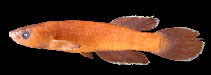 Nimbapanchax maeseni
Изображение сделано RMCA/Musschoot, T.
изображения | Изображение на Google
Изображение сделано RMCA/Musschoot, T.
Классификация / Имена народные названия | синонимы | Catalog of Fishes(род, виды) | ITIS | CoL | WoRMS | Cloffa
> Cyprinodontiformes (Rivulines, killifishes and live bearers) > Nothobranchiidae (African rivulines)
Eponymy: ‘A Maesen’ was one of the collectors of this species, probably referring to Belgian ethnologist Albert Maesen (1915–1992), who explored the Ivory Coast (the type locality) with his professor Frans Olbrechts (q. [...] (Ref. 128868), visit book page.
More on author: Poll.
Eponymy: ‘A Maesen’ was one of the collectors of this species, probably referring to Belgian ethnologist Albert Maesen (1915–1992), who explored the Ivory Coast (the type locality) with his professor Frans Olbrechts (q. [...] (Ref. 128868), visit book page.
More on author: Poll.
Taxonomic Remarks
Treated as Aphyosemion maeseni (Ref. 126460), but here placed in Nimbapanchax; this is based on the fan-shaped neural process of the second vertebra of this species, a morphological condition unique to species of Nimbapanchax among nothobranchiids (Ref. 126460).
Окружающая среда: среда / климатическая зона / пределы глубины / диапазон распространения экология
; пресноводный пелагический; dH range: 4 - 12; немигрирующий. Tropical; 20°C - 24°C (Ref. 2060)
распространение Территории | регионы FAO | Экосистемы | места находок | карта точек | интродукции | Faunafri
Africa: northeastern Liberia, southeastern Guinea and western Ivory Coast (Ref. 82704).
Размер / Вес / Возраст
Краткое описание определительные ключи | морфология | морфометрия
колючие лучи спинного плавника (общее число) : 0; членистые (мягкие) лучи спинного плавника (общее число) : 10 - 14; колючие лучи анального плавника: 0; членистые (мягкие) лучи анального плавника: 14 - 18; позвонки: 29 - 30. Diagnosis: Nimbapanchax maeseni, N. melanopterygius, N. viridis and N. jeanpoli are distinguished from N. petersi and Aphyosemion guineense by a white or light blue margin around caudal fin, not always completely closed, a small dark brown or reddish submarginal stripe and brown blotches between fin rays, no yellow zone in fins, females without or with small spaced dark bars on side versus an often broad yellow to yellow-greenish or whitish marginal or submarginal zone on anal and lower caudal fin, females on side with wide spaced dark bars in N. petersi and an asymmetrically coloured caudal with white upper and lower margin, a dark brown or red submarginal line and alternating white and brown or red streaks from center to posterior fin margin, sometimes fin center blue-greenish and alternating pattern only in posterior caudal fin in Aphyosemion guineense (Ref. 82704). Nimbapanchax maeseni, N. melanopterygius, N. petersi, N. viridis and Aphyosemion guineense are distinguished from N. jeanpoli by the lack of broad brown or red-brown vertical bars or blotches on side in males; N. maeseni and N. melanopterygius can be distinguished from N. viridis and N. jeanpoli by brown sides of males with center of many scales metallic blue-green, only little red pigmentation on head and sides and a dark brown or red blotch above and slightly posterior to the insertion of pectoral fin on side in females versus blue-green scales with only narrow brown scale margins on the side of males with distinct red dots forming lines or horizontal stripes in N. viridis or the before mentioned brown or red-brown vertical bars or blotches on upper half of side in N. jeanpoli, and no dark blotch above insertion of pectoral fin in females (Ref. 82704). It is distinguished from N. melanopterygius by a white or light blue margin and a dark brown or red submarginal band in the anal fin and a blue-green center in unpaired fins with small dark brown or red dots versus a black, dark brown, or dark red marginal, sometimes white submarginal band in anal fin and a less dense pattern of brown or dark red blotches in anal and caudal fin in N. melanopterygius (Ref. 82704). Nimbapanchax maeseni is distinguished from Aphyosemion guineense, N. melanopterygius, N. jeanpoli and N. viridis by a pattern of vertical stripes on sides formed by metallic blue-greenish scales in young males and a similar pattern of brown stripes in females versus absence of vertical striped pattern or broad, dark brown stripes or blotches on upper half in N. jeanpoli, and vertical stripes only faint in frightened females of N. melanopterygius (Ref. 82704).
Found in brooks, pools and small streams in the forested savanna (Ref. 3788). Not a seasonal killifish; very difficult to maintain in aquarium (Ref. 27139).
Жизненный цикл и брачное поведение половая зрелость | размножение | нерест | икра | Плодовитость | личинки
Основная ссылка
Загрузите свои рекомендации | ссылки | координатор | соавторы
Romand, R., J.-F. Agnèse and W.J.E.M. Costa, 2020. On the identity of the West African killifish Aphyosemion maeseni Poll, 1941 (Cyprinodontiformes: Aplocheilidae). Cybium 44(3):179-183. (Ref. 126460)
Статус Красного Списка МСОП (Ref. 130435: Version 2025-2 (Global))
Не вызывающий беспокойства (LC) ; Date assessed: 25 October 2019
CITES
Not Evaluated
Угроза для людей
Harmless
Использование человеком
аквариум: коммерческий
FAO - Publication: search | FishSource |
дополнительная информация
Трофическая экология
Пищевые предметы (добыча)
состав пищи
потребление пищи
Продовольственные пайки
хищники
Пищевые предметы (добыча)
состав пищи
потребление пищи
Продовольственные пайки
хищники
экология
экология
экология
Динамика численности населения
Параметры роста
Макс. возраст / размер
Отношение длины к весу.
Отношение длины к длине.
Размерный состав
Преобразование массы
пополнение
численность
Параметры роста
Макс. возраст / размер
Отношение длины к весу.
Отношение длины к длине.
Размерный состав
Преобразование массы
пополнение
численность
Жизненный цикл
размножение
половая зрелость
Зрелость/Жиры относительно.
Плодовитость
нерест
Нерестовые скопления
икра
Развитие икры
личинки
динамика численности личинок
размножение
половая зрелость
Зрелость/Жиры относительно.
Плодовитость
нерест
Нерестовые скопления
икра
Развитие икры
личинки
динамика численности личинок
Анатомия
жаберная область
Мозг
Отолит
жаберная область
Мозг
Отолит
Физиология
Состав тела
Питательные вещества
Потребление кислорода
Тип плавания
Скорость плавания
Зрительные пигменты
Звук рыбы
Болезни и паразиты
Токсичность (LC50s)
Состав тела
Питательные вещества
Потребление кислорода
Тип плавания
Скорость плавания
Зрительные пигменты
Звук рыбы
Болезни и паразиты
Токсичность (LC50s)
Связанные с человеком
Системы аквакультуры
особенности рыбоводства
степень растяжения
Случаи заболевания сигуатерой
Марки, монеты и прочее.
Системы аквакультуры
особенности рыбоводства
степень растяжения
Случаи заболевания сигуатерой
Марки, монеты и прочее.
инструменты
Электронная книга | полевой определитель | определительные ключи | Длина-Частота | онтогенез | карта точек |
Catch-MSY |
Специальные отчеты
Проверить содержание в аквариумах | Проверить опубликованные видовые данные | Проверить опубликованные данные по аквакультуре
Скачать в формате XML
ресурсы в Интернет
AFORO (otoliths) | Aquatic Commons | BHL | Cloffa | Websites from users | Проверить FishWatcher | CISTI | Catalog of Fishes: род, виды | DiscoverLife | ECOTOX | FAO - Publication: search | Faunafri | Fishipedia | Fishtrace | GloBI | Google Books | Google Scholar | Google | IGFA World Record | OneZoom | Open Tree of Life | Otolith Atlas of Taiwan Fishes | PubMed | Reef Life Survey | Socotra Atlas | TreeBase | Tree of Life | Wikipedia: Вперёд, поиск | World Records Freshwater Fishing | Зоологическая летопись
Оценки, основанные на моделях
Индекс филогенетического разнообразия (ссылка 82804): PD50 = 0.5312 [Uniqueness, from 0.5 = low to 2.0 = high].
Bayesian length-weight: a=0.00603 (0.00250 - 0.01453), b=3.13 (2.93 - 3.33), in cm total length, based on LWR estimates for this (Sub)family-body shape (Ref. 93245).
Трофический уровень (ссылка 69278): 3.2 ±0.5 se; based on size and trophs of closest relatives