This website uses cookies to enhance your browsing experience and ensure the functionality of our site. For more detailed information about the types of cookies we use and how we protect your privacy, please visit our Privacy Information page.
×
Cookie Settings
This website uses different types of cookies to enhance your experience. Please select your preferences below:
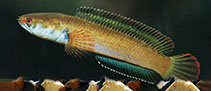
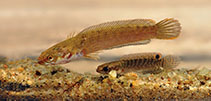
Obligate air-breathing (Ref. 126274); Are broadly adapted species occurring in rivers, lakes, ponds, mountain streams and even brackish water (Ref. 12693). Usually hide under the cover of marginal roots and bogwood. Found in quiet, shaded, clear, flowing water with a silt or gravel substrate (Ref. 6028). Can tolerate very stagnant, poorly oxygenated and turbid water. They also tolerate very foul water (Ref. 1479). Feed largely on insects and crustaceans. A small percentage of fish is also included in the diet. Spawn in shallow water with a silt or gravel substrate. Can tolerate a temperature of 36.5°C.
Exhibits mouthbrooding. Eggs hatch in the mouth of the male and either parent may keep the brood in its mouth for protection after hatching. Fry have been found to feed on successive batches of eggs laid by the female.
Talwar, P.K. and A.G. Jhingran, 1991. Inland fishes of India and adjacent countries. Volume 2. A.A. Balkema, Rotterdam, i-xxii + 543-1158, 1 pl. (Ref. 4833)
Statut dans la liste rouge de l'IUCN (Ref. 130435: Version 2025-2 (Global))
Vulnérable (VU) (B1ab(iii)+2ab(iii)); Date assessed: 06 August 2019
Cycle de vie Reproduction Maturité Maturité/épines rel. Fécondité Frai Agrégats de frai Œufs Développement de l'œuf Larves Dynamique des populations larvaires
Indice de diversité phylogénétique (Réf. 82804): PD50 = 0.5000 [Uniqueness, from 0.5 = low to 2.0 = high].
Bayesian length-weight: a=0.00933 (0.00560 - 0.01554), b=3.03 (2.89 - 3.17), in cm total length, based on LWR estimates for this species & Genus-body shape (Ref. 93245).
Niveau trophique (Réf. 69278): 3.8 ±0.59 se; based on food items.
Résilience (Réf. 120179): Milieu, temps minimum de doublement de population : 1,4 à 4,4 années (Fec = 933).
Vulnérabilité de la pêche (Ref. 59153): Low vulnerability (23 of 100). 🛈